Paris with a 12-Year-Old: History Without the Boredom
A twelve-year-old asks whether the version of history on a label is the whole story. It is a useful question to take through Paris, where objects, buildings, and performances offer different ways of approaching the past. You do not need to dilute a complex subject into a string of entertaining facts to make it accessible. Begin with a question worth considering, while adapting the visit to your own child's interests rather than assuming a standard response at this age.
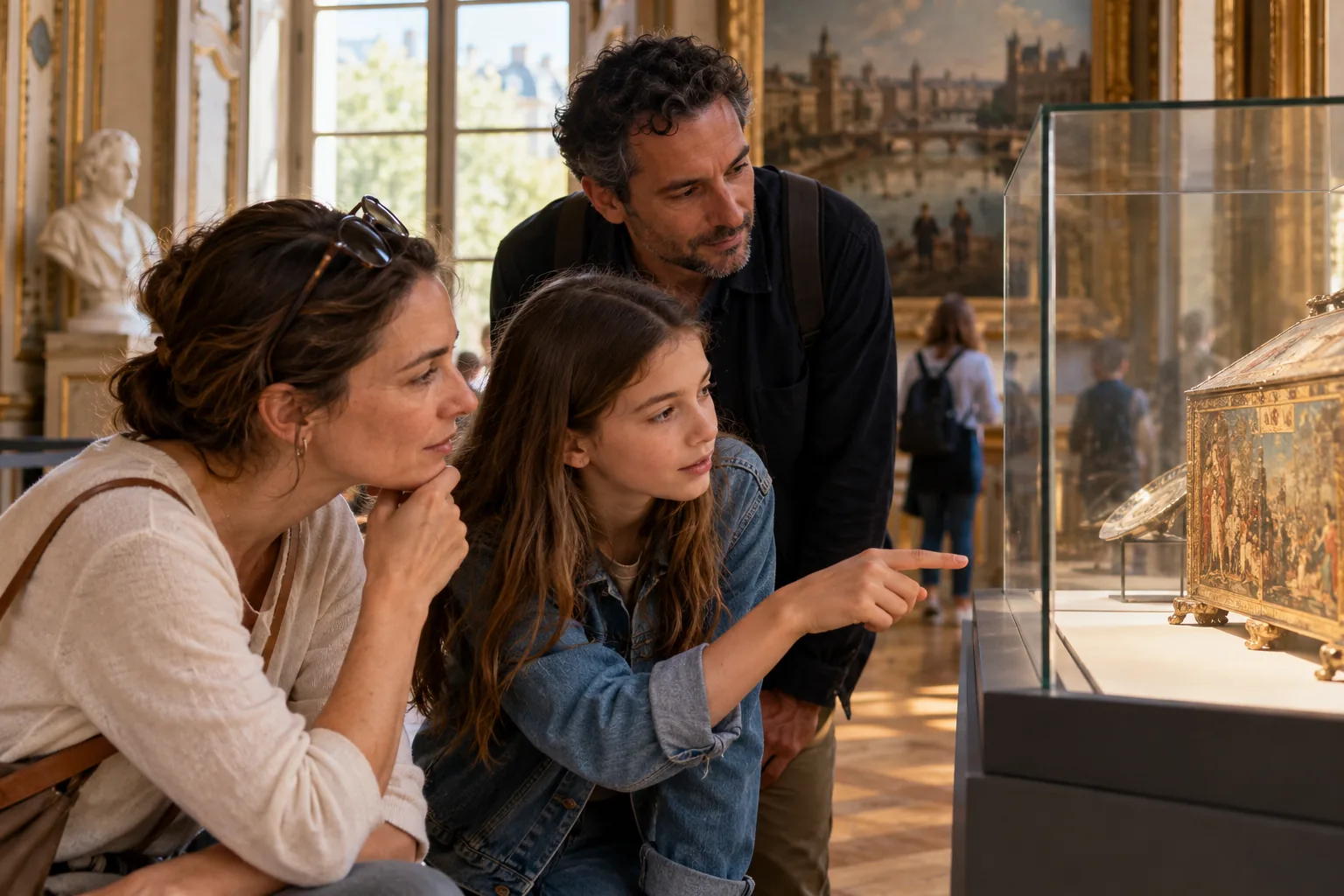
Give the visit a question worth investigating
Choose a theme that allows discussion, such as who gets represented in art or what an everyday object reveals about work. A focused visit to Carnavalet can provide evidence connected with Parisian life, while an art collection offers another route into questions about how people are shown. Review the institution's collection and family resources to select material that supports your theme. Our guide for history lovers can help the adults find a wider context without turning the outing into a lecture.
Ask your child what they would want to know before reading an explanation together. Then distinguish what the object visibly shows, what its label establishes, and what remains a matter of interpretation. That distinction makes disagreement productive, since a preference does not have to be confused with a historical fact. Our article on making Paris history fun offers a simpler starting point if you would rather begin with an everyday question.
Compare perspectives without inventing certainty
A portrait can tell you how someone was represented, but it does not automatically reveal everything about their private thoughts. A building may establish a place in the story while leaving questions about particular events unanswered. Let uncertainty become part of the conversation instead of filling each gap with an attractive anecdote. If you research a question afterward, begin with the museum's collection information or another authoritative source connected with the subject.
Give your child a say in how to record the discovery, whether through a short note, a drawing, or a photograph where allowed. The aim is to preserve an interesting observation, rather than gather evidence that the child paid sufficient attention. You might compare the record over a meal and notice how the adults saw the same object differently. Our guide to shared family activities helps you choose experiences where several viewpoints can belong.
Practical choices still matter when the conversation becomes more demanding. Agree on a manageable route, protect time for a break, and avoid booking a second visit just because it relates to the first. A child can enjoy a thoughtful discussion while disliking a crowded room or a long transfer. Use the actual response during the day to decide whether to extend the question or leave it for another outing.
Frame immersive theater as an interpreted viewpoint
The Immmersiv character themes offer another way to approach personalities and places when a particular story interests your family. Read what to expect and confirm the selected encounter's age suitability, language, availability, and practical demands. Explain that the performer creates an interpretation informed by a historical subject, rather than reproducing an encounter documented in every detail. That frame allows a twelve-year-old to engage with the performance and still ask how its narrative connects with the evidence.
Prepare an open question if your child wants to participate, without promising that a particular exchange will occur. After the encounter, discuss what perspective the portrayal brought into view and what you would investigate through a collection or historical source. Use the Paris map to place the experience in a realistic day. A good thematic link is useful only when the location, format, and family preferences also make sense.
History becomes less remote when a twelve-year-old can examine a claim instead of merely receiving it. Paris offers many chances to connect visible details with larger questions about people and society. Leave room for curiosity, disagreement, and the practical need to stop before the day becomes tiring. A new question carried home can be a more meaningful result than a long list of remembered names.