THE LANDMARK
A place with a story.
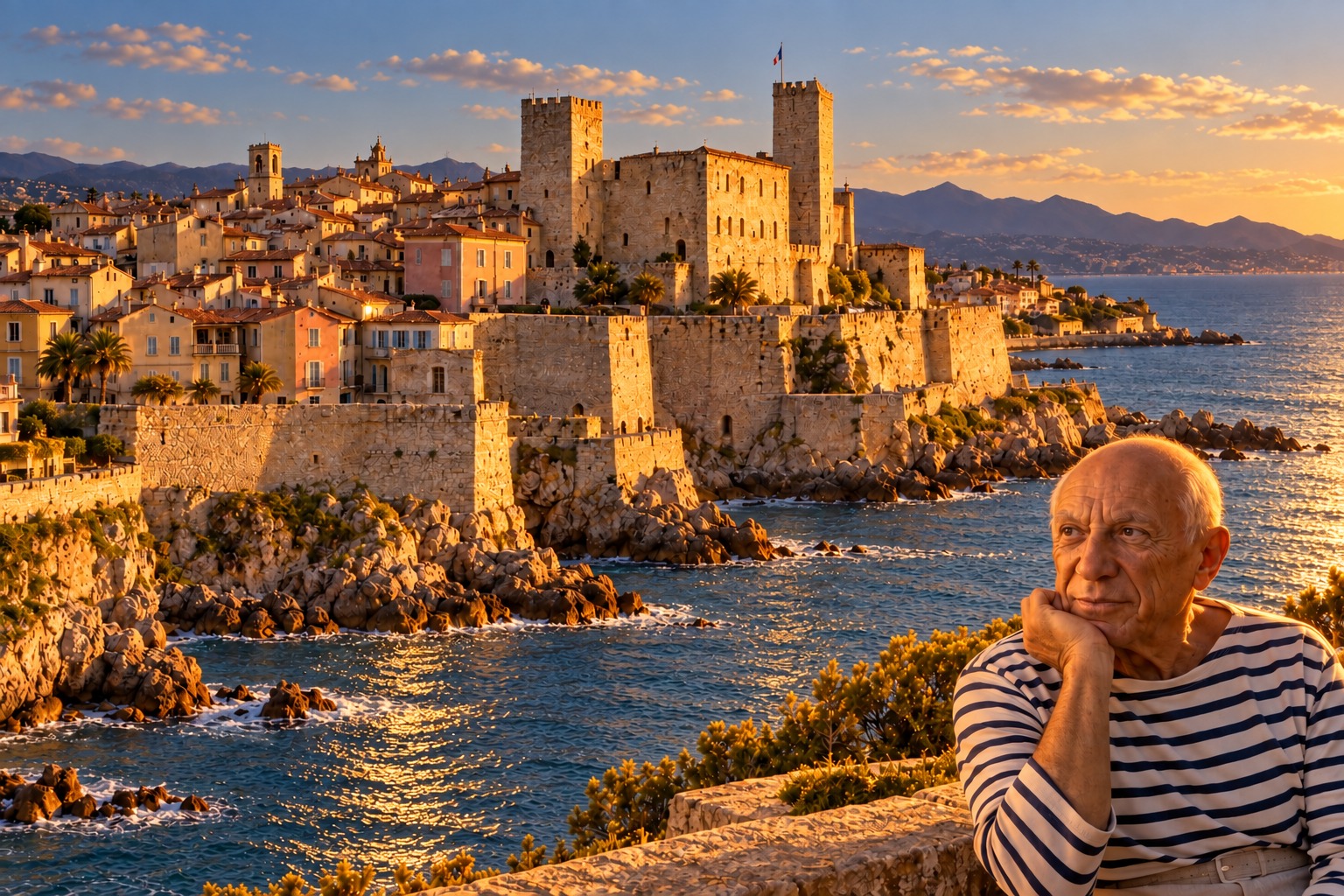
Antibes brings an old town and a Mediterranean waterfront into close contact. Stone walls, compact streets, and openings toward the sea create a landscape of sharp contrasts: sheltered passages give way to bright horizons, while historic buildings stand against the movement of the water. The town’s character is especially clear where its architecture meets the coast.
The Château Grimaldi is a central landmark in this relationship between art and place. Pablo Picasso worked here in 1946, and works from that period became part of the collection associated with the Musée Picasso. The building’s historical identity and its later artistic role make it a distinctive setting, connecting a major figure of modern art with a site rooted in the town’s earlier history.
The surrounding old town gives that connection a wider context. Its walls and streets offer changing perspectives on the château, while the seafront introduces light, color, and space into the experience. These are details that can be appreciated directly, even before examining a painting: the landscape itself encourages an awareness of contrast and composition.
Picasso’s theatrical perspective invites you to look at Antibes with that creative attention. Notice the shape of a shadow on stone, the way a wall divides a view, or the sudden intensity of blue beyond a street corner. The character’s story links these observations to a life of artistic experiment. Antibes becomes a place to consider how a setting can stimulate new ideas, and how a familiar view can be rearranged through an artist’s imagination.