THE LANDMARK
A place with a story.
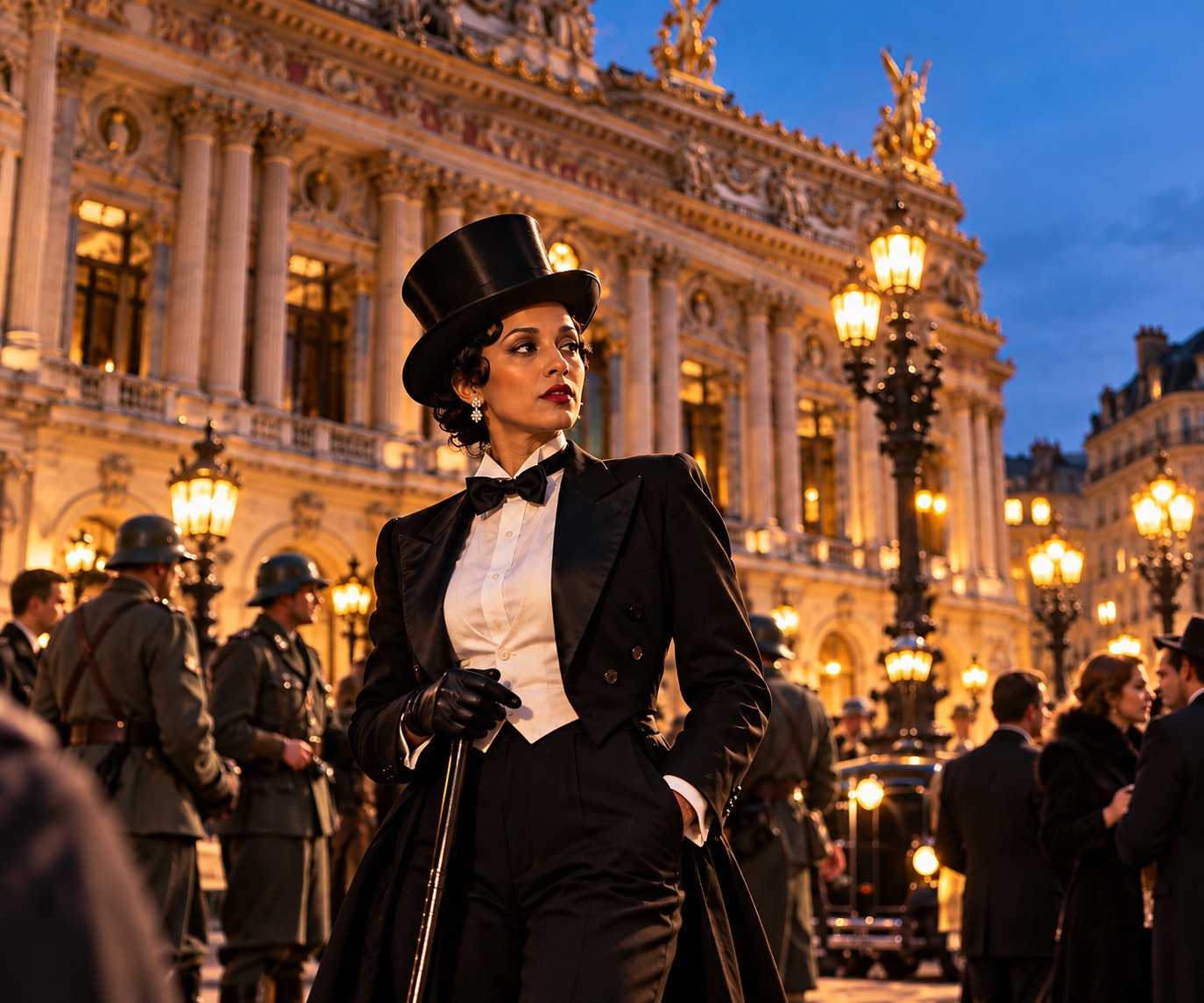
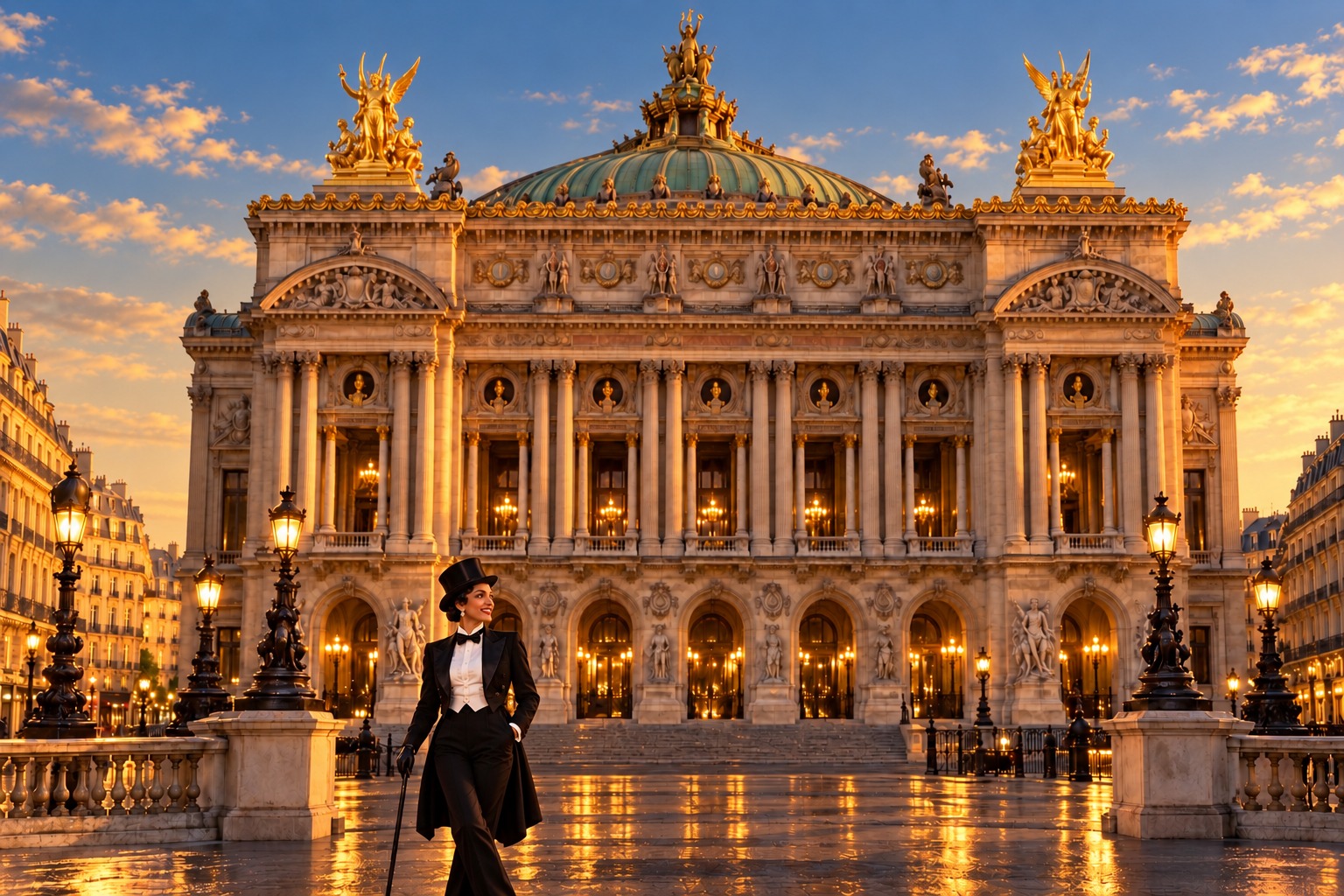
The Palais Garnier brings the drama of a theater into the architecture of the street. Its broad façade combines columns, arches, sculptural groups, and richly worked decoration, creating a building that announces its purpose before a performance begins. At the end of the surrounding avenues, it becomes a visual destination: an elaborate stage set within the wider composition of Paris.
Designed by Charles Garnier and opened in 1875, the opera house reflects the ambition of nineteenth-century cultural life. Its architecture was conceived to make arrival and circulation part of the spectacle. Inside, the monumental staircase and reception spaces extend that idea, giving social encounters and public appearances a setting almost as theatrical as the auditorium itself.
Outside, the neighborhood connects the building to broad boulevards, shopping streets, and the rhythms of central Paris. The opera house belongs to a world where fashion, entertainment, and public visibility overlap. Its ornate surfaces tell us about the importance attached to culture and display, while the streets around it reveal how such a monument participates in everyday urban movement.
Through Joséphine Baker’s story, this setting becomes an introduction to the energy and tensions of Parisian performance. Her perspective concerns the wider city of stages, audiences, and public life rather than a claim that every event occurred inside Garnier. Look closely at the façade’s gestures and the way people approach it. The landmark gives a dramatic architectural frame to questions of talent, recognition, freedom, and the power of being seen.