THE LANDMARK
A place with a story.
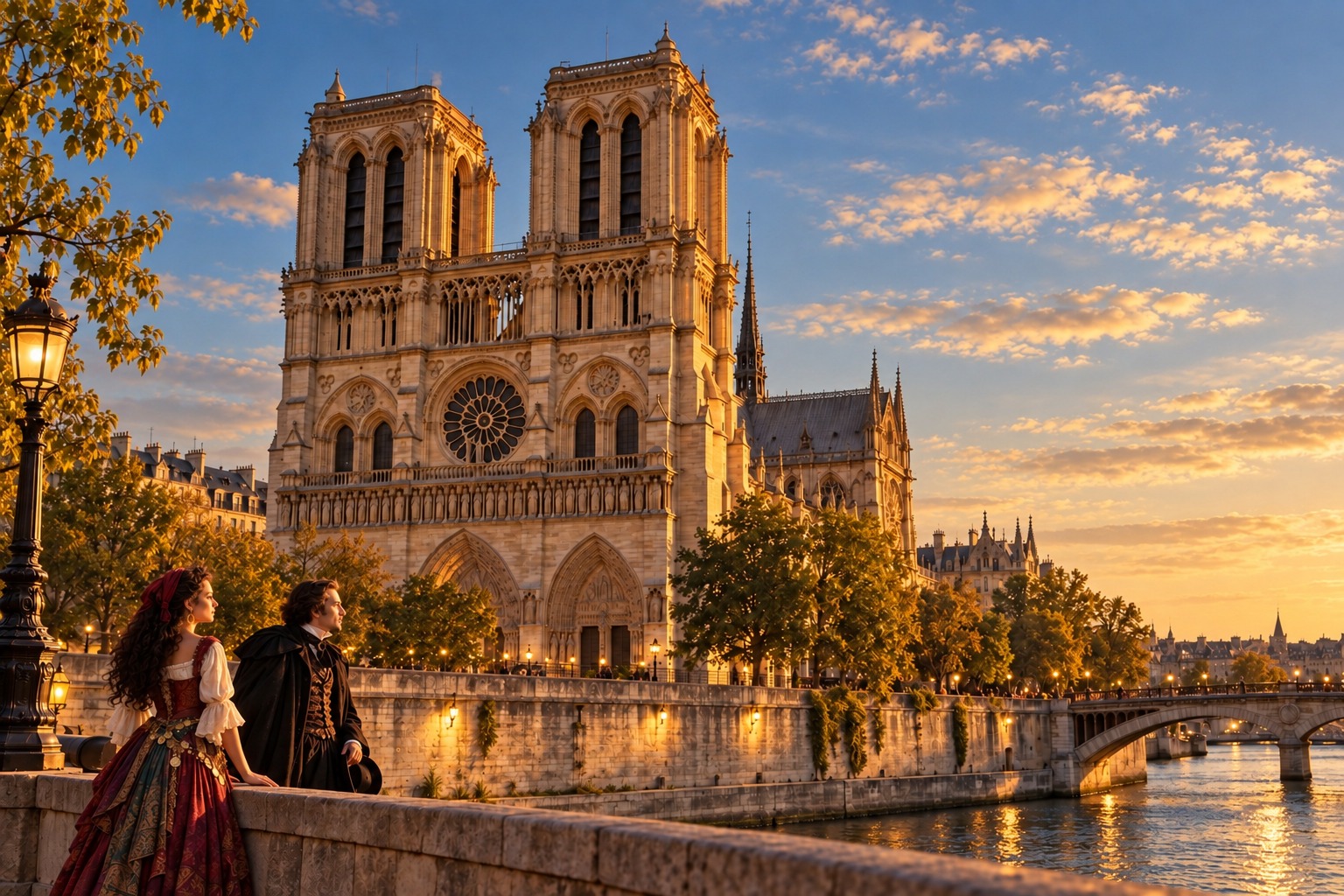
Notre-Dame stands on Île de la Cité, surrounded by the Seine at the historic heart of Paris. Its twin towers, sculpted portals, and balanced western façade make a powerful first impression, while its sides reveal the more intricate structure of Gothic architecture. Flying buttresses reach outward from the building, showing how stone supports made high walls and large windows possible.
Construction began in 1163 and continued across generations. The cathedral carries the ambitions of medieval builders alongside the changes introduced by later restoration. Its carved figures, rose windows, and contrasting masses reward attention at several scales, from the overall silhouette to an individual face above a doorway. The building’s long history is written into this combination of structure and ornament.
The surrounding island adds another dimension. Bridges, riverbanks, and narrow streets connect the cathedral with the movement of the city, reminding visitors that it has always belonged to a lived urban setting. Victor Hugo’s novel strengthened Notre-Dame’s place in the imagination, giving its architecture a literary life as well as a religious and civic one.
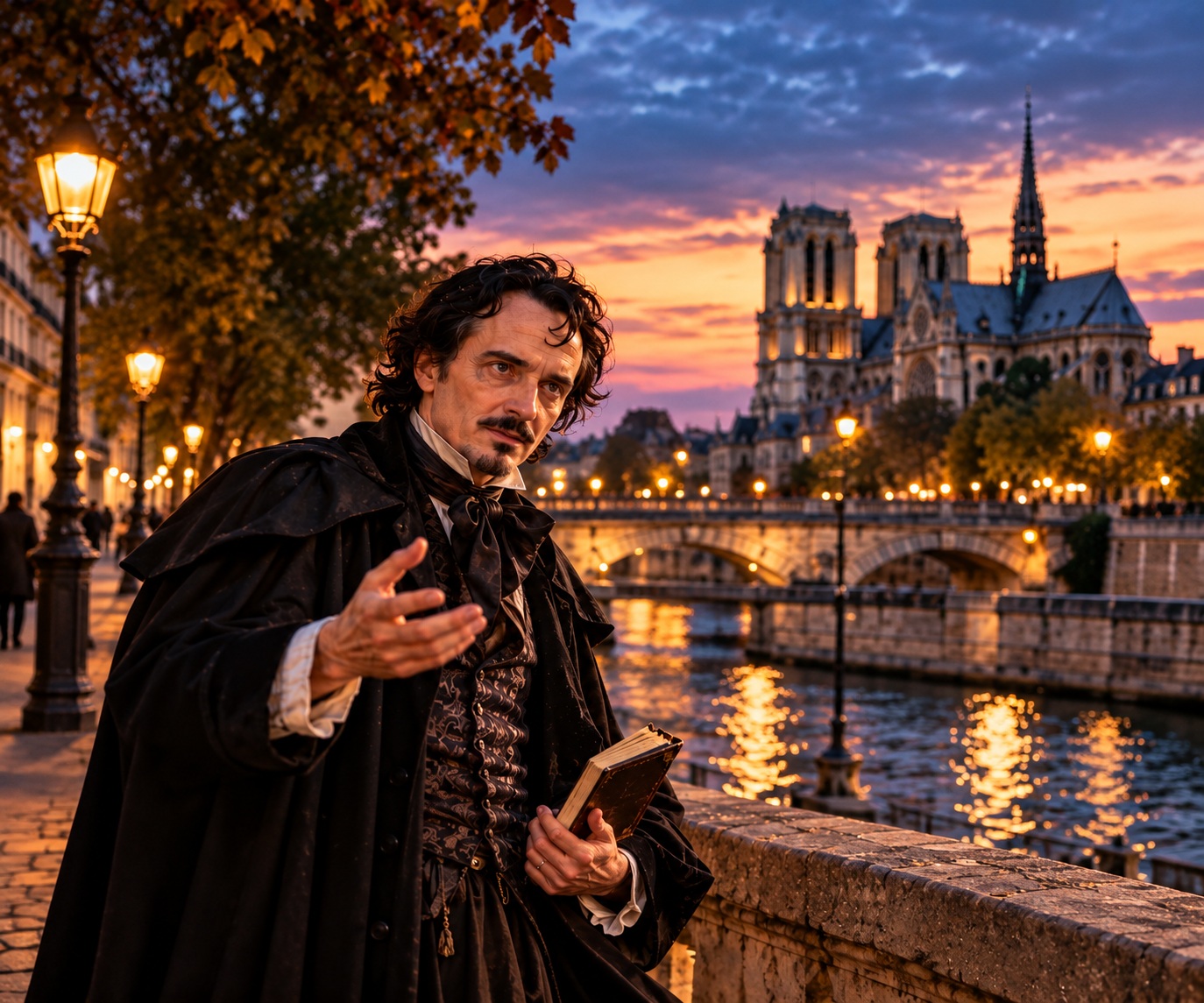
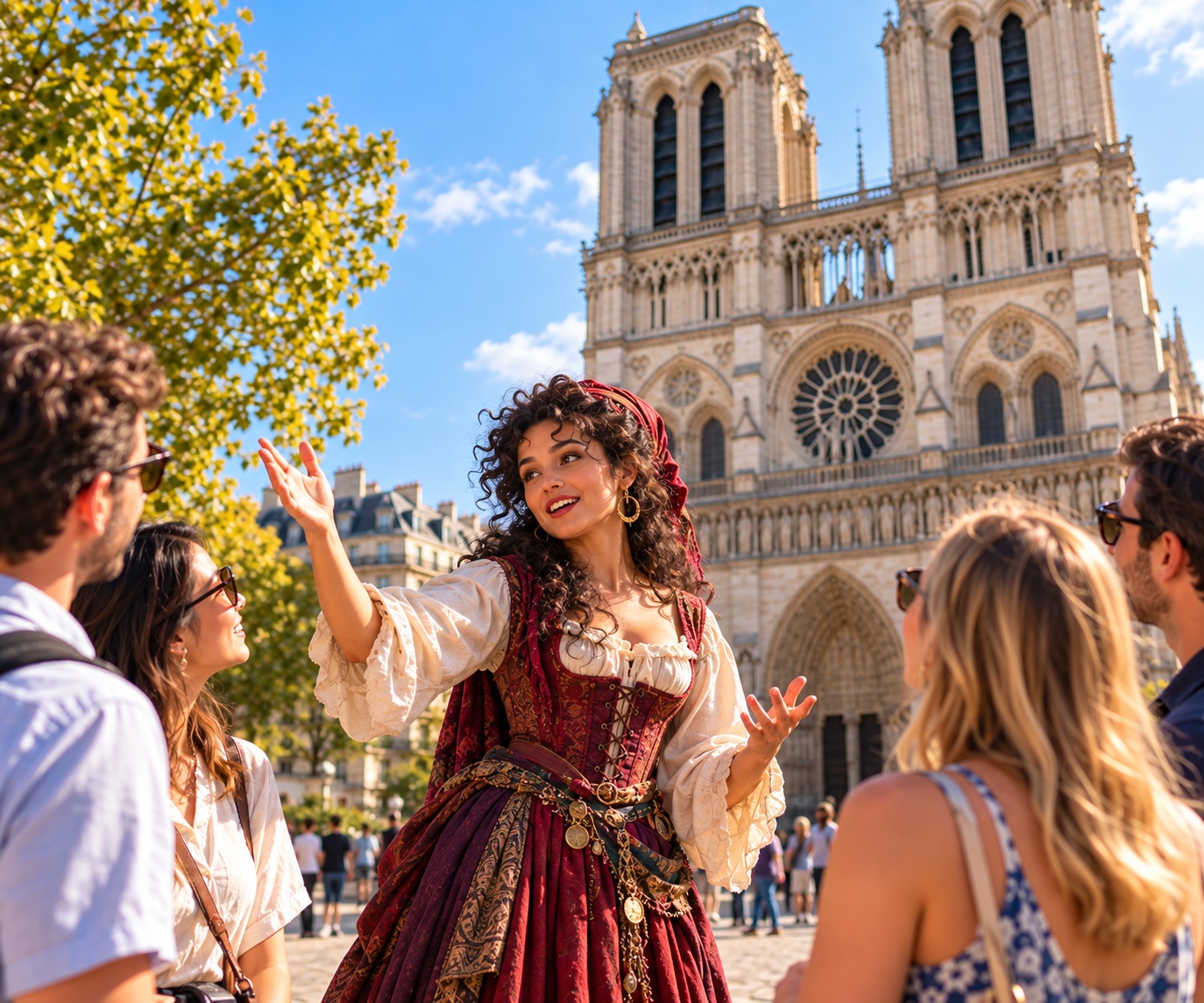
Esmeralda offers a route into that imagined world, while the Edgar Allan Poe experience explores a different theatrical atmosphere in the island’s streets. Look at how shadows collect beneath carved details, how the river changes the view, and how the towers emerge between buildings. These outdoor perspectives make the landmark a starting point for stories about beauty, exclusion, mystery, and the people who give a city its emotional character.