THE LANDMARK
A place with a story.
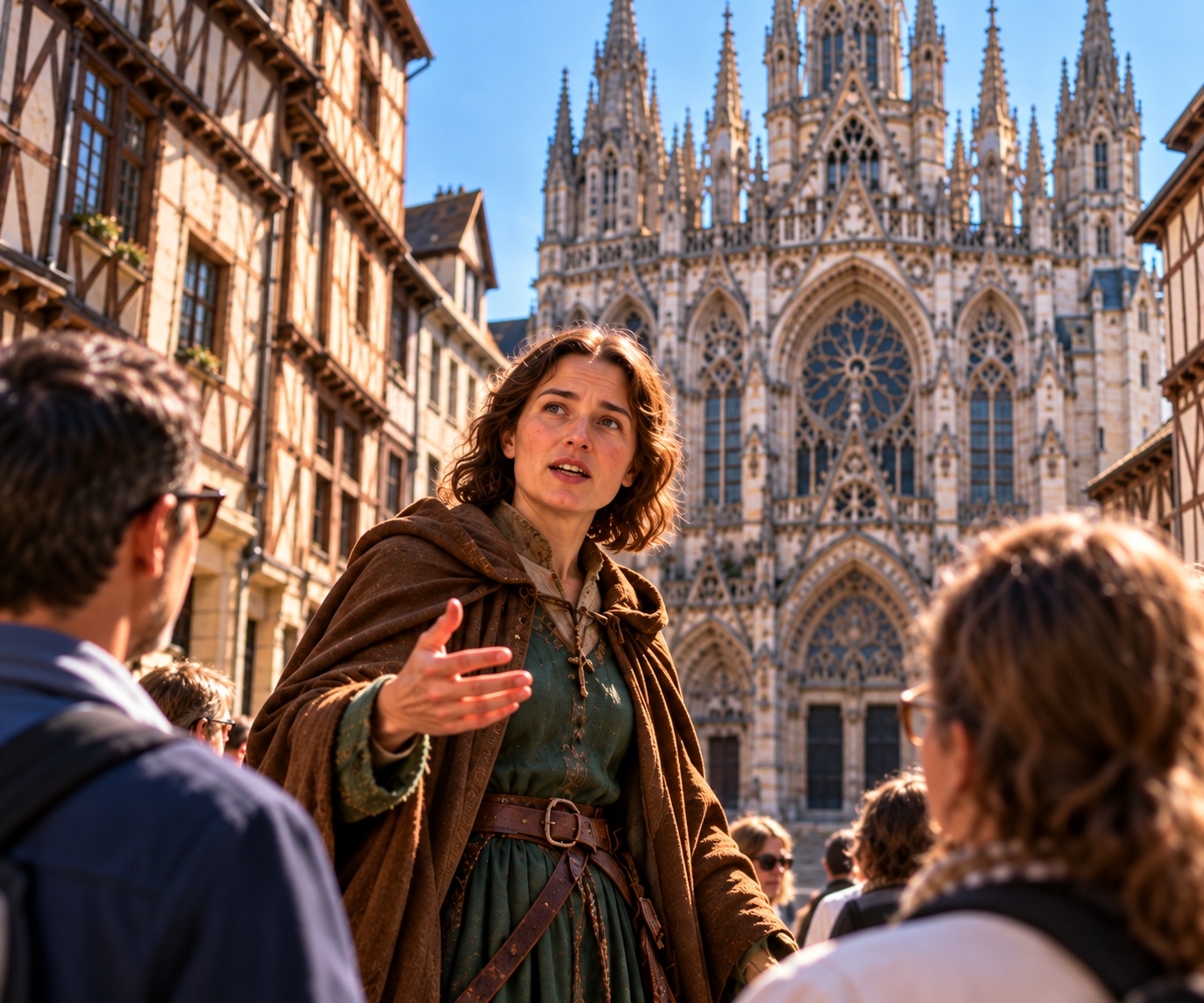
Rouen’s historic center is a layered urban landscape of narrow streets, timber-framed houses, church architecture, and open squares. Its buildings vary in scale and material, creating a rich visual rhythm as you move through the city. A carved detail or an upper story can draw attention away from a major monument, making the smaller streets as rewarding as the familiar views.
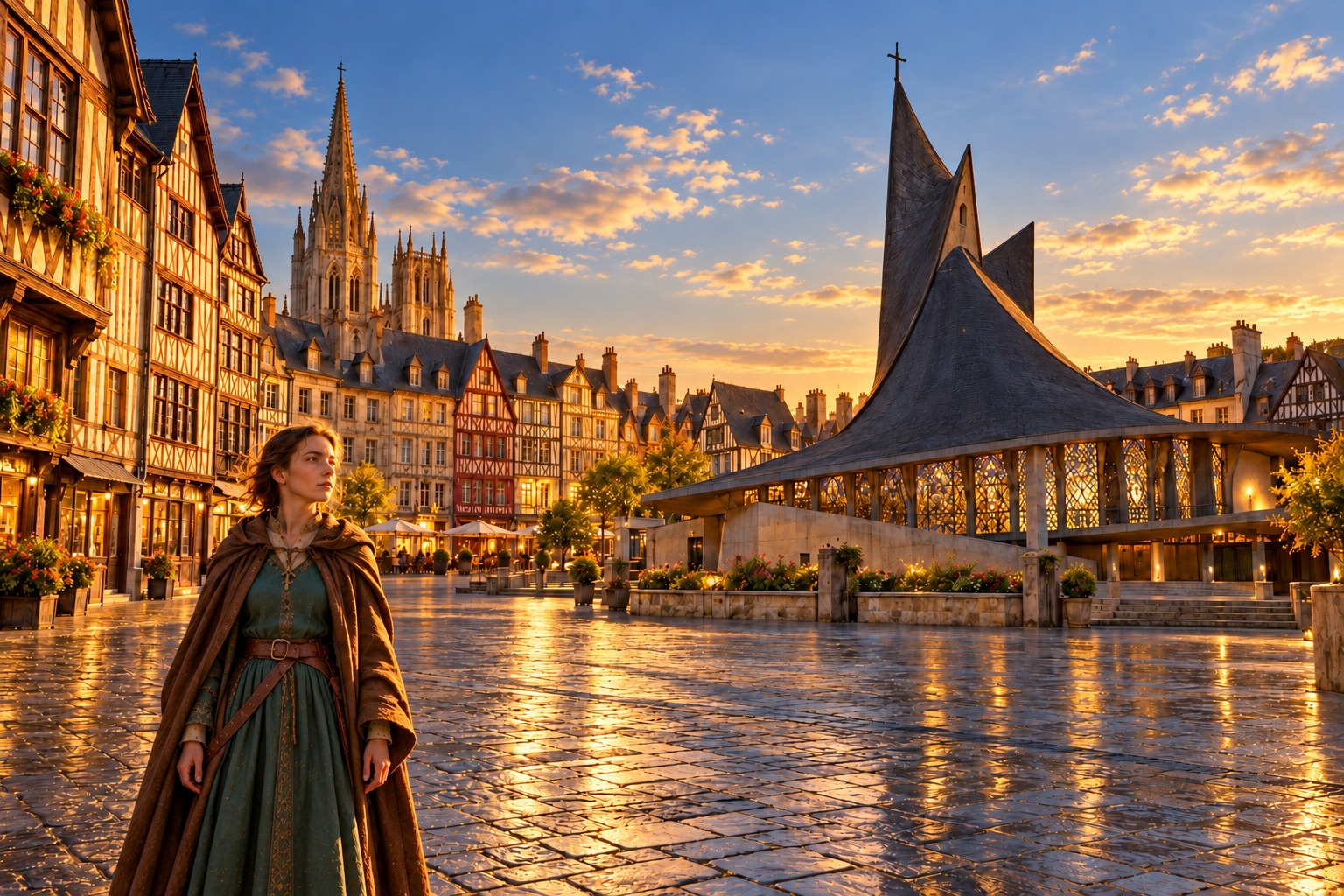
Place du Vieux-Marché carries a particularly powerful historical association: Joan of Arc was executed here in 1431. The square joins the memory of that event to the everyday activity of a city center. Its cafés, market setting, and surrounding buildings make the site feel lived in, reminding visitors that a place of national remembrance can remain part of ordinary urban life.
The church dedicated to Joan of Arc, completed in 1979, gives the square a striking modern silhouette. Its sweeping roof contrasts with the older streets around it, while historic stained glass introduces another layer of continuity. The result is an architectural conversation between different periods, with remembrance expressed through both a specific location and a distinctive building.
Joan’s theatrical story helps connect these landmarks with the experience of an individual. Look at how the square opens after the narrower streets, and how the church changes your sense of the space. Rouen offers a setting in which questions of courage, judgment, belief, and public memory become tangible. The city’s physical details give those questions context, turning an important historical episode into a more attentive discovery of the place itself.