THE LANDMARK
A place with a story.
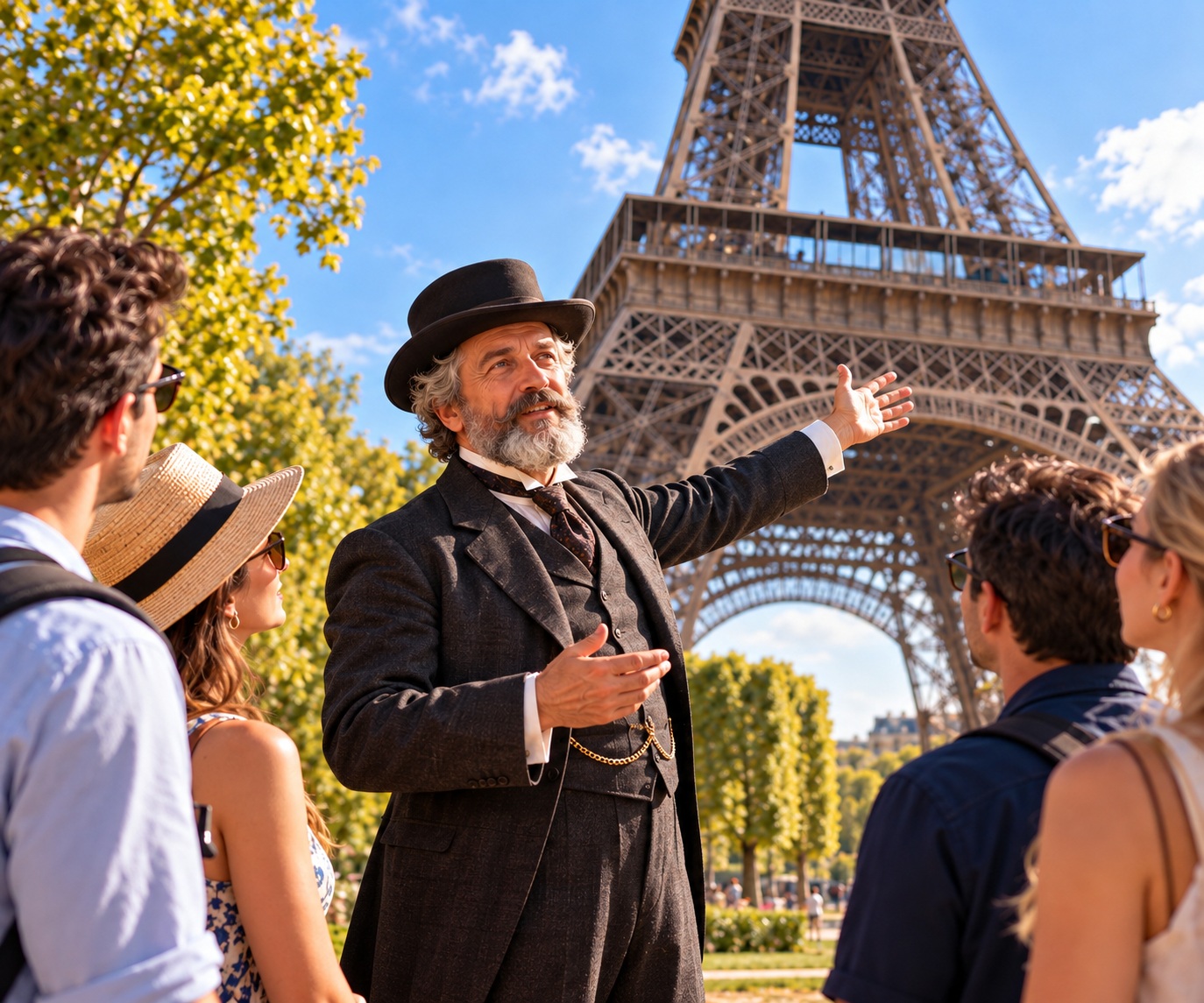
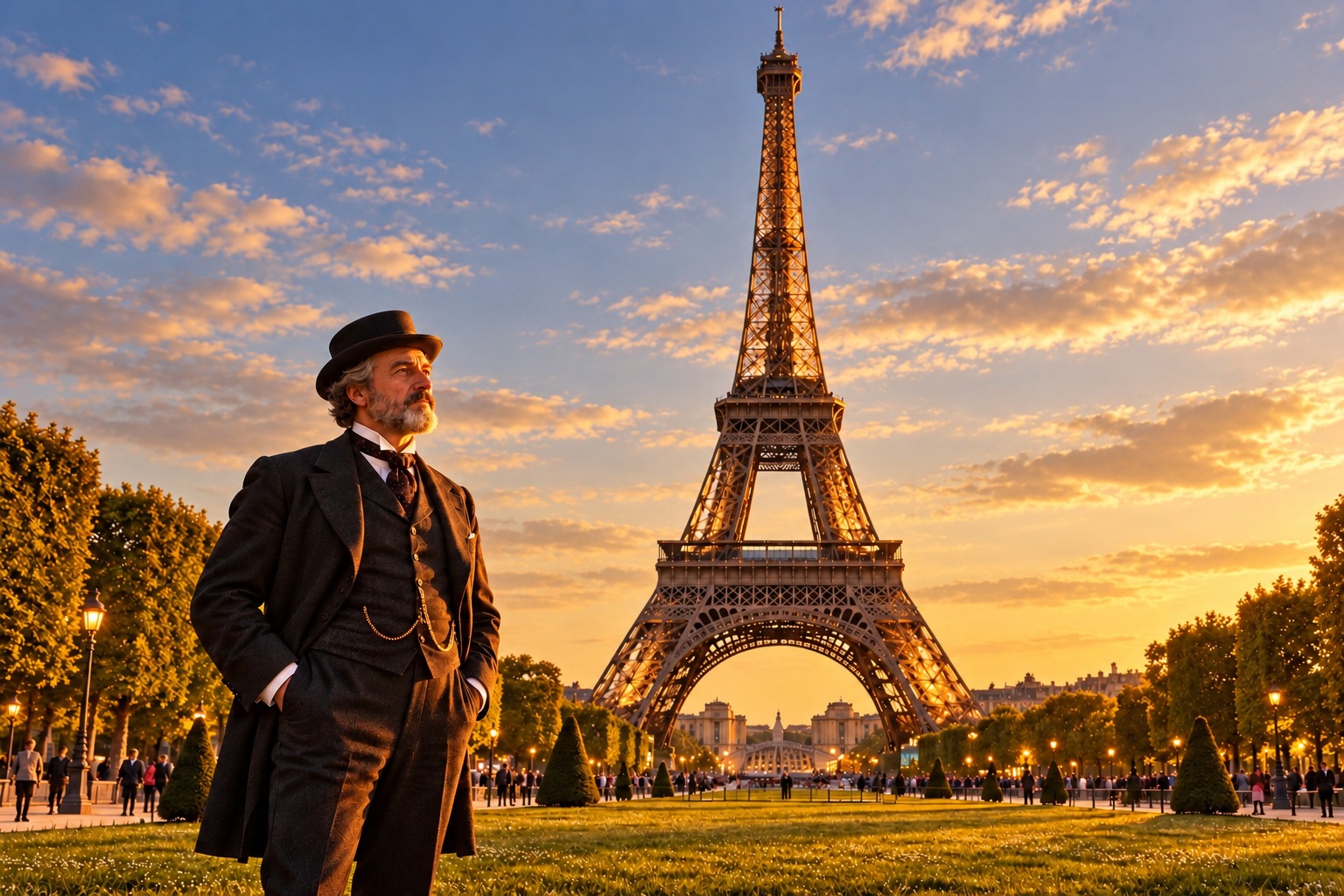
The Eiffel Tower gives the Champ de Mars an unmistakable focal point. Seen from the ground, its four broad legs rise in sweeping curves before joining into a slender structure above Paris. The open lattice lets the sky remain visible through the ironwork, making an enormous monument appear unexpectedly light. Move around its base and the familiar silhouette becomes a changing arrangement of beams, angles, and empty space.
Built by Gustave Eiffel’s company between 1887 and 1889 for the World’s Fair, the tower expressed an extraordinary confidence in modern engineering. The project brought together precise workshop preparation and demanding work on site. Its construction depended on the coordination of designers, metalworkers, and crews assembling thousands of individual components into a single structure.
The tower was also a bold intervention in the Paris skyline. Its industrial appearance challenged established ideas about beauty and provoked objections before becoming a symbol of the city itself. That contrast between controversy and recognition is part of what makes the monument compelling: an invention once questioned can eventually feel inseparable from its surroundings.
Looking at the tower with an engineer’s curiosity changes the experience. Follow a line of rivets, study the way the legs spread their weight, and notice how the structure narrows as it climbs. The lawns, paths, and river nearby offer different perspectives. From these outdoor viewpoints, the tower becomes more than a postcard image: it is a visible argument about imagination, calculation, and what people can build together.