Paris with Kids: How to Make History Fun
Children do not need history to be made less true; they need a reason to care about the evidence. Paris offers walls, bridges, rooms, objects, gardens, and characters that can turn the past into a sequence of questions. The most successful family visits replace long explanations with observation, choice, movement, and conversation. Fun comes from discovery, not from pretending that every historical event was cheerful.

Start with a mystery children can solve
Before entering a monument or museum, give the family one concrete question. Ask why a staircase is so wide, how a wall protected the city, what a portrait wanted viewers to believe, or which material looks oldest. A question makes children active observers and gives adults permission to ignore most of the room. The answer can remain incomplete as long as everyone leaves with better evidence.
On the street, turn architectural details into clues rather than a lecture. Doorways, reused stones, street names, plaques, and changes in building height can suggest how the city developed. Children can photograph or sketch one detail from each period, then arrange the clues later. This method teaches that history is constructed from traces, not simply delivered by an authority.

Choose objects and characters, not entire centuries
A museum visit becomes manageable when each person chooses one object to investigate. Look at its materials, size, signs of use, and the information provided by the institution before inventing a story about it. Compare what is visible with what experts know and what remains uncertain. This distinction between evidence and imagination is one of the most valuable habits history can teach.
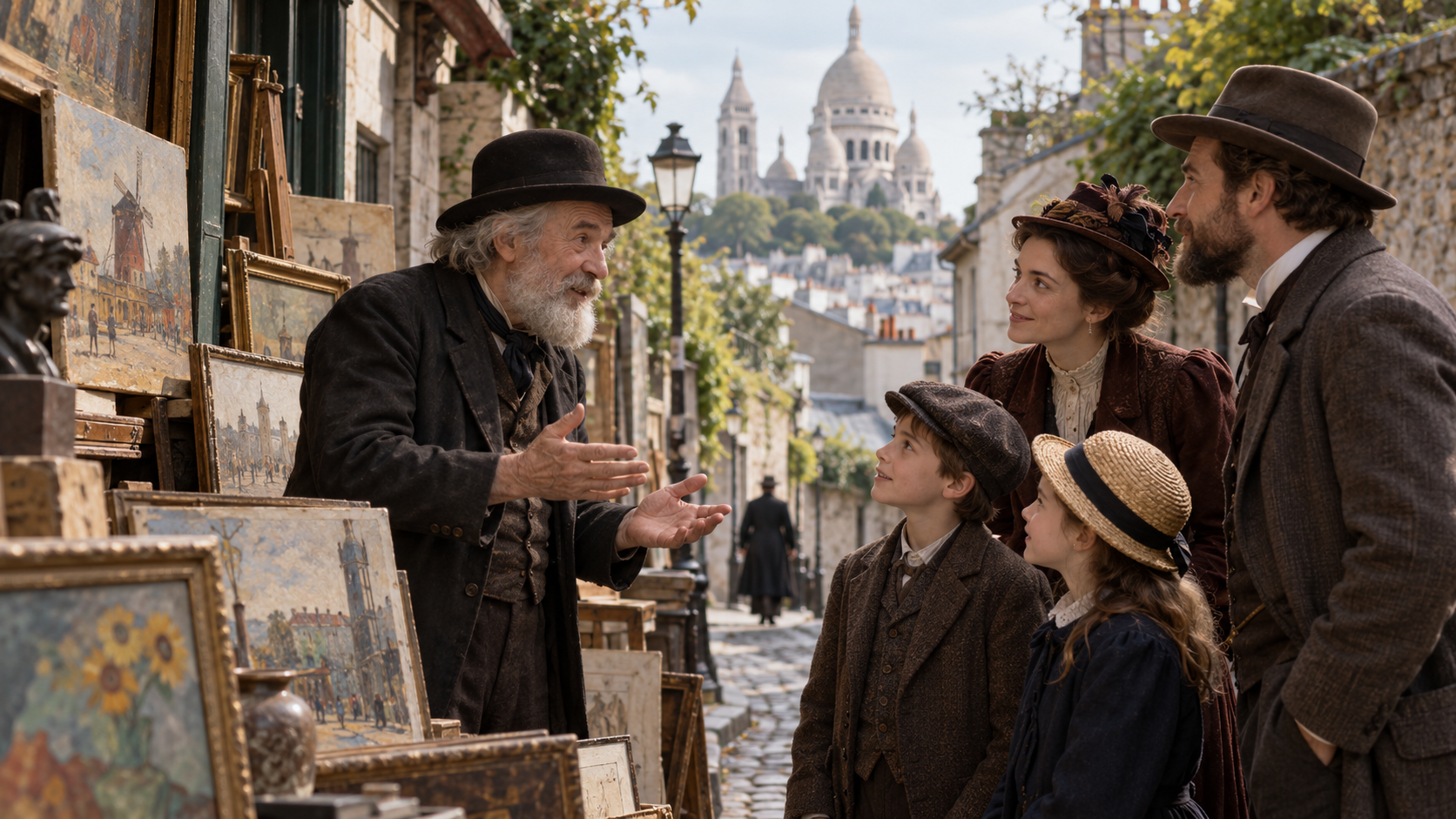
Historical characters provide another strong anchor because motives and choices are easier to discuss than abstract chronology. Marie Antoinette can open questions about court life and reputation, while Père Tanguy reveals how artistic communities depended on relationships and commerce. The adult role is to resist turning a person into either a flawless hero or a simple villain. Complexity is not beyond children when it is expressed through clear decisions and consequences.
Use live storytelling with honest boundaries
A professional actor embodying a historical character can create attention that a wall label rarely achieves. The encounter should identify what is documented, what is a plausible interpretation, and what belongs to later legend. Children can ask the character a question and then compare the answer with museum evidence or an official source. That exchange turns performance into inquiry rather than replacing history with theater.
Respect the emotional weight of difficult subjects. Revolution, war, persecution, death, and inequality should be adapted to age and readiness without becoming sensational entertainment. Explain the human stakes, invite questions, and make space for silence or a change of activity. Serious history can be engaging without being turned into a thrill.
Protect curiosity with movement, choice, and an ending
Plan visits shorter than the maximum time children can technically endure. Alternate indoor concentration with a garden, riverside walk, snack, or short task that uses the body. Let children choose between two appropriate options, because ownership often matters more than novelty. Stop while conversation is still possible rather than after everyone has become irritable.
At the end of the day, ask each person for one object, person, place, and unanswered question. Avoid quizzing children on dates unless they enjoy that form of recall. A drawing, invented newspaper headline, or comparison with the present may reveal much deeper understanding. Paris history becomes fun when the family is still telling its stories over dinner.
Continue the story with Immmersiv
Marie Antoinette at Versailles features a professional actor embodying Marie Antoinette and opens age-appropriate questions about court life, representation, and political crisis. Père Tanguy and the Artists of Montmartre features a professional actor embodying Père Tanguy and makes artistic networks tangible. Select the story that best fits the child’s current interests and attention. Confirm age suitability, language, duration, route, and current details before planning.