10 Ways to Get Kids Interested in Paris History
Paris can feel enormous to a child standing beneath a monument whose story has not yet begun. A doorway, a face in a painting, or a question about an old street can make the city more manageable. Interest often starts with a detail rather than with an adult's explanation of why a place is important. These ten approaches give families several ways to find that detail, without turning every hour of a vacation into a lesson.
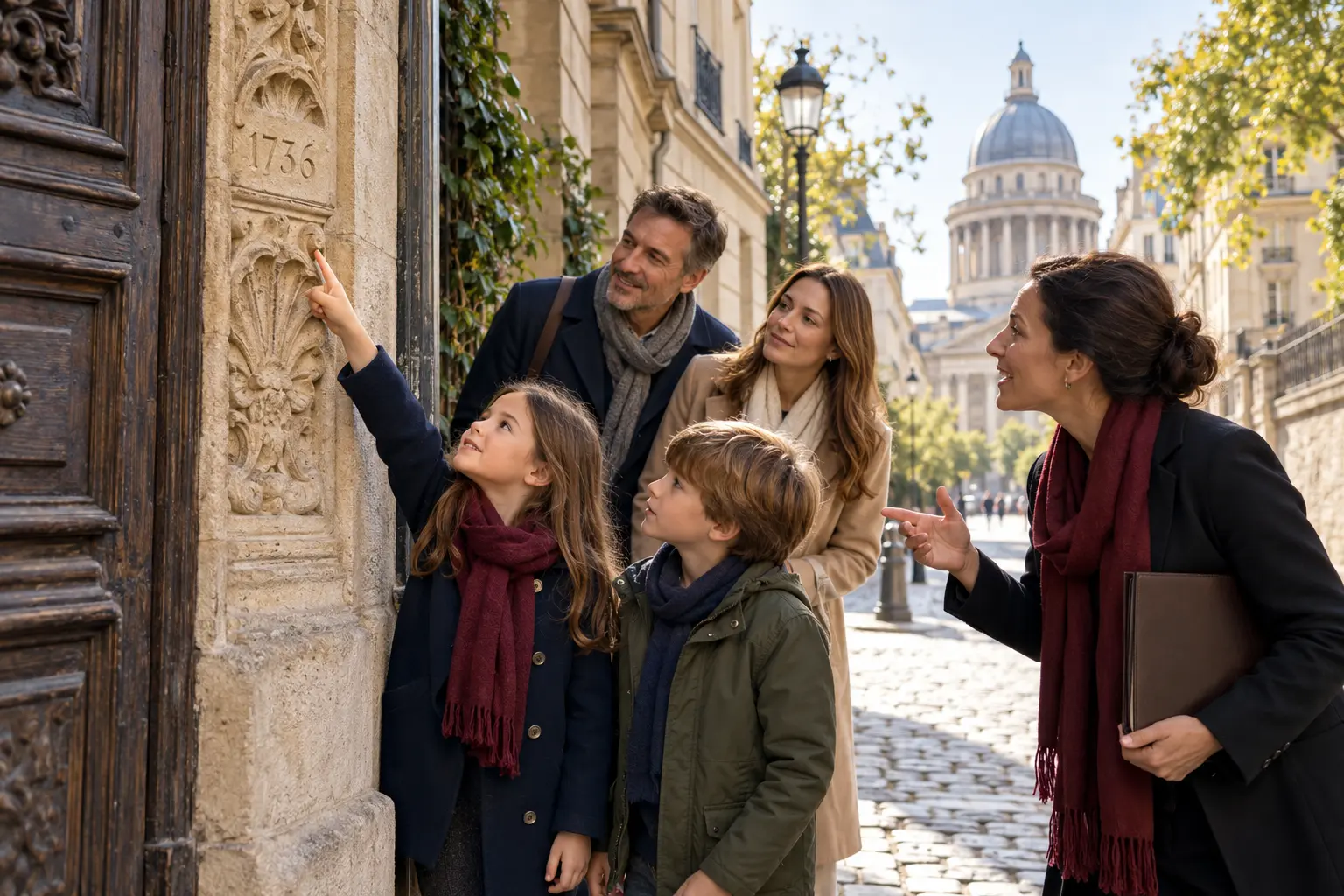
Three ways to begin before the visit
First, let your child choose a question about the past that feels connected to everyday life. Second, show one image of the place you plan to visit and ask what they notice before supplying an explanation. Third, choose a single person or subject to follow through the outing instead of announcing an entire historical survey. Our guide to making history fun in Paris helps you keep that preparation light enough to leave room for surprise.
A child interested in drawing may want to know how artists worked, while a child fascinated by clothes may notice a different story. You can use the Immmersiv character pages to explore possible themes without assuming every character experience is available. Read the selected page's current description and confirm the practical details before committing. Preparation should offer a point of entry, rather than promise a scene or activity that the visit does not actually provide.
Four ways to explore while you are there
Fourth, search for one concrete detail, such as a material, an expression, or a change in the shape of a street. Fifth, compare two objects and ask what is similar before discussing what makes them different. Sixth, use a museum's own family resources where they suit your child's language and interests. The Musée d'Orsay provides family activity booklets, while Carnavalet describes resources that help families approach the history of Paris.
Seventh, allow your child to ask a question whose answer you do not already know. Read the label together or note the question for later, without inventing a convenient historical explanation. A performed encounter may also invite curiosity when you have checked its suitability through the experience format and the relevant page. Our selection of family activities adults enjoy can help you choose something that gives parents a reason to remain curious too.
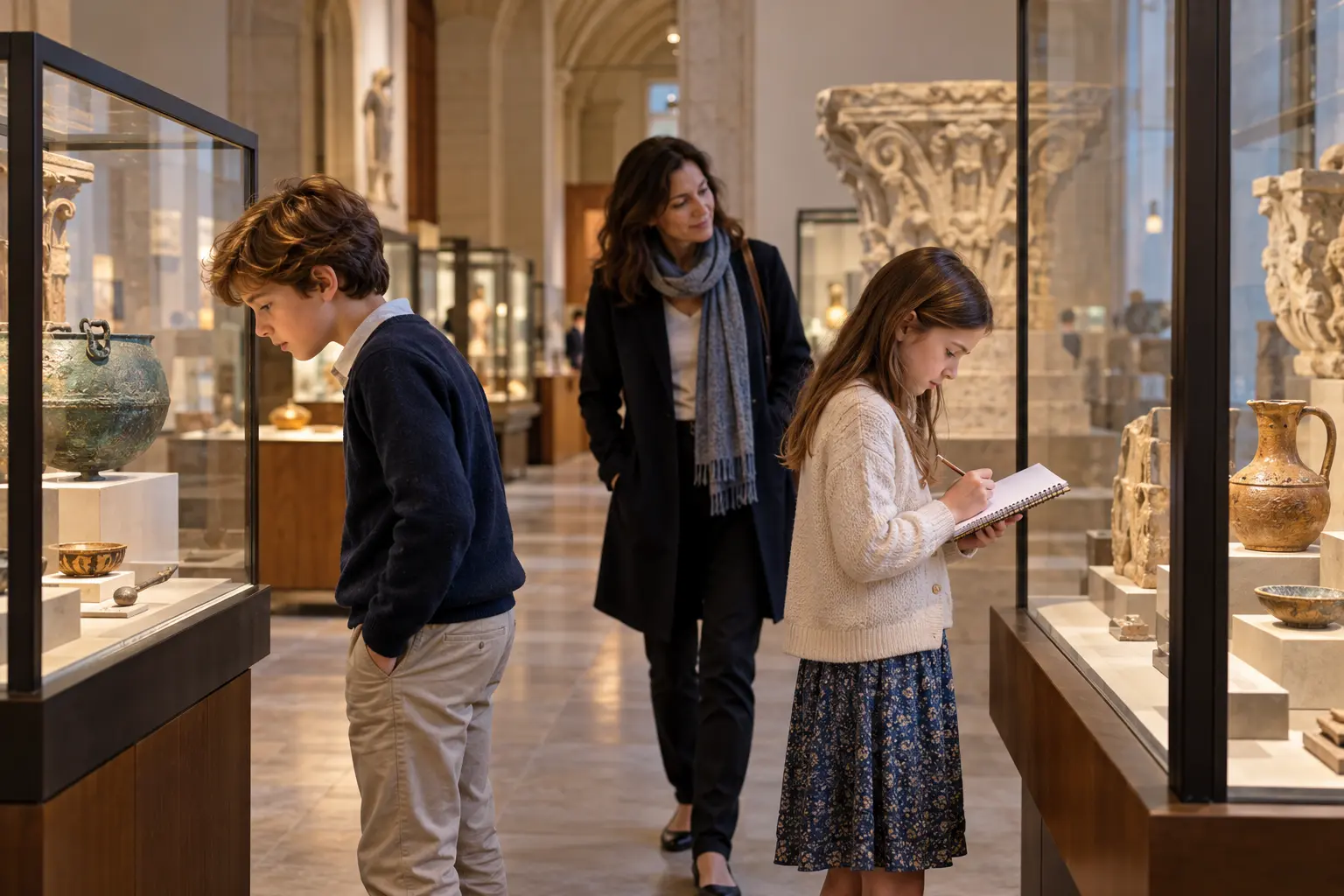
Give siblings permission to try different approaches during the same visit. One might choose a comparison while another prefers to sketch a detail, and a parent can join either activity without ranking the results. Explain the museum's rules before beginning, including where drawing or photography is permitted and why objects must remain untouched. Small choices within those boundaries make the exploration easier to share without asking every child to express interest in the same way.
Three ways to keep curiosity alive afterward
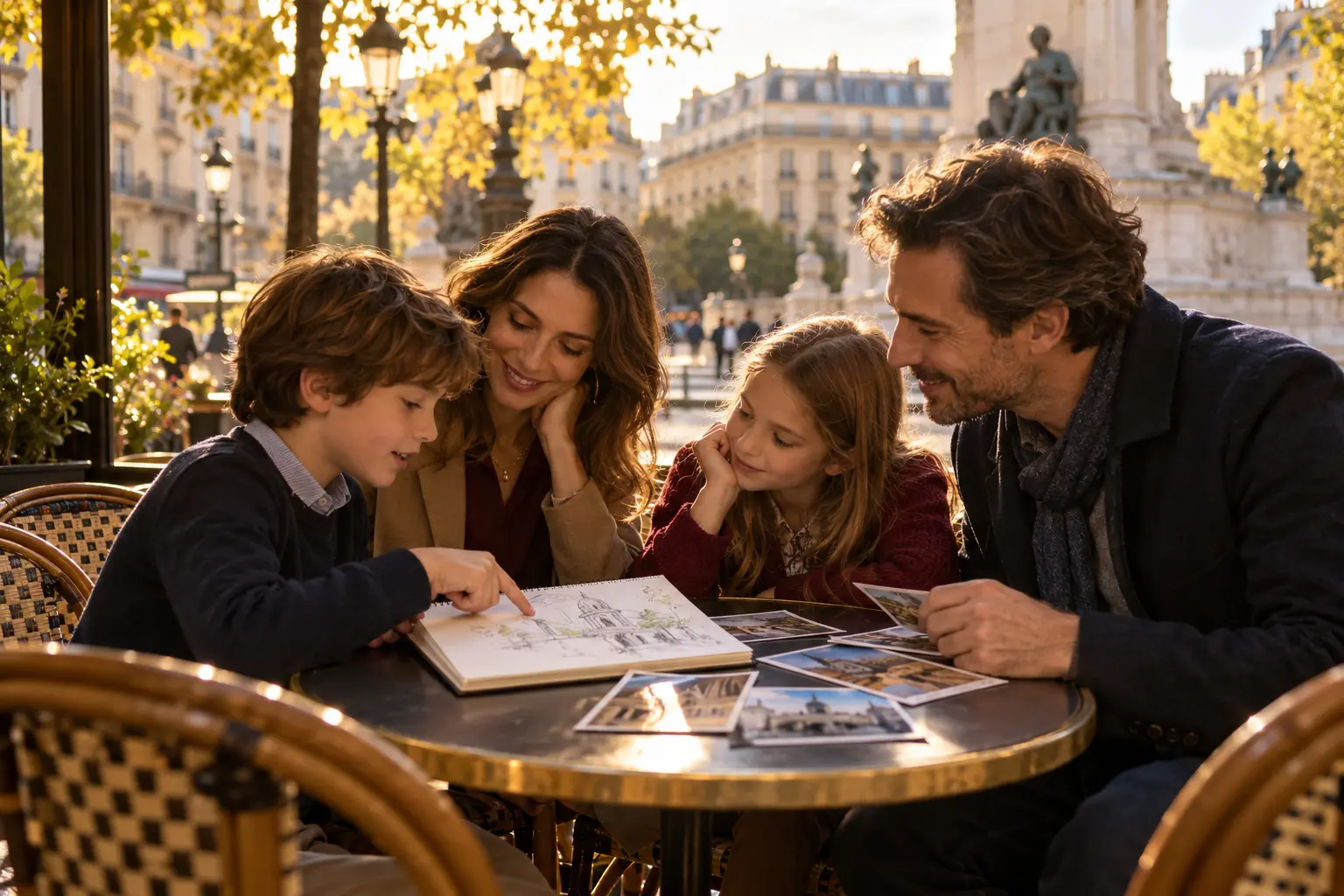
Eighth, give the visit an ending while there is still something your child would like to discuss. Ninth, return to one observation over a meal or a relaxed walk instead of asking for a complete recap. Tenth, let your child keep a small record, whether that means a drawing, a sentence, or a photograph where photography is permitted. These simple choices leave a thread to pick up again without asking the child to prove that the outing was worthwhile.
Use Paris, your playground to understand how an experience fits into the geography of the rest of your day. Nearby discoveries and a comfortable break may be more useful than crossing the city for another ambitious stop. Our guide to Paris with kids offers further ideas when you need a different setting for the same curiosity. Treat these ten approaches as options to adapt, rather than a series of tasks every family must complete.
The most revealing moment may arrive when your child notices a detail you would have walked past. Give that observation enough time to become a conversation. You can add historical context gradually, checking facts as the questions become more specific. Paris starts to feel like a place children can explore when their own attention helps decide which stories come into view.