Best Things to Do in Paris for History Lovers
Paris rewards historical curiosity because the city never belongs to a single century. Roman traces, medieval institutions, revolutionary memory, imperial monuments, and modern boulevards occupy the same map. The richest visit connects surviving evidence to the forces that changed or erased what came before. History here is not a backdrop; it is a way of reading the city.

A history lover can spend weeks in Paris and still encounter only a fraction of its archives, buildings, collections, and contested memories. The solution is not to assemble the longest possible list, but to choose a period or question and follow it across different kinds of evidence. A medieval hall, a city museum, a street alignment, and a personal testimony reveal different parts of the same story. When they are placed in dialogue, Paris becomes more than a sequence of beautiful monuments.
Read Île de la Cité as a place of power
Île de la Cité concentrates religious, royal, judicial, and civic history within a walkable area. Sainte-Chapelle was built within the medieval royal palace, while the Conciergerie preserves major halls from that complex and later became closely associated with imprisonment during the French Revolution. Notre-Dame adds another long history of worship, construction, alteration, damage, restoration, and national symbolism. Immmersiv’s Île de la Cité guide helps connect these institutions to the streets and river crossings that shaped their authority.
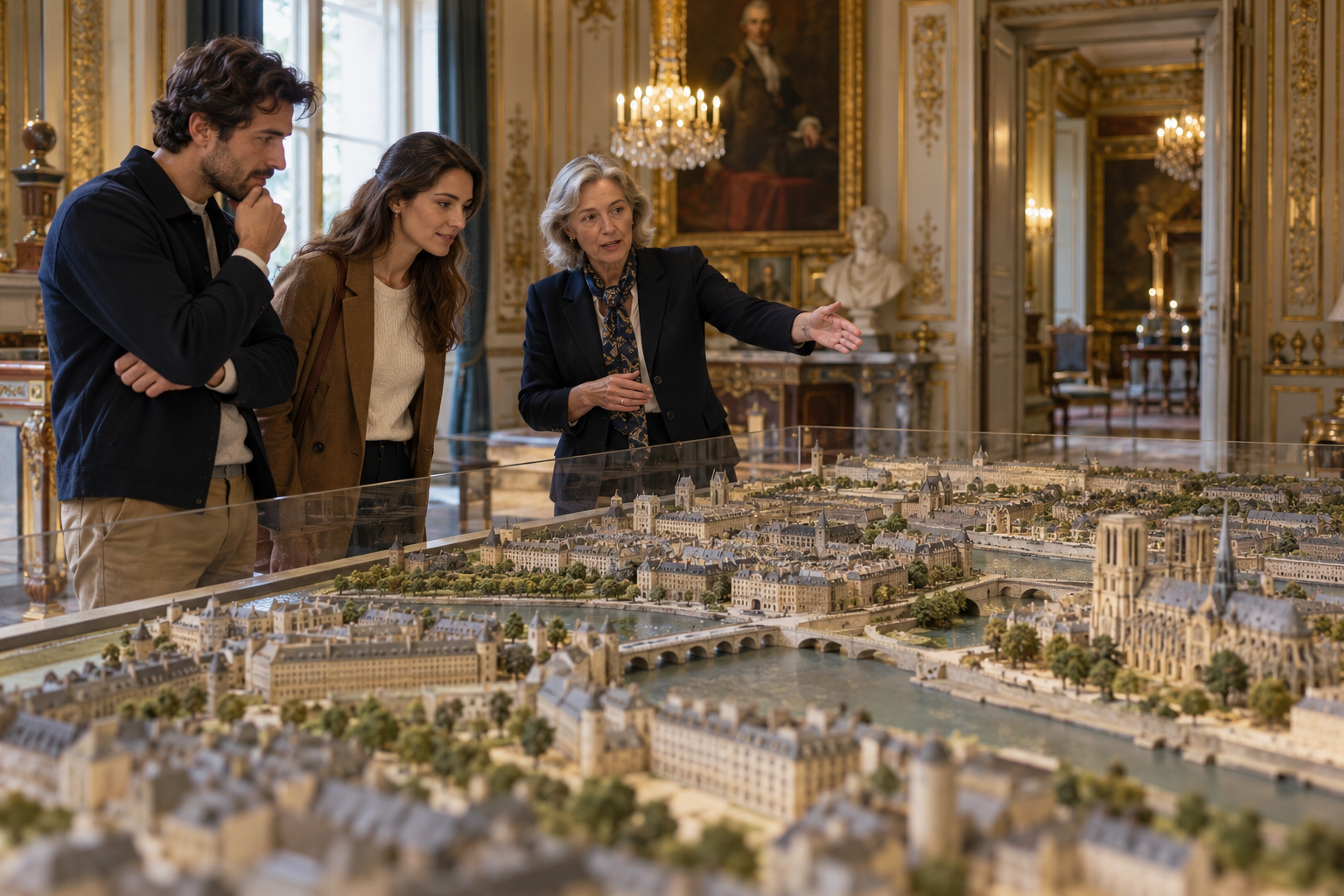
Use the Musée Carnavalet as a city archive
The Musée Carnavalet’s collections trace the history of Paris from archaeology through later political, social, and cultural change. Its strength lies in the relationship among objects, decorative interiors, signs, paintings, and records of urban life rather than in a single universal masterpiece. Visit with a question—how Parisians lived, how revolution transformed public space, or how the city represented itself—and the collection becomes easier to navigate. Because galleries and display conditions may change, consult the museum’s official information before building a detailed route around a specific object.
Follow Napoleon through evidence and debate
Napoleonic Paris should not be reduced to triumphal architecture or a simple legend of genius. The Arc de Triomphe expresses military commemoration, the Musée de l’Armée holds major collections connected to the period, and the city preserves administrative and monumental consequences of imperial rule. Immmersiv’s Arc de Triomphe guide and Napoleon encounter page offer two different ways to frame that legacy without claiming that interpretation replaces documentary evidence. Ask what a monument celebrates, what it omits, and how later generations changed its meaning.
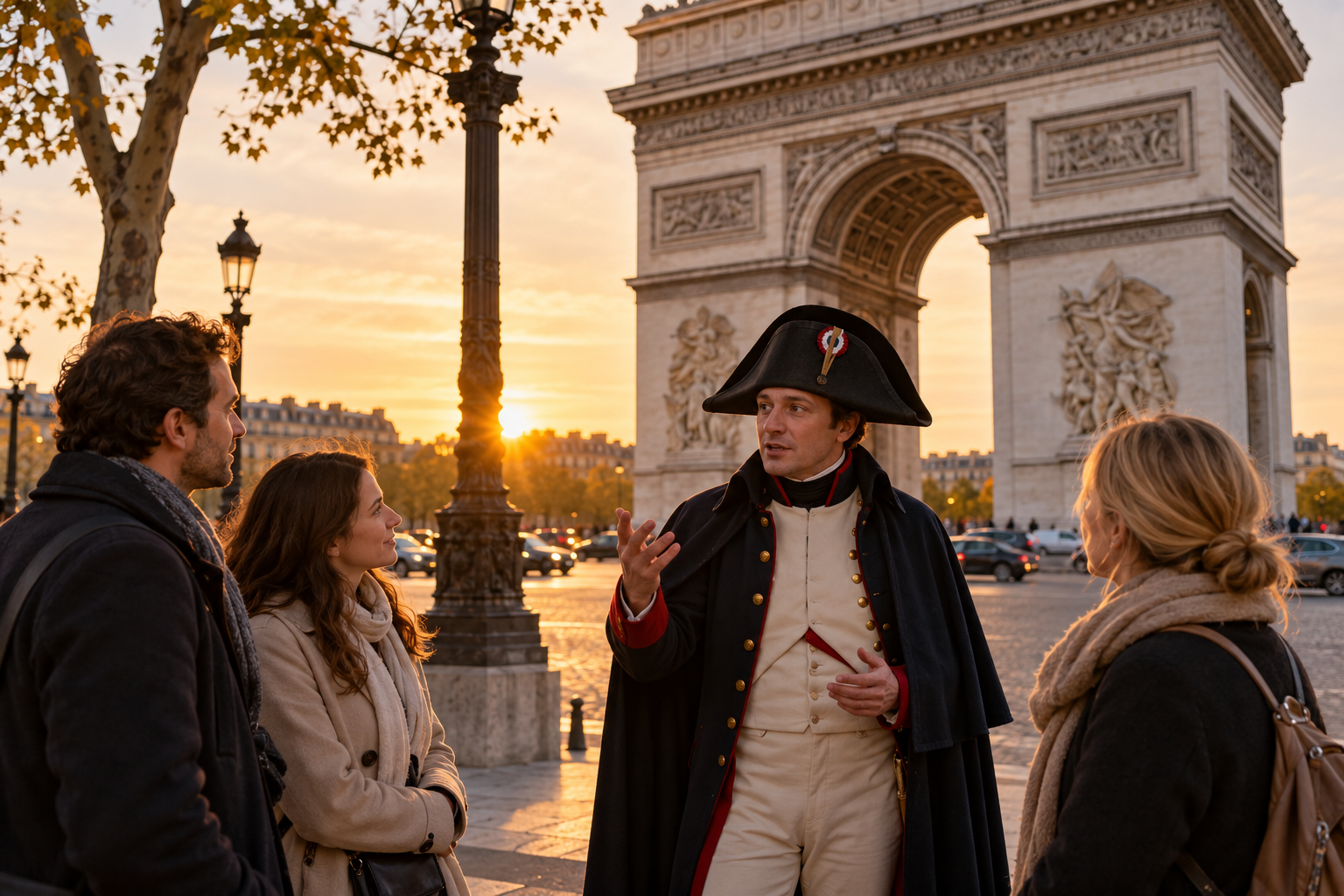
Compare the archive with the living street
Haussmann-era boulevards, surviving medieval lanes, reused religious buildings, and changing street names show that urban history is also a history of selection and disappearance. Carry an old map or study one before a walk, then notice where the present street confirms or contradicts it. Immmersiv’s historical characters can provide a personal entry point, while the encounter guide explains how live interpretation should distinguish fact, perspective, and dramatic framing. The most revealing moment may be the gap between an authoritative plan and the stubborn trace that survived it.
The best things to do in Paris for history lovers move between scale and intimacy. A monumental arch explains public memory, a museum object preserves private life, and a street corner exposes the city’s uneven layers. Choose a coherent thread, verify sensitive claims, and allow different sources to challenge one another. Paris then becomes not a frozen capital of the past, but an argument among centuries that is still visible today.
Sources checked
Discover an Immmersiv Experience
For an artistic story connected with a neighborhood, explore The Impressionists of Montmartre. A professional actor offers a present-day theatrical interpretation of Père Tanguy and the artistic world around him. Confirm current language, age suitability, walking and standing requirements, accessibility, and availability before choosing the encounter. Its booking conditions are separate from museum admission or transport, with dramatic dialogue understood as interpretation rather than original historical testimony.