What Was Paris Like Before the French Revolution?
The Paris before 1789 is often introduced as a glittering royal world waiting for its dramatic ending. That image leaves too much of the city outside the frame. Publishing, work, institutions, and unequal circumstances offer other ways to approach the period. Read the evidence without assuming every person already knew a revolution was coming, and the city becomes a place of competing interests rather than the first scene of an inevitable conclusion.
Royal government formed one setting among several
The court and headquarters of government had moved to Versailles in 1682, while Paris remained the official capital. That arrangement is useful background, but it does not describe every Parisian's daily life. A royal institution, a street of workshops, and a place of reading each require different evidence. Our guide to French history before a Paris visit helps keep the political framework distinct from an imagined experience shared by everyone.
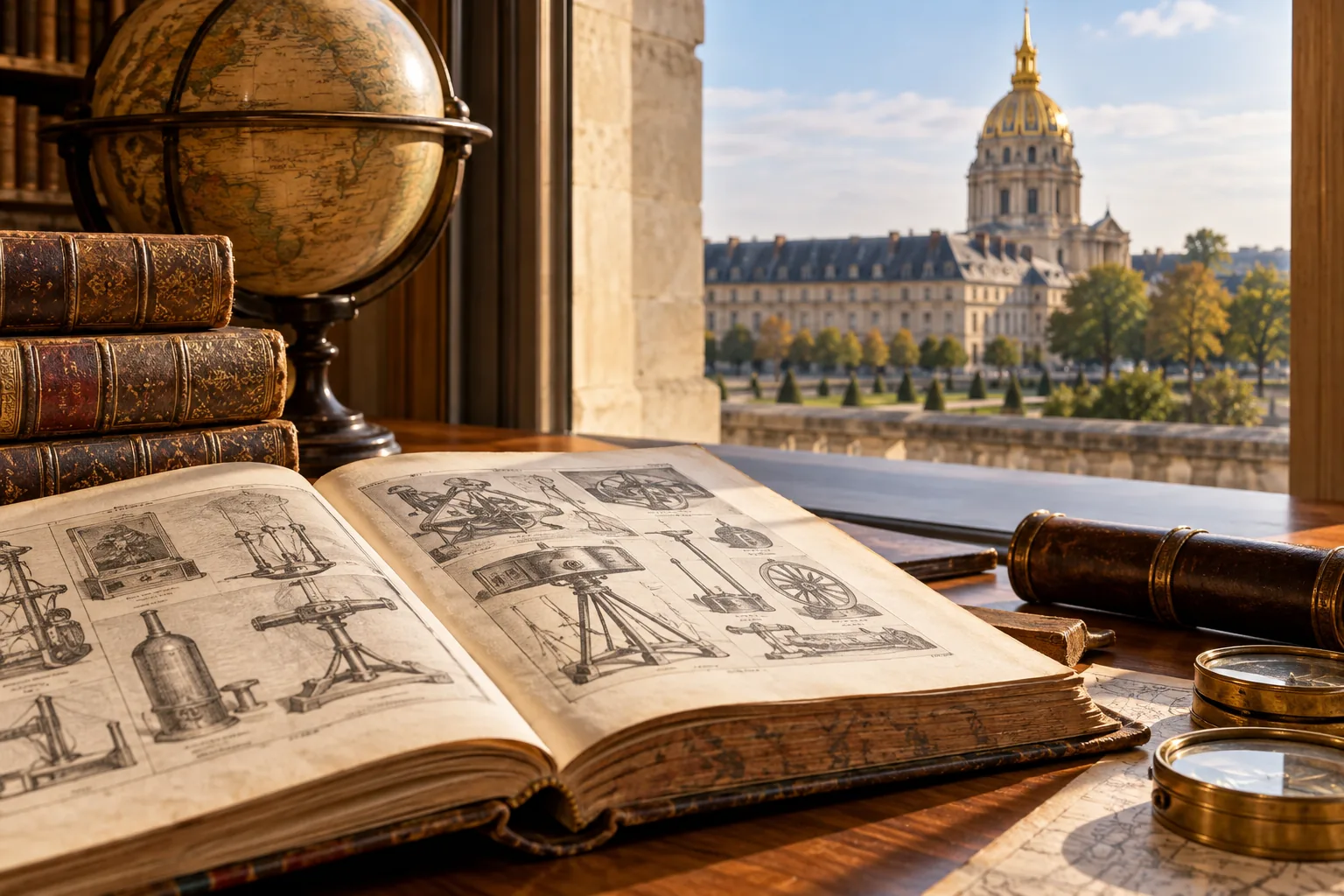
Invalides illustrates an institution created under Louis XIV with military and medical functions that continued beyond his reign. Its original purpose included accommodation and care for soldiers rather than the later museum identity familiar to tourists. The example shows why a building's current role cannot simply be projected into the eighteenth century. Check the institution's historical explanation before deciding what kind of activity the setting represents for your visit.
Publishing and work open different questions about the city
The first volume of Diderot and d'Alembert's Encyclopédie appeared in 1751, according to the BnF's historical account. The project brought knowledge about sciences, arts, and trades into an ambitious printed form. Its publication also met opposition, including a royal prohibition affecting the first volumes in 1752. This is evidence of a contested publishing enterprise, not proof that every resident read the work or shared a single enlightened viewpoint.
A document or printed image can help investigate how knowledge and work were represented. Read its date, purpose, and intended audience rather than assume it gives an unfiltered view of the street. Our guide to checking historical narratives offers a method for separating what a source says from what a later storyteller infers. A compelling image needs context before it becomes a claim about the lives of an entire city.
The Réveillon riots in April 1789 provide a documented example of tensions around wages and inequality before the Bastille was taken. The city's historical route describes workers protesting after reports that the wallpaper manufacturer wanted to reduce pay. Keep the reported proposal distinct from a verified decision, as the institutional account itself frames the claim cautiously. This episode shows why the months before the Revolution deserve attention beyond the royal court alone.
Let present-day visits make the contrasts visible
A focused museum visit can bring objects and images into the question of how eighteenth-century Paris represented power and daily activity. Our guide to Paris for history lovers helps choose a theme instead of seeking a complete reconstruction of the period. Check current collections and labels for the actual origin and date of what you see. A luxurious object is evidence of a particular use or owner, not a reason to describe the whole population as living in luxury.
Explore the Immmersiv character themes and read the performance format if a portrayed biography connects with your question. Use the map to identify when the encounter requires a separate Versailles outing. A professional actor's interpretation can approach an individual perspective without speaking for every person before 1789. Confirm the selected experience's suitability, language, availability, and practical conditions before choosing it.
Paris before the French Revolution becomes richer when the royal frame is joined by publishing, institutions, and documented working tensions. Read those settings on their own terms rather than only as signs of an ending that later historians already know. Keep the source's claims and limits visible as you explore. The period can then introduce a city of unequal and competing circumstances, with questions that remain worth pursuing beyond one dramatic event.
Discover an Immmersiv Experience
For an individual royal perspective on a separate trip, investigate Marie Antoinette, Rebel Queen, with a professional actor embodying Marie-Antoinette. The encounter takes place in Versailles and should not be presented as a complete account of pre-revolutionary Paris. Read the actual premise without assuming palace admission is included. Confirm suitability, language, availability, travel, and practical arrangements before booking.