Eiffel’s Wind Tunnel: The Paris Story beyond the Tower
The Eiffel Tower makes you look up, but one of Gustave Eiffel’s other achievements asks you to look at something invisible. Air moving around an object became a problem he could test, measure, and return to. His experiments eventually led away from the landmark to a laboratory in Auteuil. Follow that change of setting and you meet an engineer whose curiosity continued long after the tower had made his name famous.
A landmark becomes an experimental tool
In the early 1900s, Eiffel used the tower’s height to study resistance to moving through air. Objects traveled down a vertical cable while attached instruments recorded their behavior. The familiar monument became part of the apparatus, giving the experiments a scale that an ordinary room could not provide. Beside the panoramic story in our Eiffel Tower guide, this is another way to understand what the structure made possible.
Imagine the difference between recognizing a silhouette and asking what people actually did with it. One gives you an image to take home, while the other supplies a question worth following. That question can continue across a city even after you leave its most photographed site. Our guide to Paris beyond the Eiffel Tower starts from that same pleasure in discovering a wider story.
Move the air instead of dropping the object
A laboratory at the foot of the tower followed in 1909. Here, air could move past an object held in place, replacing the brief downward journey with a more manageable experiment. Researchers could vary the airflow and take measurements without repeatedly sending a test body down a cable. It was a practical change in the way a question about movement could be investigated.
This is the idea that makes Eiffel’s wind tunnel approachable even if you have never studied aerodynamics. You can picture a shape staying in one position while air passes around it. The important drama lies in comparing results under conditions the experimenter can control. A machine that appears complicated at first becomes easier to read when you begin with the problem it was built to solve.
The work moves to Auteuil in 1912
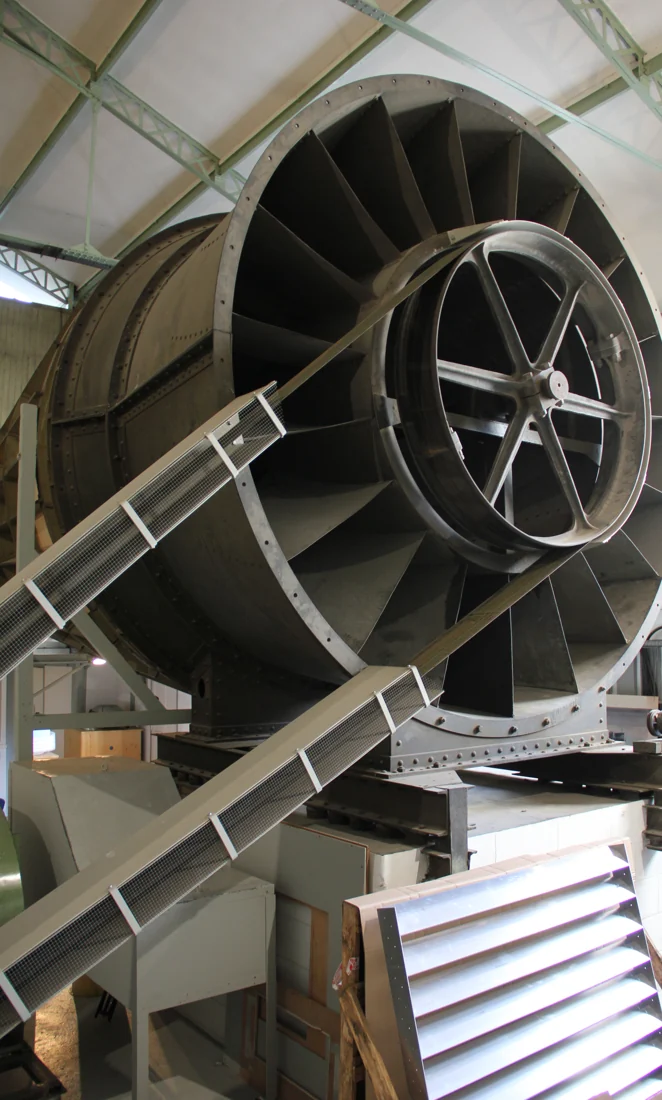
The Auteuil laboratory on rue Boileau opened in March 1912, according to the French Ministry of Culture’s heritage record. Its modest building housed a wind tunnel, an electric motor, and instruments for control and measurement. The setting moves the story away from the tower’s spectacular public image. A less famous address can preserve a substantial part of a famous person’s working life.
The laboratory’s own history emphasizes Eiffel’s contributions to aviation, particularly experiments involving wing and propeller profiles. It also records work for Peugeot on a racing car in 1915. These different uses show why it is misleading to reduce the laboratory to a machine for explaining the tower itself. The airflow became a tool for questions extending into other kinds of design, with each test requiring attention to what was actually being measured.
Learn to read the machinery as evidence
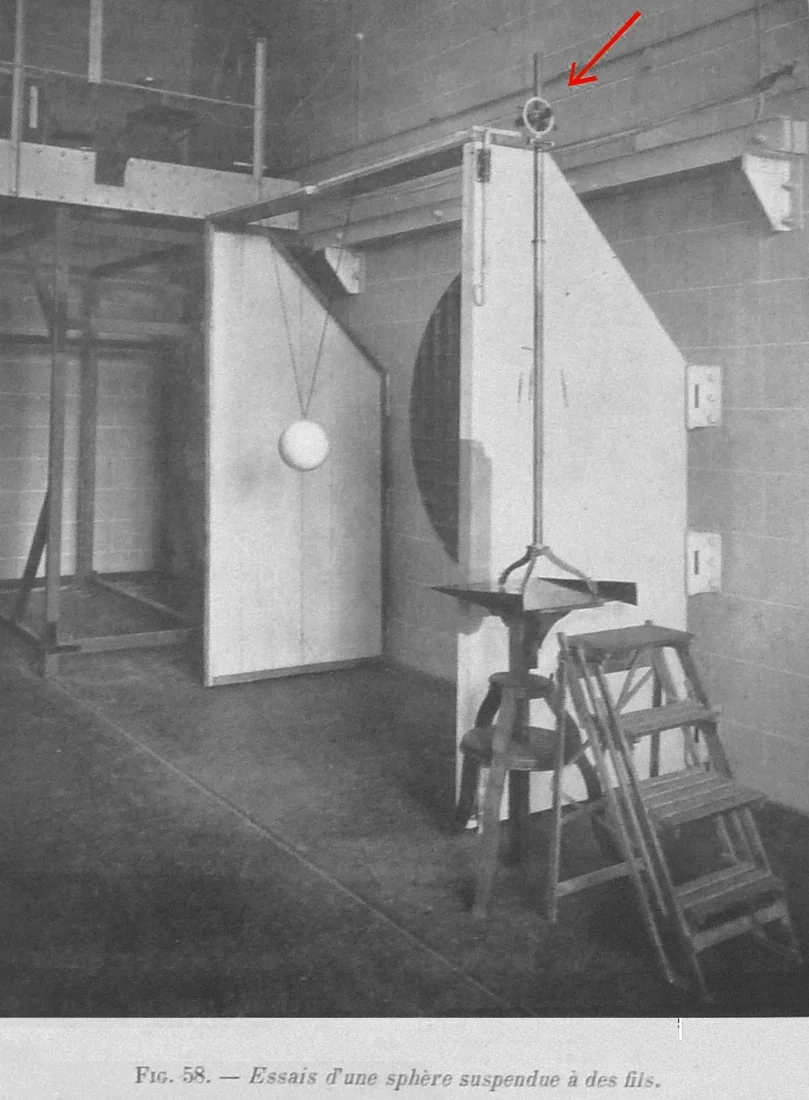
Look at the historical photograph of a sphere suspended in a test arrangement, then compare it with the larger machinery pictured here. The images show different parts of experimental work rather than a single dramatic moment of invention. Ask what holds the object, what moves, and what might register a change. That habit belongs naturally to a history lover’s approach to Paris, where an object becomes more revealing when its purpose is understood.
There is a useful distinction between an experimental apparatus and the modern tools discussed in how technology changes our experience of history. One was made to produce measurements, while the other may help interpret a story for visitors. If your curiosity turns toward another nineteenth-century world, Montmartre offers the workshops and relationships of artistic Paris. The Père Tanguy experience, performed by a professional actor, follows that separate story; Eiffel’s laboratory leaves you with a different invitation, to look for the question hidden inside a machine.
Discover an Immmersiv Experience
Explore The Impressionists of Montmartre with a professional actor embodying Père Tanguy. This article provides background for your curiosity. It does not promise stops or access beyond the published experience route. Consult the current experience page for its route and practical details.