How Technology Is Changing the Way We Experience History
Technology can return vanished streets to view, place a fragile object in a wider context, and let visitors hear competing voices across a historic space. It can also create confidence without evidence, especially when a polished reconstruction hides every uncertainty. The most useful digital tools do not replace historical sources. They make relationships visible and give visitors better questions to ask of the surviving record.
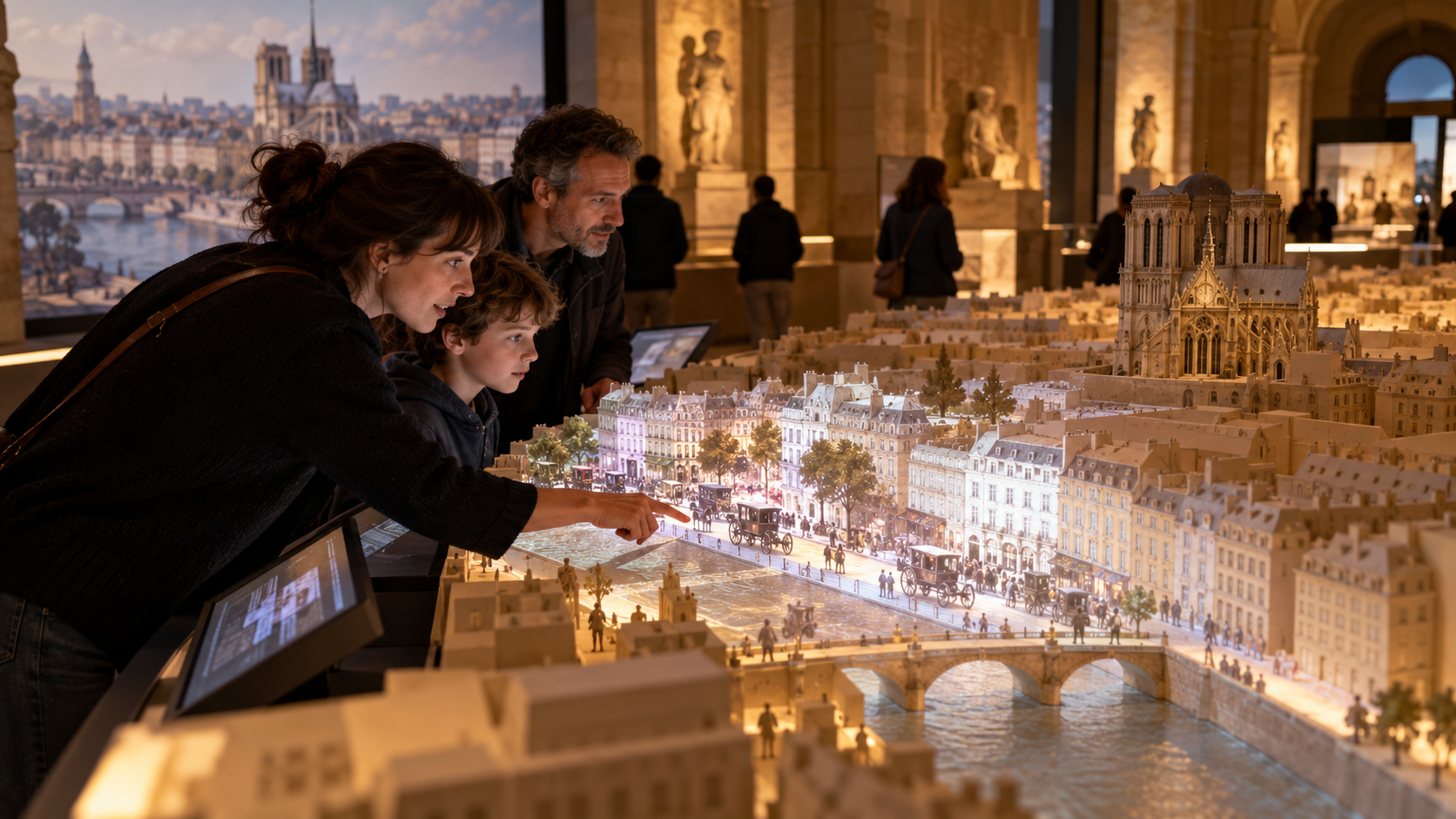
Reconstruction can reveal what the present city hides
Digital models can show earlier street plans, lost buildings, construction phases, or the movement of people through a space. Their strength is relational: visitors can compare then and now without relying on imagination alone. Every reconstruction should indicate where evidence is strong and where designers have made plausible choices. Visual precision must not be mistaken for historical certainty.
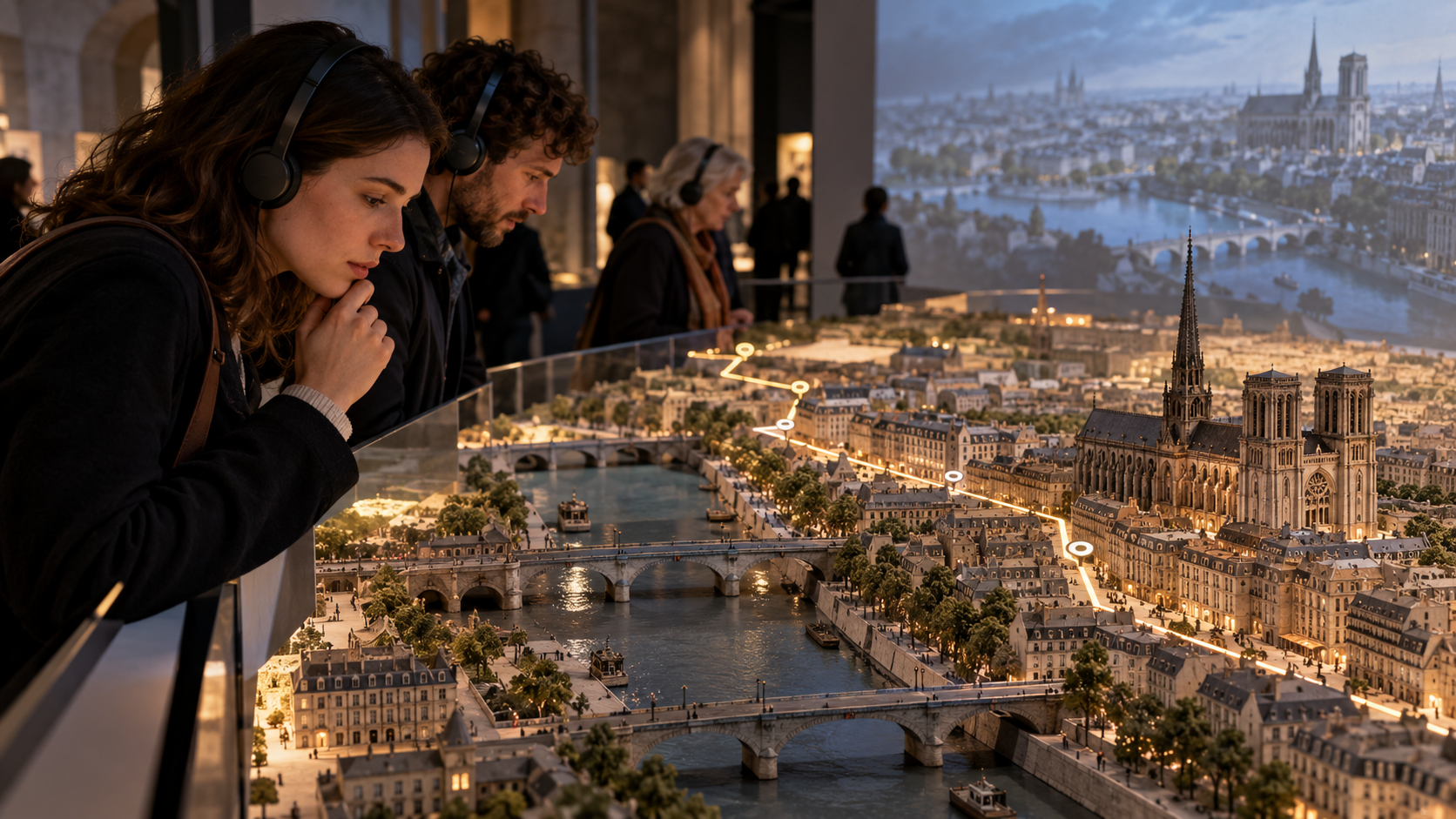
Sound can organize attention across time and space
Spatial audio can separate public speeches, domestic sounds, machinery, or personal testimony so visitors understand that history occurred through overlapping environments. It can guide the eye toward architecture without requiring another glowing screen. Designers still need to identify whether a voice is quoted, adapted, translated, or newly written. Transparent authorship protects the difference between archive and performance.
Interaction can turn visitors into careful decision-makers
An interactive map or model can let visitors test routes, compare evidence, or see consequences unfold across geography. The best interaction asks for interpretation rather than rewarding speed or collecting points. It should remain usable for visitors with different physical, sensory, and cognitive needs. Technology succeeds when it reduces barriers and clarifies complexity instead of displaying novelty.
Human interpretation remains essential
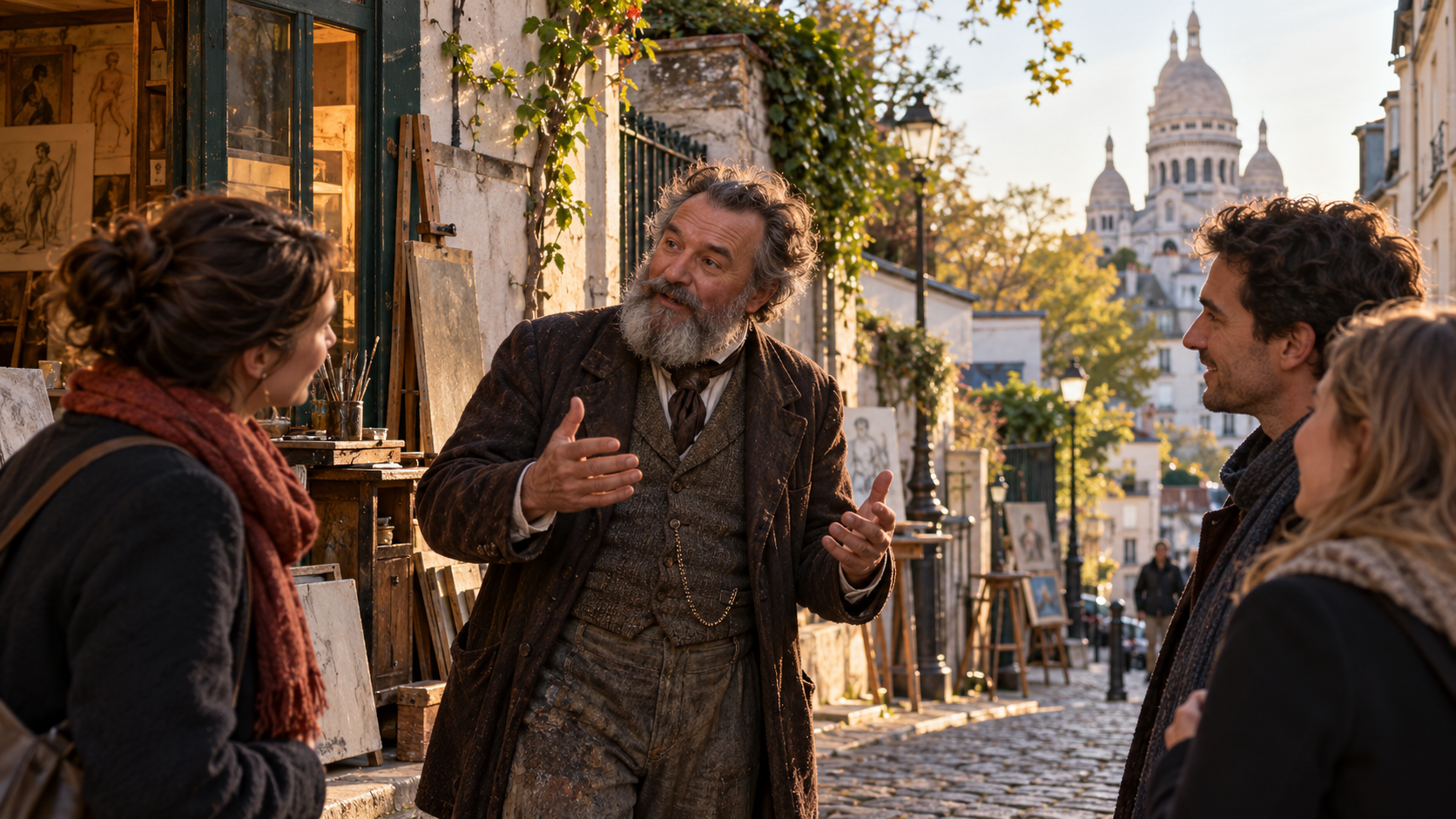
A professional actor embodying Père Tanguy can explain how artists, dealers, materials, money, and friendship shaped Montmartre’s creative networks. A digital map might visualize those connections, while the performer gives them rhythm and invites questions. Neither tool should invent undocumented private scenes to make the story more dramatic. Human judgment is still required to distinguish fact, inference, and legend.
Technology changes historical experience most profoundly when it makes evidence easier to inspect, compare, and remember. It should expose uncertainty rather than erase it and support place rather than overwhelm it. Before trusting a digital reconstruction, ask who created it, which sources informed it, and how speculative elements are marked. The future of history is not less human; it depends on more visible collaboration between historians, designers, performers, and visitors.
A useful digital interpretation should give you a question you can carry back to the evidence. Notice which relationship becomes clearer through the model, then ask what surviving object, document, or recorded observation supports it. The account may also identify an area that remains uncertain, and that uncertainty should remain part of what you remember. You can enjoy the atmosphere of a reconstruction without treating its visual completeness as a complete historical record. After the experience, compare one detail with an institutional description rather than trying to verify every image at once. The technology then becomes an invitation to investigate, with human judgment still shaping the discovery.
For the practical part of this outing, consult Paris, your playground to locate Immmersiv experiences. Browse the personalities according to the subject that interests you. Read what to expect alongside the individual experience description before booking. Confirm current language, suitability, walking requirements, access needs, and availability for your own group.
Continue the story with Immmersiv
In Montmartre, The Impressionists of Montmartre features a professional actor embodying Père Tanguy and turns artistic networks into a live, question-led story. On the Île de la Cité, The Dark Legends of Paris features a professional actor embodying Edgar Allan Poe while separating literary atmosphere from historical evidence. Each encounter centers human interpretation rather than technological novelty. Confirm date, language, route, and current practical details before planning.