Best Things to Do in Paris Beyond the Eiffel Tower
Paris becomes more personal when you stop treating one monument as the center of the trip. The city’s quieter rewards live in neighborhoods, small museums, covered passages, performances, and the stories attached to ordinary streets. They are not consolation prizes after the famous sights. They are how the capital begins to feel like a place rather than an image.
The Eiffel Tower deserves its place in a first Paris itinerary, but it does not need to dominate every day. A more satisfying plan uses the monument as one chapter and then follows the city outward through districts with their own pace, architecture, and memory. This approach is especially useful for travelers who want to understand why Paris feels different from one arrondissement to the next. Instead of collecting distant attractions, you build a day around one area and let museums, cafés, streets, and stories reinforce each other.
Trade a monument checklist for a neighborhood story
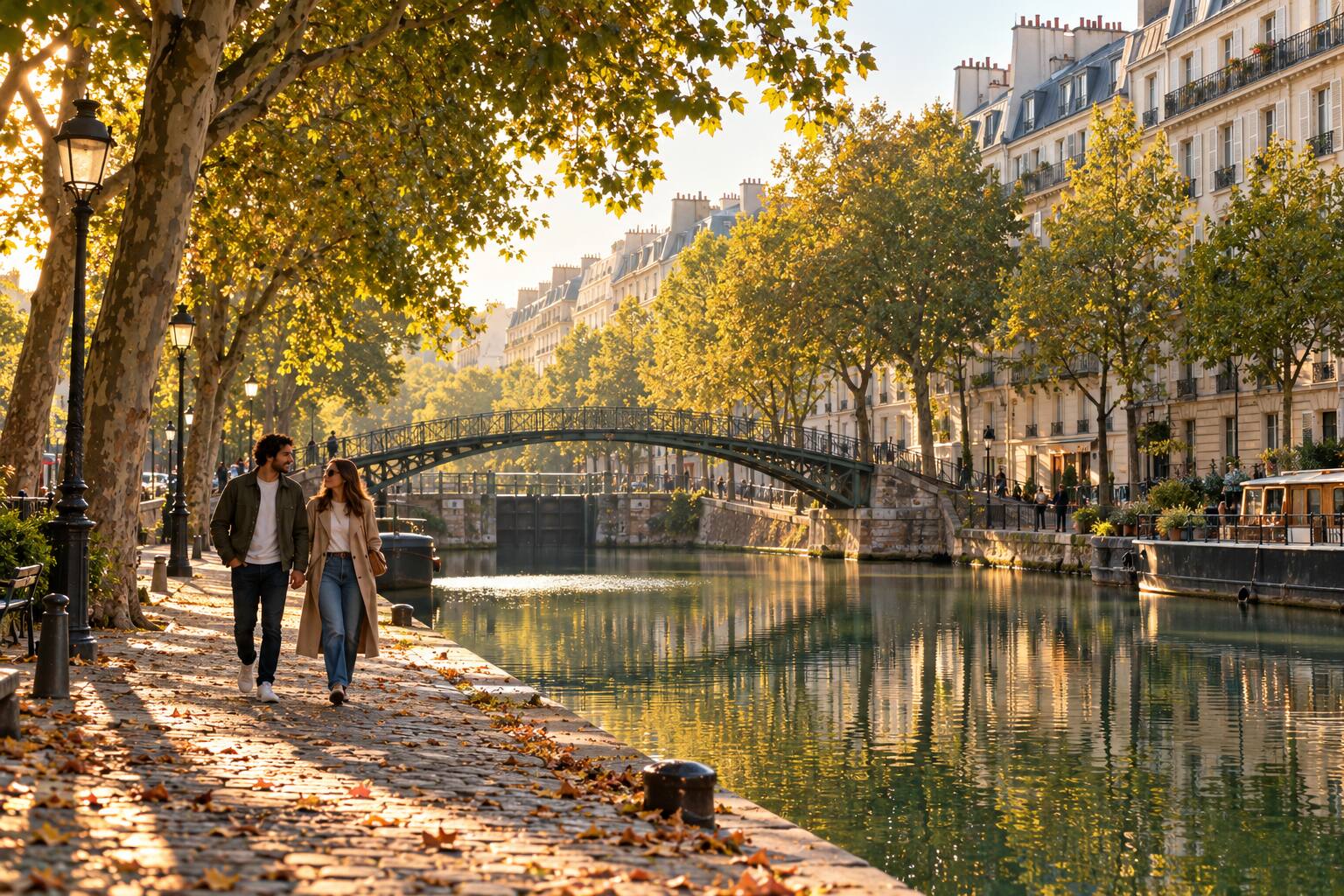
Begin with a district that has a clear identity rather than a list of isolated pins. Canal Saint-Martin offers water, iron footbridges, local shops, and a relaxed walking rhythm, while the Latin Quarter layers Roman traces, medieval institutions, book culture, and student life within a compact area. The official Paris tourism office highlights several less familiar districts for exactly this reason: Belleville, the Butte-aux-Cailles, and the Mouzaïa reveal forms of Paris that large monuments cannot contain. Use the Paris planning map to choose one zone, then give it enough time for detours instead of racing across the city.
Read the city through passages, courtyards, and smaller museums
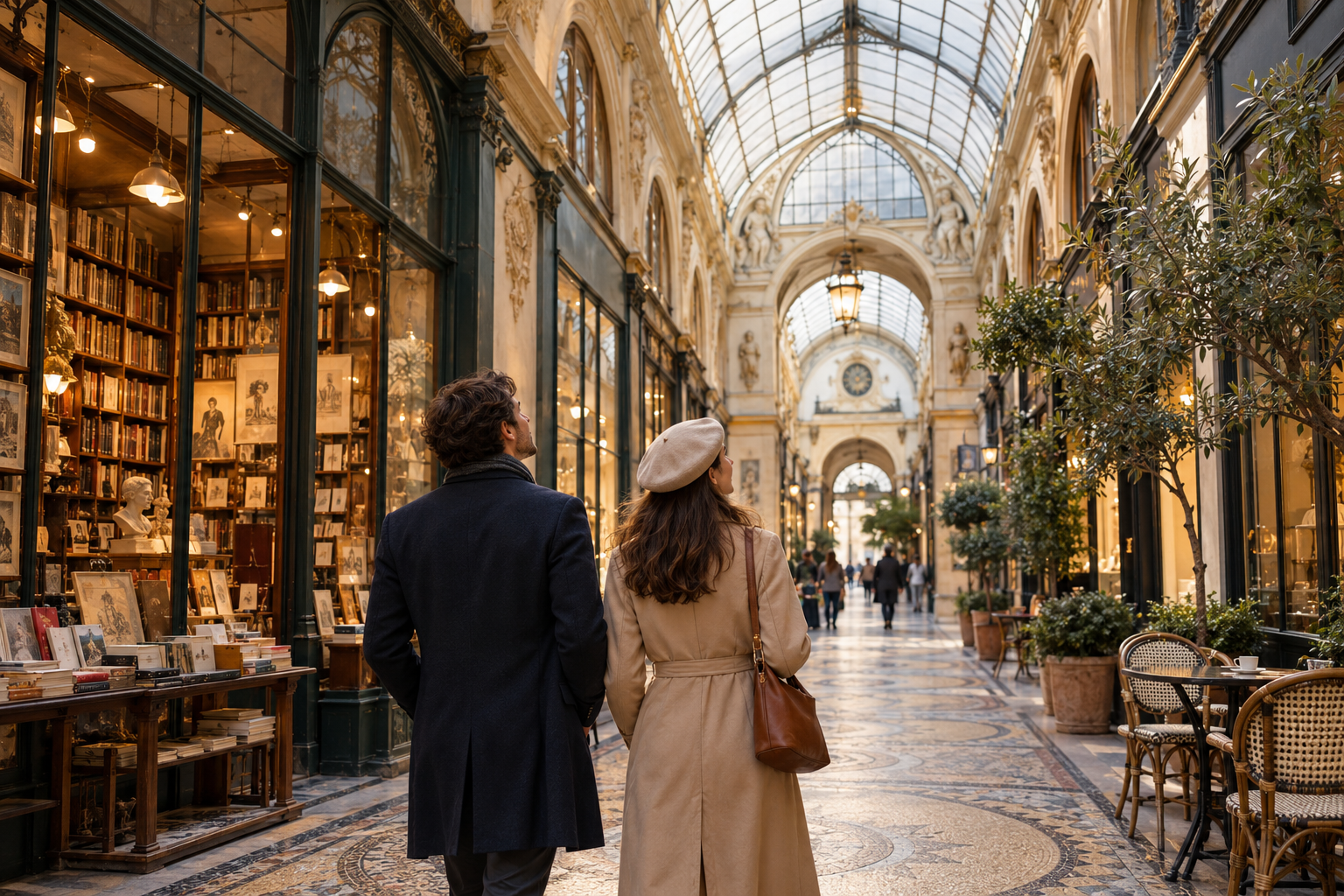
The covered passages of the Right Bank compress nineteenth-century urban life into glass roofs, mosaic floors, bookshops, and narrow sightlines. In the Marais, the Musée Carnavalet places the history of Paris inside two historic mansions, making it a natural companion to the streets outside rather than a separate cultural obligation. The Musée de la Vie romantique offers another scale entirely, with collections linked to nineteenth-century artistic life in a house and garden associated with the Nouvelle Athènes district. These places work best when you leave room before and after the visit, because their details become legible again in the façades, shopfronts, and courtyards nearby.
Choose one living cultural encounter
Paris is not only a city that preserves culture; it is a city where culture still happens in front of an audience. A self-guided visit to the Palais Garnier can reveal the architecture of nineteenth-century theater, while an evening performance shows how the building changes when it resumes its original purpose. A character-led encounter offers a different form of access by connecting a personality to streets and landmarks through live storytelling rather than a conventional lecture. Browse Immmersiv’s historical personalities and its guide to live encounters to decide whether conversation, performance, or a more independent visit suits your travelers.
End with a place that lets the day settle
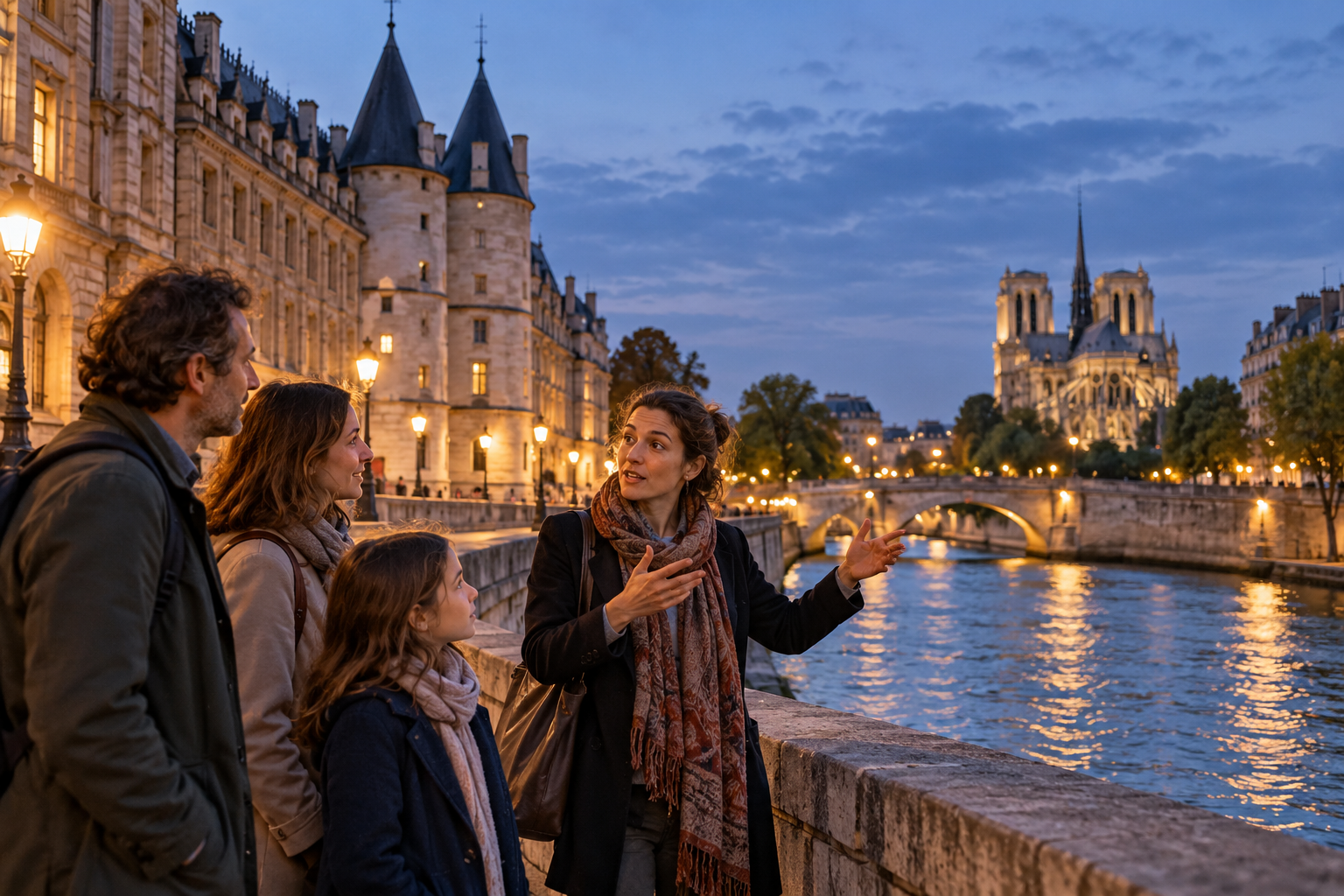
The final hours of a Paris day do not need another timed admission. On Île de la Cité, the Conciergerie and Sainte-Chapelle reveal very different aspects of the medieval royal palace, but the riverbanks afterward provide the pause that helps those histories connect to the modern city. Elsewhere, a garden chair, a canal quay, or a café terrace can perform the same function when it belongs naturally to the route. The goal is not to avoid famous Paris but to create contrast, so that grand monuments, lived neighborhoods, intimate collections, and human stories each retain their own weight.
A day beyond the Eiffel Tower succeeds when it feels coherent rather than obscure. Choose a neighborhood, one cultural anchor, one live or interpretive experience, and enough unplanned space to notice the city between them. That structure works for first-time visitors and repeat travelers because it replaces the pressure to “do Paris” with a more realistic invitation to understand one part of it. You may take fewer photographs, but you will return with a stronger sense of where you actually were.
Sources checked
Discover an Immmersiv Experience
For an artistic story connected with a neighborhood, explore The Impressionists of Montmartre. A professional actor offers a present-day theatrical interpretation of Père Tanguy and the artistic world around him. Confirm current language, age suitability, walking and standing requirements, accessibility, and availability before choosing the encounter. Its booking conditions are separate from museum admission or transport, with dramatic dialogue understood as interpretation rather than original historical testimony.