Renoir’s Luncheon of the Boating Party: The Work behind a Relaxed Afternoon
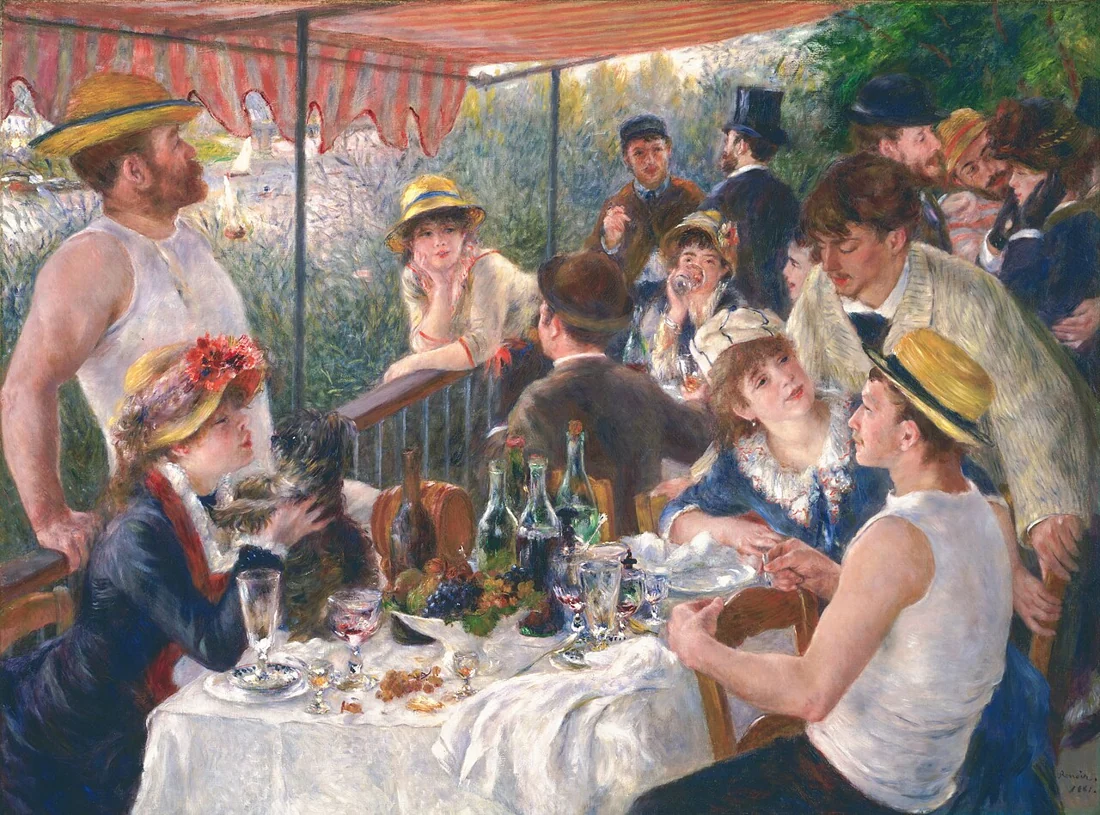
The table is crowded, the conversation seems unfinished, and a small dog receives someone’s full attention. Renoir’s Luncheon of the Boating Party makes a gathering feel almost close enough to join. But the ease you see took work to create. Follow the painting back to Chatou, then look beneath its surface, and a relaxed afternoon becomes a story about a family business, friendship, and the patient rearrangement of a picture.
A riverside business behind the balcony
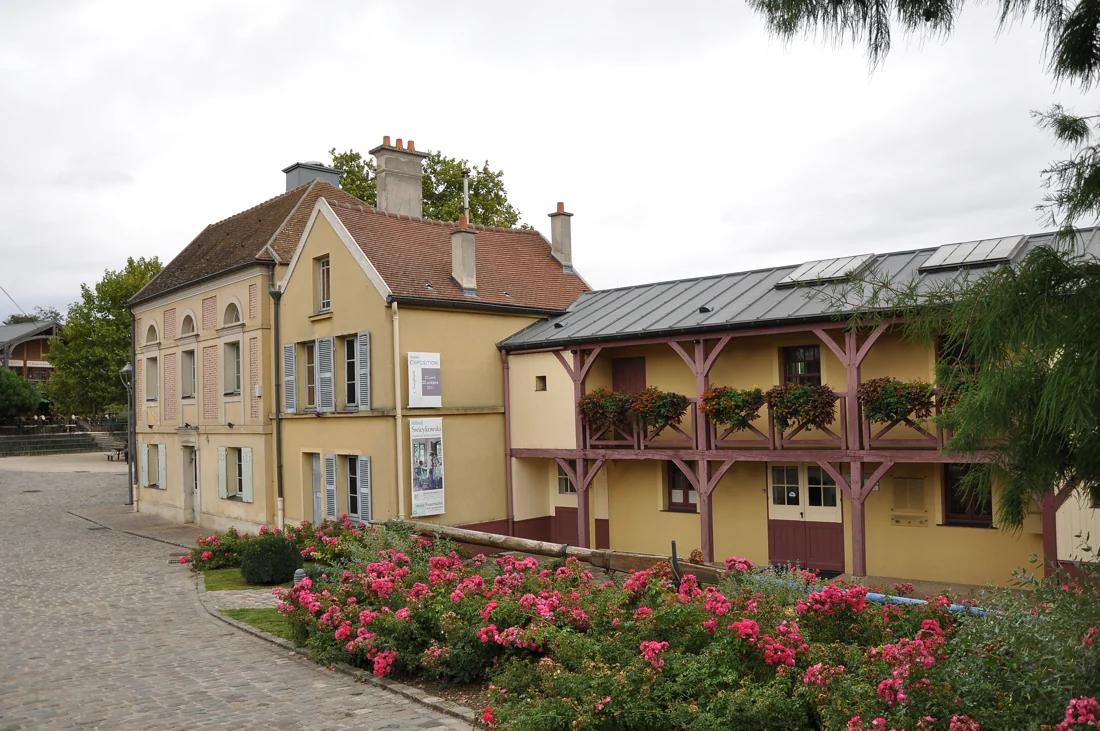
The setting belongs to the Maison Fournaise at Chatou, on the Seine outside Paris. In 1857, boatbuilder Alphonse Fournaise acquired a modest wine establishment and a boat-breaking yard there. His business grew around visitors drawn to the river, with boats to rent and a restaurant to welcome them. It was a working family enterprise before it became a place many people recognized through a painting.
The family shared the practical tasks behind that welcome, from cooking to helping customers take to the water. That detail gives the balcony a different weight when you look again. Leisure depended on people maintaining boats, preparing food, and receiving guests. For another approach to the river as an artistic workplace, compare Monet’s studio boat at Argenteuil, where the water supports a very different kind of working day.
Meet the faces without turning them into a seating chart
The Phillips Collection dates Renoir’s canvas to 1880–81. At the left, Aline Charigot, his future wife, attends to a terrier. At the right foreground, fellow painter Gustave Caillebotte sits backward on a chair. Recognizing even those two figures changes an anonymous restaurant scene into a gathering with personal connections.
Try following their attention before trying to memorize everyone’s name. Notice how a turned head, a bent arm, or an upright glass sends your eye toward another part of the group. These are visual observations you can make without inventing what anyone said. Then compare Renoir’s treatment of sociability with the crowd at the Moulin de la Galette, where the scale and rhythm of the gathering feel different.
The changes hidden beneath the ease
Technical examination makes the seemingly effortless scene more intriguing. The Phillips Collection’s study used X-rays, infrared images, and paint cross-sections to investigate its construction. The findings show repeated revisions beneath the final arrangement. Researchers cannot establish how many people posed together at any particular sitting, so the painting should not be treated as proof of one gathering captured all at once.
That uncertainty invites you to spend longer with what Renoir actually made. Watch how separate pairs and small groups form a larger social world across the balcony. A convincing afternoon can be assembled through choices, alterations, and returns to the canvas. The distinction between an image and a transparent record also enriches a comparison with Caillebotte’s Floor Scrapers, another painting that rewards attention to arrangement as well as subject.
Carry the story from Chatou back to Paris
The building’s later history adds another layer to this scene of enjoyment. Chatou acquired the deteriorating property in 1979 and undertook restoration. The restaurant reopened in 1990, followed by the museum in 1992. Those dates remind you that the survival of an artistic setting involves later decisions and work, as well as the earlier moment a painter made memorable.
Keep Chatou distinct from Montmartre when you connect the painting to your Paris discoveries. Both can prompt questions about the people around artists, but they are different places with different stories. Immmersiv’s Père Tanguy experience in Montmartre brings an earlier artistic neighborhood into focus through a professional actor, rather than recreating Renoir’s balcony at Chatou. Read what to expect from the theatrical format, then return to the canvas with one small challenge: find the gesture that makes the whole gathering feel alive to you.
Discover an Immmersiv Experience
Explore The Impressionists of Montmartre with a professional actor embodying Père Tanguy. This article provides background for your curiosity. It does not promise stops or access beyond the published experience route. Consult the current experience page for its route and practical details.