Père Tanguy’s Paint Shop: The Story Behind Van Gogh’s Portrait
Before a painting becomes a museum favorite, someone has to supply the paint. That simple thought opens an unexpected door into the life of Julien Tanguy, the Paris shopkeeper remembered as Père Tanguy. You may recognize his face from Van Gogh’s portrait without knowing why a seller of colors mattered to an artist. Follow that question and a familiar art neighborhood becomes a story about the people who made creative work possible.
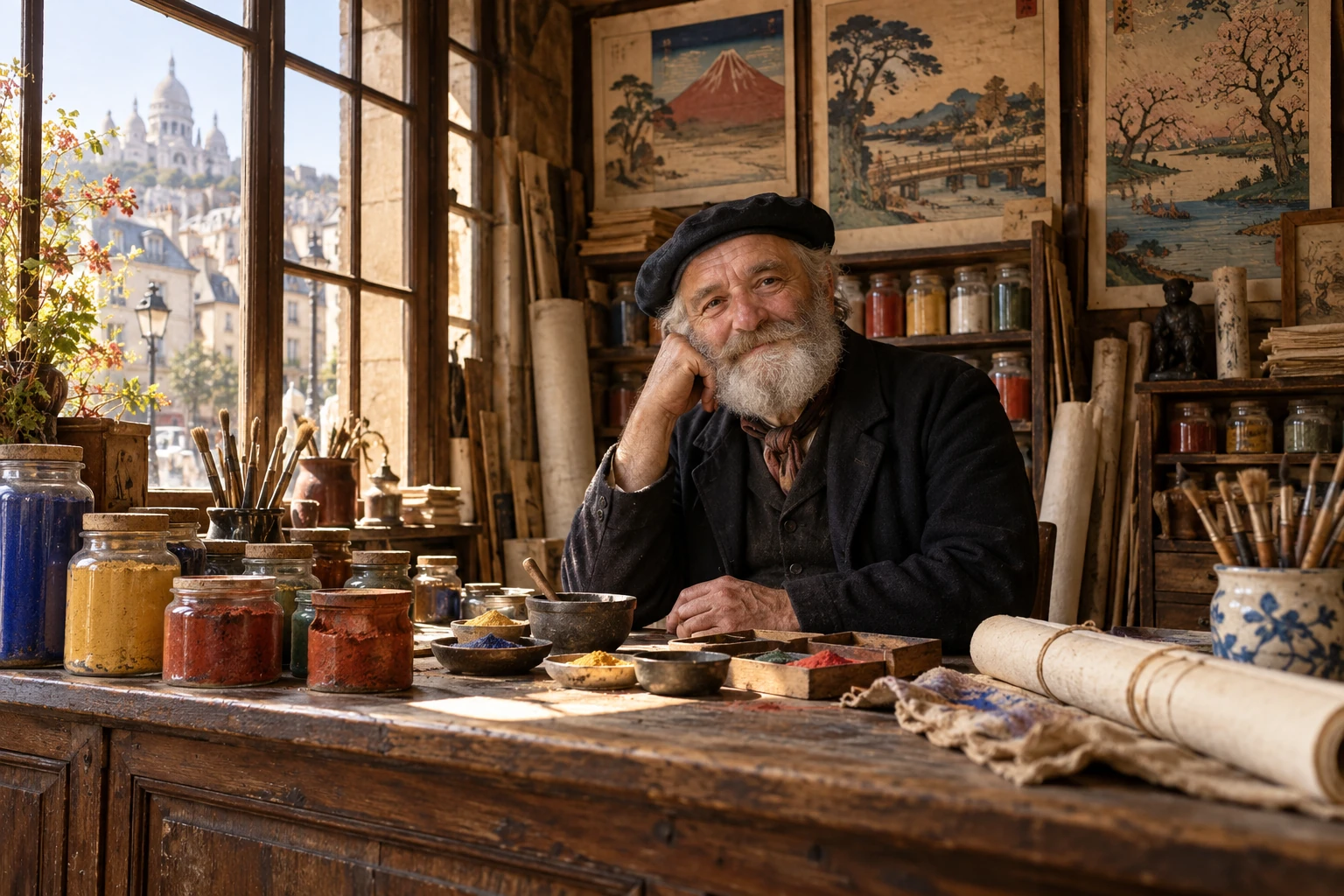
Start with the shopkeeper, not the famous painter
The Musée Rodin identifies Tanguy as a paint supplier on Rue Clauzel who sometimes took paintings in exchange for supplies. It also records Van Gogh’s friendship with him and the three portraits the artist made of him. These details bring a practical relationship into view before the later fame. They suggest a useful question for your own visit: what does an artist need from a neighborhood besides beautiful scenery?
A paint shop connects materials, money, and human contact in one small room. Think about how differently you might work if every canvas or tube represented a difficult purchase. That is a way to approach the setting, rather than a claim about a particular conversation at Tanguy’s counter. Our introduction to the artists who changed Paris provides a wider frame, while this story stays close to the overlooked person supplying the tools.
Look at the portrait as a meeting of worlds
The portrait in the Musée Rodin collection dates to 1887. Tanguy faces the viewer with his hands together, surrounded by colorful Japanese prints. The museum describes this setting as part of Van Gogh’s tribute to his friend. You can notice the contrast between the still sitter and the active background without turning either into a secret code.
Try a simple looking exercise before reading a long explanation. Choose one area where neighboring colors seem especially different, then notice where your eyes travel next. Ask a companion whether the quiet face or the surrounding patterns attract attention first. You do not need to agree, because the value lies in returning to what is actually visible rather than guessing what the artist must have felt.
Separate the collection, the street, and the encounter
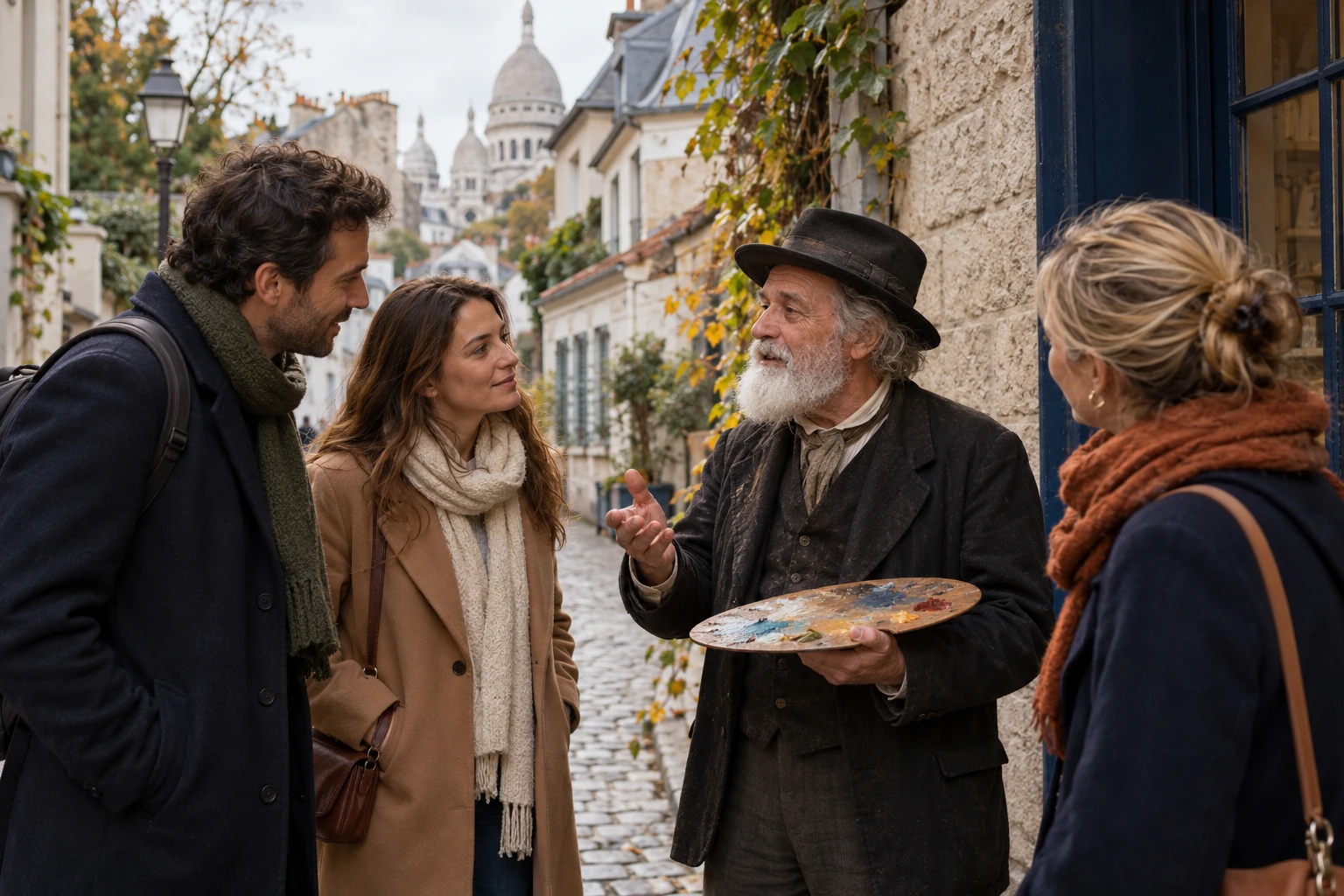
Three different experiences can grow from the same story. A museum collection lets you study an object, a street helps you think about a working environment, and a theatrical encounter offers an interpreted human perspective. None automatically provides the others. The portrait belongs to the Musée Rodin collection, but you should check the museum’s current information before building a visit around seeing it on display.
Rue Clauzel should not be confused with a promise of an intact shop you can enter. Nor should a walk through Montmartre be treated as a reconstruction of every address in an artist’s life. Our article on Montmartre’s hidden history introduces the broader neighborhood. The more specific pleasure here is learning to notice the everyday support behind a celebrated creative world.
Bring one good question to Montmartre
Instead of collecting a long list of famous names, choose a question to carry with you. Who made it easier for an unfamiliar artist to keep working? How might a supplier see a painting differently from its eventual audience? Such questions connect a small shop to the bigger story explored in Monet’s Paris and the birth of Impressionism, without suggesting that every painter followed the same path.
For an embodied continuation, explore The Impressionists of Montmartre, in which a professional actor portrays Père Tanguy. Read what to expect from the theatrical format before deciding whether it suits your companions. The encounter offers interpretation rather than recovered dialogue or proof of an undocumented event. Let that distinction keep your curiosity open: the next painting you see may lead you to wonder who helped it become possible.
Discover an Immmersiv Experience
Explore The Impressionists of Montmartre, with a professional actor embodying Père Tanguy. This is an interpreted encounter, distinct from the documents and artworks discussed above. Check the current experience page for practical information before planning your visit. Keep time afterward to compare the places you saw with the questions you brought.