Best Cultural Experiences in Paris: How to Choose
Paris offers more culture than any itinerary can absorb. The useful question is not what belongs on an ultimate list, but which format will make art, history, architecture, or performance meaningful to you. A great experience depends on how you like to pay attention. The right combination matters more than the number of venues you enter.
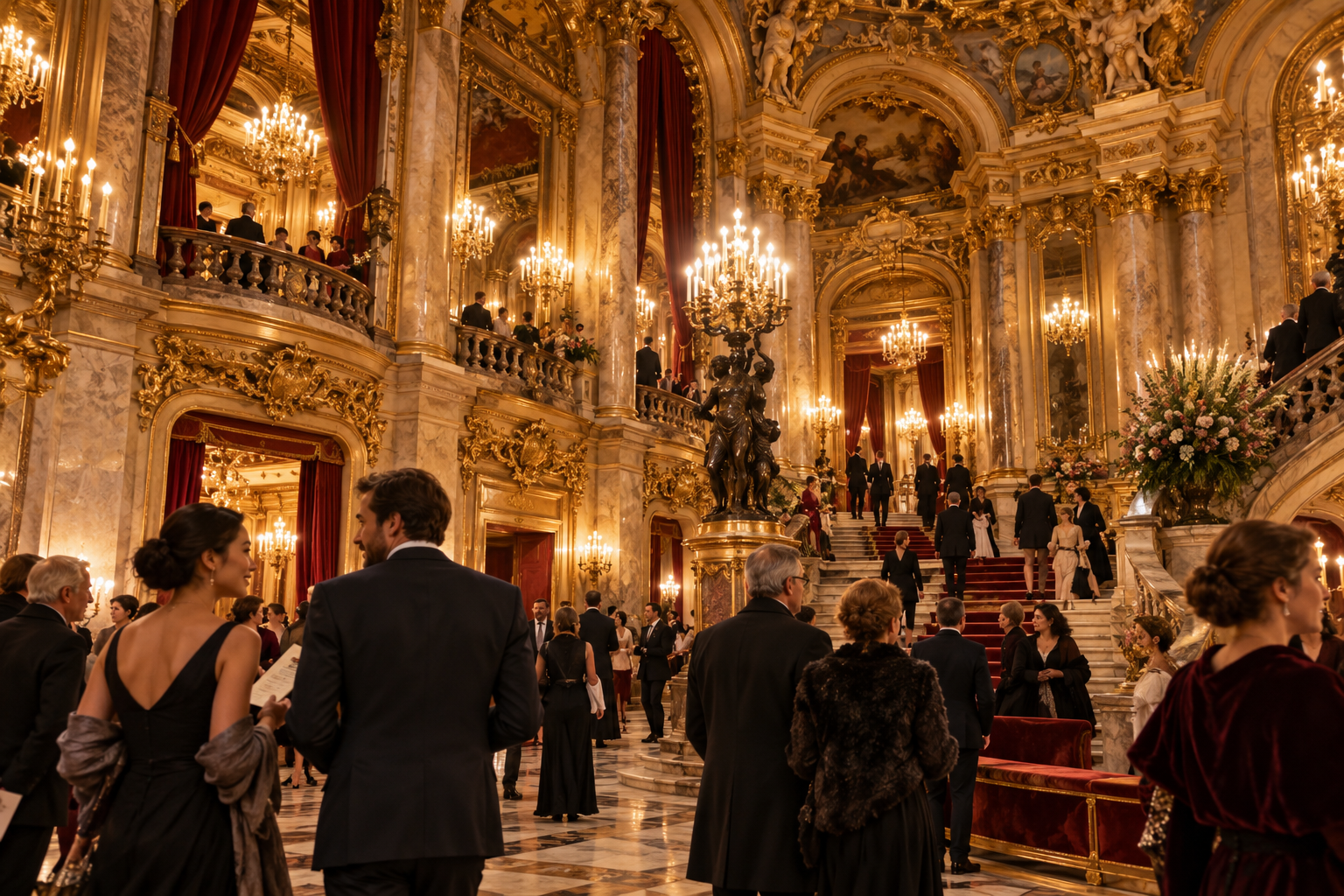
A museum masterpiece, a medieval chapel, a live performance, and a conversation with a historical character can all be described as cultural experiences, yet they ask very different things of a visitor. One rewards solitary concentration, another reveals the power of architecture, and another depends on the unpredictable presence of performers and an audience. Ranking them as if they were interchangeable attractions misses the point. A better Paris plan chooses two or three complementary formats and gives each enough attention to work on its own terms.
Choose a museum for depth, not for obligation
Large museums offer extraordinary range, but range is useful only when you arrive with a question, collection, period, or handful of works in mind. Smaller institutions can provide a more coherent encounter: the Musée Carnavalet follows the history of Paris, while the Musée de la Vie romantique connects art and literary memory to a nineteenth-century house in the Nouvelle Athènes district. Many permanent municipal collections are freely accessible according to the City of Paris, although listed exceptions and temporary exhibitions have their own conditions. Whether you choose a global institution or a house museum, decide what you want to understand before entering and stop while your attention is still alive.
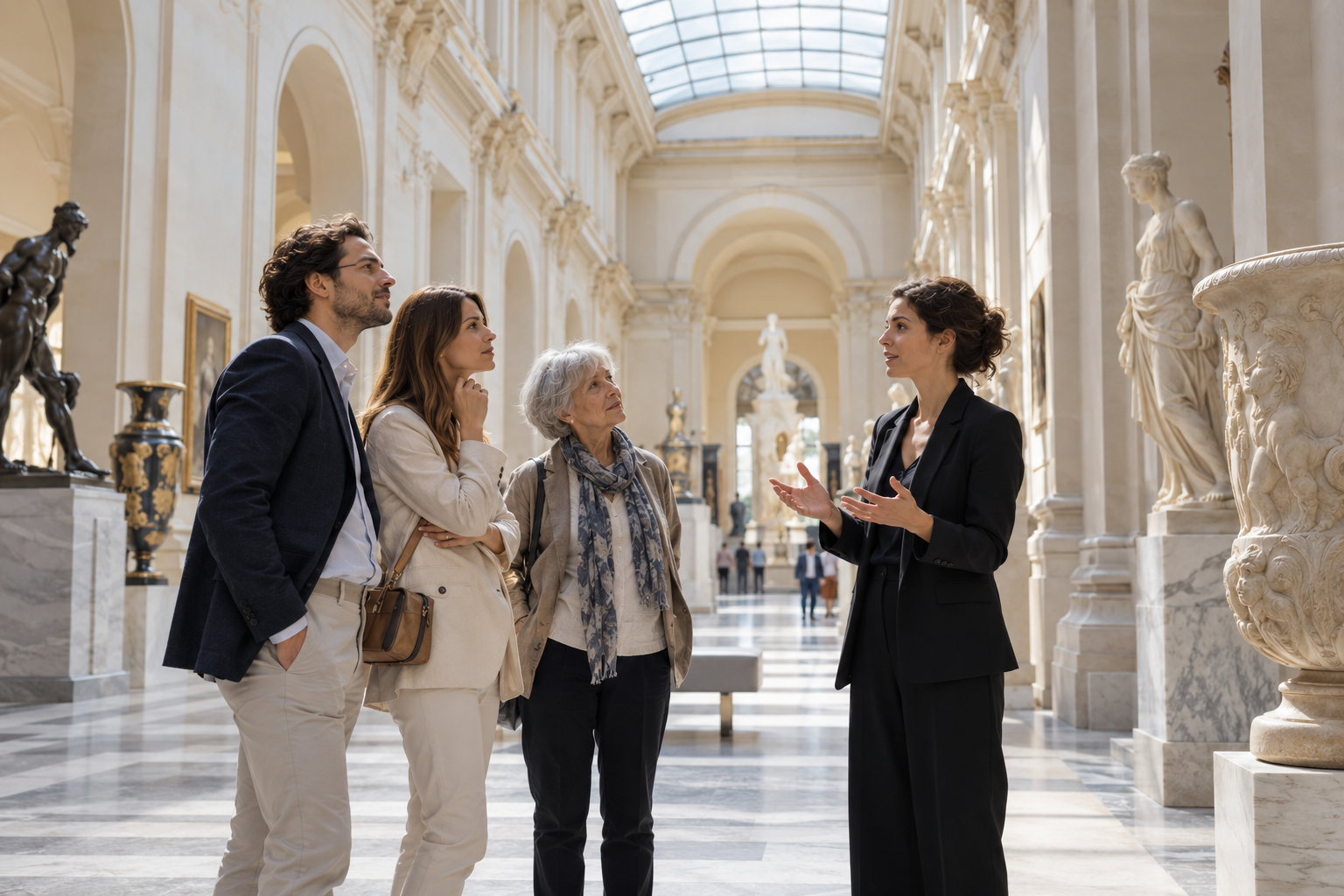
Choose a monument when architecture is the experience
Some Paris monuments communicate through space before any guide begins to explain them. Sainte-Chapelle’s stained-glass program, the Conciergerie’s surviving medieval halls, and the Palais Garnier’s theatrical public rooms each shape movement, light, and expectation in a different way. These visits become richer when their function is clear: royal chapel, royal palace and later prison, or nineteenth-century opera house. Use Immmersiv’s Île de la Cité guide or Opéra district guide to connect the building to its surrounding streets rather than treating it as an interior sealed off from the city.
Choose performance when you want culture in the present tense
An opera, concert, dance performance, or play is not simply another historic interior with a scheduled start. It depends on living artists, the concentration of an audience, and a specific evening that will not happen in exactly the same way again. Paris’s major institutions publish current programs and practical conditions, while smaller venues may offer chamber music, contemporary creation, cabaret, or experimental theater. Select a form you genuinely enjoy rather than attending for prestige, and leave enough space around it for arrival, context, and the emotional shift that performance can create.
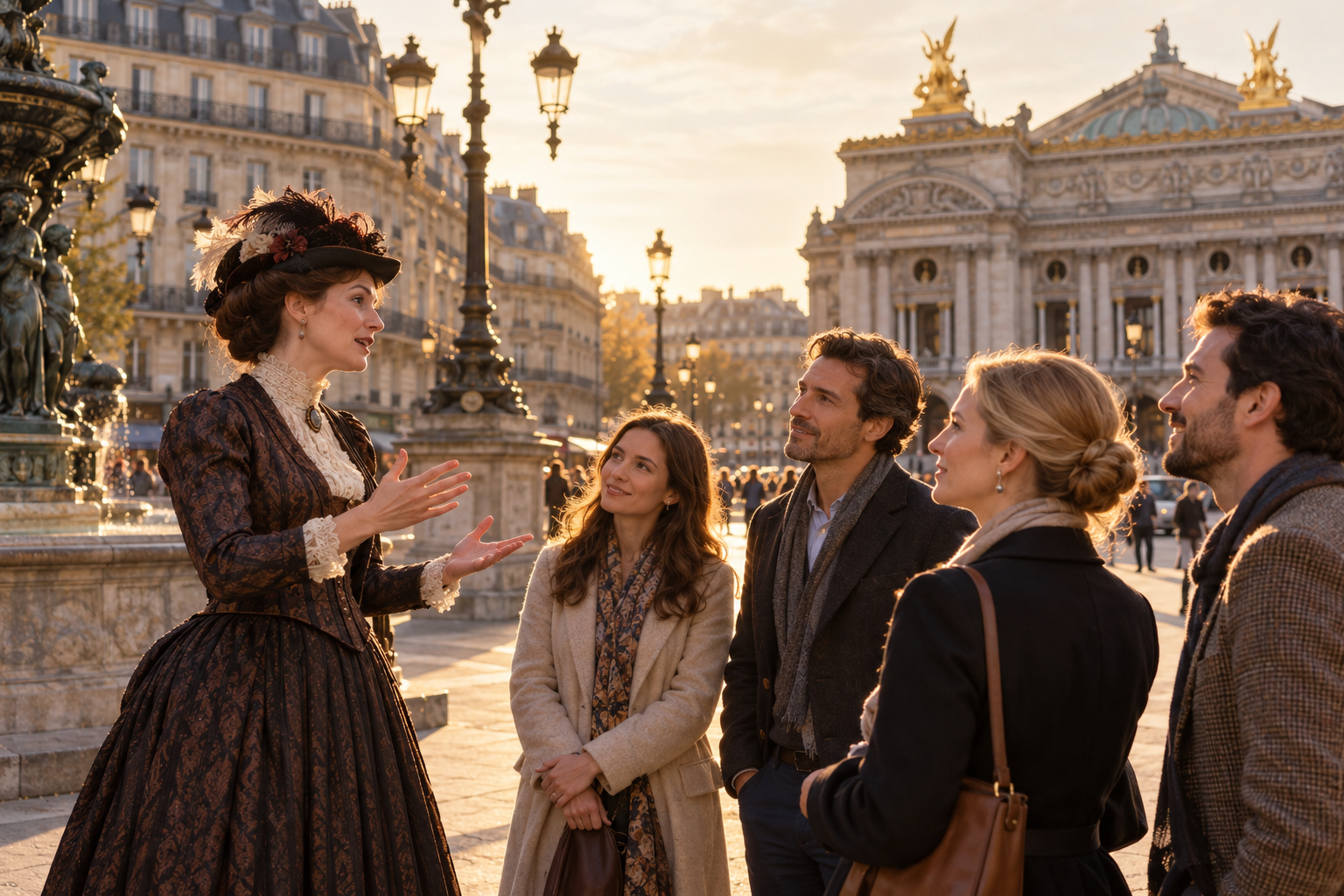
Choose living history when personality opens the city
Live historical storytelling occupies the space between theater, guided interpretation, and conversation. A well-designed encounter does not pretend that the past has literally returned, and it should never confuse documented fact with legend or dramatic interpretation. Instead, a performer gives voice to a particular perspective while the real square, street, or monument supplies evidence and friction. Explore Immmersiv’s character-led experiences and what-to-expect guide to see how this format can help families, history enthusiasts, and curious adults engage with Paris through a human relationship.
The best cultural itinerary is not the one with the longest list of famous names. It balances different modes of attention: quiet looking in a museum, physical awareness inside a monument, collective energy during performance, and dialogue during a live encounter. Add a neighborhood walk between them so the city becomes the connective tissue rather than transportation between reservations. When culture is planned this way, Paris stops feeling like a syllabus and begins to feel like a series of stories that answer one another.
Sources checked
Discover an Immmersiv Experience
For an artistic story connected with a neighborhood, explore The Impressionists of Montmartre. A professional actor offers a present-day theatrical interpretation of Père Tanguy and the artistic world around him. Confirm current language, age suitability, walking and standing requirements, accessibility, and availability before choosing the encounter. Its booking conditions are separate from museum admission or transport, with dramatic dialogue understood as interpretation rather than original historical testimony.