Paris with an 8-Year-Old: A Cultural Itinerary
An eight-year-old notices a small figure in a painting while the adults are still looking for the room number. That detail can become the beginning of a cultural day if the itinerary leaves time to follow it. Planning around one child does not require assuming every child of the same age enjoys the same things. Start with your own child's interests, comfort, and preferred way of exploring, then use this flexible day as a framework rather than a timetable.
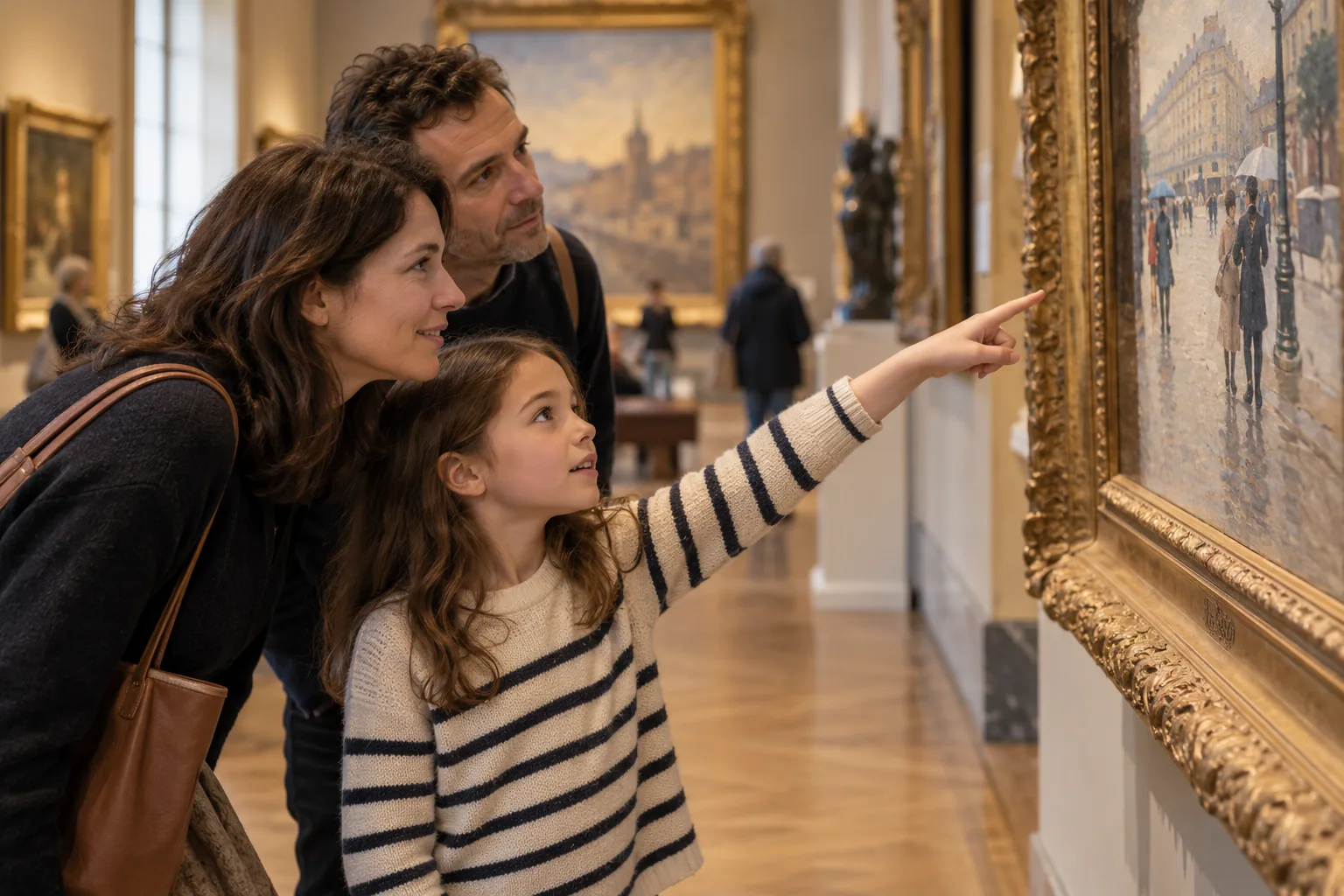
Begin with one museum and one clear invitation
Choose either a collection about Parisian life or an art visit, rather than expecting to fit both into the morning. Carnavalet provides family resources for approaching the city's history, while the Musée d'Orsay offers themed family activity booklets for exploring its artworks. Review the museum's current visitor information and select a manageable part of the collection. Give the visit a simple purpose, such as finding a detail that tells you something about a person's everyday life.
Let your child describe an object before you read the full explanation together. Ask what in the object supports their idea, and leave room for the label to reveal a different answer. If reading is not how your child wants to engage, you can share the useful information aloud and keep the observation central. Our guide to making history fun in Paris offers a broader approach to keeping a museum conversation connected with things children can see.
Build the middle of the day around comfort
Finish the museum visit when the chosen selection feels complete, rather than when every gallery has been covered. Leave time for a meal and a nearby change of setting before deciding whether the afternoon needs another booked activity. Review the route and practical facilities in advance, especially if an unfamiliar transfer would turn a relaxed break into a hurried connection. Our selection of things to do in Paris with kids can help you choose a suitable next step without filling every gap.
Offer a small choice that does not reopen the entire day's plan, such as deciding which observed detail to sketch or discuss. A sketch can hold an idea without becoming a test of artistic skill, and a spoken recollection works just as well. Explain any rules about where drawing or photography is allowed before beginning. Your child's age is a planning reference, while their actual response tells you whether to continue, rest, or change the format.
Keep a fallback that preserves the day's purpose without requiring a second admission or a long journey. A short neighborhood observation can connect a museum object with the city outside, provided you avoid inventing a historical connection for the sake of the activity. You can notice materials, signs, and street arrangements while keeping adults responsible for crossings and navigation. This gives the family a shared discovery even if a more ambitious afternoon no longer feels appealing.
Add an encounter only when the fit is clear
A performed historical character may provide a different way to approach a subject your child enjoyed that morning. Browse the Immmersiv character themes and read the specific experience page before choosing. Confirm age suitability, language, current availability, and how participation works instead of assuming an eight-year-old can join every encounter. The experience guide helps you explain that a performer interprets a historical personality within a theatrical story.
Use Paris, your playground to check the location and allow a comfortable arrival. A child may prefer listening to speaking, and that preference deserves to be discussed before booking when interaction matters. Our family weekend itinerary offers a wider framework if you would rather place the encounter on another day. Keeping that choice open can make the day more enjoyable than defending an overambitious schedule.
End with one remembered detail and let the rest of the city remain available for tomorrow. Your child might recall an expression, a surprising object, or a question that an adult had not considered. Those observations can guide the next cultural outing more effectively than an age-based checklist. A successful Paris day with an eight-year-old gives the whole family something to notice together.