Monet’s The Magpie: Finding Color in a White Winter
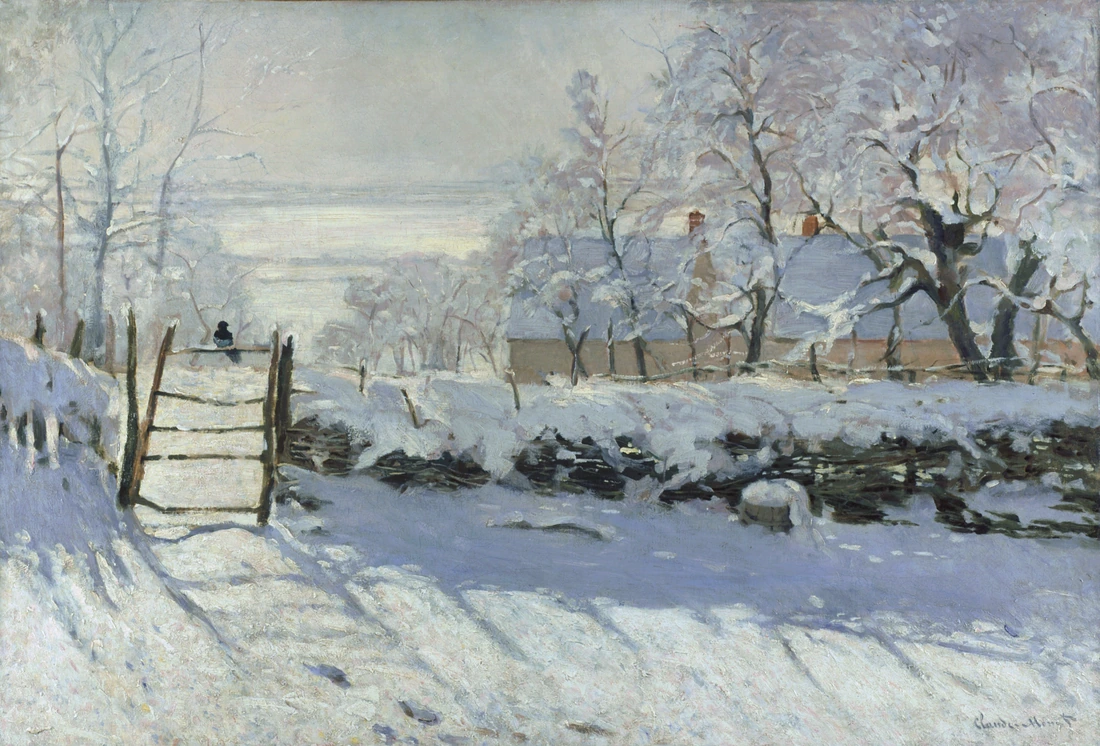
A tiny dark bird sits on a gate, almost lost in an expanse of pale snow. In Monet’s The Magpie, that small presence gives your eye a place to rest before the winter landscape opens around it. The snow soon stops looking like a single patch of white. Shadows, warm light, and the painted surfaces of trees begin to turn a quiet scene into an experiment in seeing.
A Normandy winter before the water lilies
Monet painted The Magpie during the winter of 1868–69 in the Étretat region of Normandy. The Musée d’Orsay connects the work with his growing interest in capturing temporary effects in nature. The modest bird and gate provide a starting point within that much larger investigation. This belongs to an earlier chapter than the garden explored in Monet’s water garden at Giverny, so the two settings should remain distinct.
Begin by locating the bird without immediately moving closer to the reproduction. Then follow the long marks cast across the snow in front of the fence. Look at the difference between those cool shadows and the warmer areas touched by light. The exercise gives you a way into the painting through visible relationships, even if you know little about the names of artistic movements.
How many whites can you find?
Cover the bird briefly and notice how the rest of the picture holds together. Roofs, branches, the ground, and the sky each contain pale areas, but they do not all have the same color or weight. Some edges stand clearly against their surroundings while others almost disappear. A scene that seems simple at first becomes more varied as your eye learns to separate one light surface from another.
The Musée d’Orsay emphasizes the unusual brightness of Monet’s approach and records the painting’s rejection by the Salon jury in 1869. That history helps explain why a peaceful subject could still challenge expectations about painting. The surprise lay in the way the landscape was perceived and presented. Comparing the canvas with the changing light in Monet’s later Wheatstacks reveals a recurring curiosity across very different subjects.
Follow an earlier snowy road at Honfleur
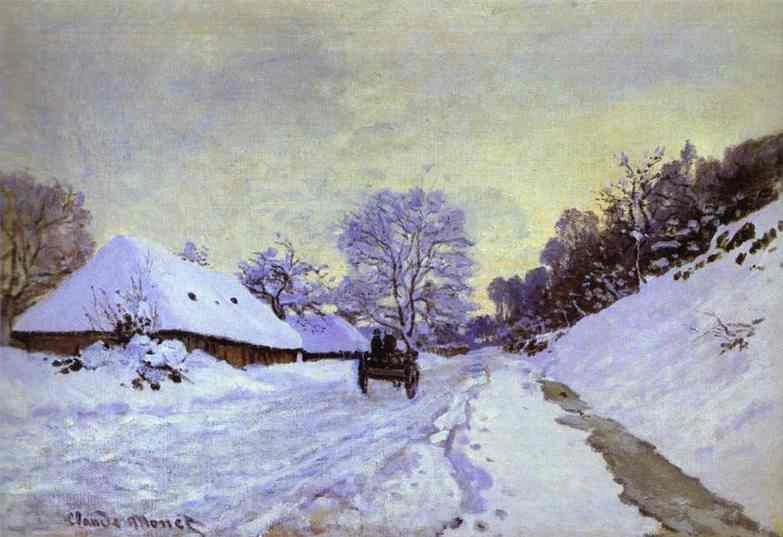
The second reproduction shows The Cart, a snow-covered road at Honfleur, which the Musée d’Orsay dates to around 1867. Its road gives your gaze a route into the scene, with a small cart and buildings helping establish distance. In The Magpie, the fence and its gate create a different rhythm across the foreground. Comparing those arrangements makes it easier to see that two winter landscapes can invite quite different journeys through a picture.
The museum’s account places both works within Monet’s snow paintings of the later 1860s. It also recalls his appreciation of the Normandy countryside in winter in a letter to his friend Frédéric Bazille. There is no need to turn that preference into an invented conversation or a single moment when Impressionism began. What you can follow is the repeated decision to return to conditions that changed familiar roads, trees, and roofs.
Take one close-looking habit to Giverny
The story of Boudin’s encouragement of the young Monet offers another entrance into the painter’s attention to the outdoors. Look from the broad setting to one small change in color, then back again. You can use that habit with a reproduction, a museum picture, or a real landscape. It rewards patience without requiring you to recognize every landmark or memorize a chronology before you start.
The Giverny guide leads to the place associated with Monet’s later working life. In Inside Claude Monet’s Giverny, a professional actor embodies the painter for an immersive theatrical encounter. The experience format explains that approach to discovering a character and a place. Carry the winter painting’s question with you: what changes when you stop naming a surface and begin looking at its colors?
Discover an Immmersiv Experience
Explore Inside Claude Monet’s Giverny with a professional actor embodying Claude Monet. This article provides background for your curiosity. It does not promise stops or access beyond the published experience route. Consult the current experience page for its route and practical details.