Monet’s Water Garden at Giverny: A Landscape Made to Be Painted
At Giverny, the landscape was part of the artist’s work before it became the subject of a canvas. Monet’s water garden invites you to look at a pond as something deliberately shaped, planted, and returned to with fresh attention. The famous bridge is one entrance to that story, but reflections and the space between leaves can be just as revealing. Arrive with that thought and you have something more rewarding to do than reproduce a familiar photograph.
Monet helped create the landscape he painted
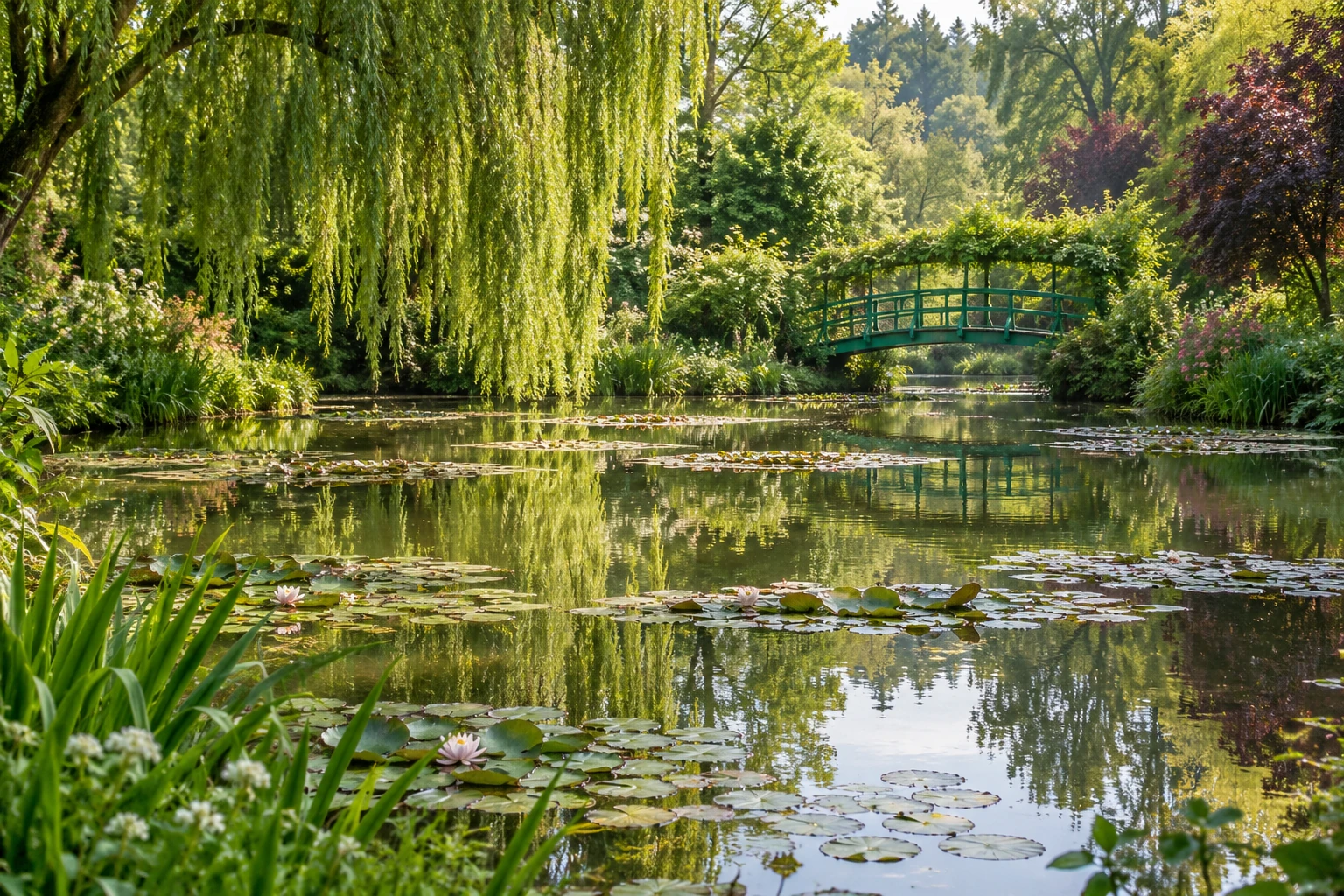
The Metropolitan Museum of Art dates Monet’s purchase of land with a pond near his Giverny property to 1893. Its account connects the resulting water garden with his desire for both visual pleasure and painting subjects. This was a landscape to cultivate as well as observe. The distinction adds another dimension to Monet’s earlier Paris story, where the artistic questions begin in a different setting.
Think of a garden path as a series of choices about what can be seen. A bend can reveal a reflection, while a planted edge can interrupt a view of the bank. These are ways to explore the relationship between making a place and making a picture, rather than a claim about the intention behind every plant. You can try them without knowing the name of a single flower or pretending to reconstruct Monet’s private thoughts.
Look beyond the bridge to the surface below
In the Met’s 1899 painting Bridge over a Pond of Water Lilies, the bridge rises above a surface filled with plants and reflections. The museum’s commentary draws attention to those different layers of water, reflected trees, and shadow. Looking at them separately can change the way you approach the whole image. A leaf rests on the pond, while the reflected branch appears to occupy another space entirely.
Try following one patch of color instead of scanning for recognizable objects. Ask whether it belongs to a floating plant, a reflection, or an area you cannot confidently identify. Then step back and notice how those uncertain patches work together. The point is not to solve the painting like a puzzle, but to enjoy the moment when ordinary water becomes surprisingly difficult to describe.
The pond and the paintings are different visits
Seeing a garden does not mean seeing every painting inspired by it. The Met’s bridge canvas belongs to a collection in New York, and the National Gallery of Art in Washington holds another 1899 treatment of the footbridge. That separation is part of the story rather than an inconvenience to explain away. A living landscape and a painted surface offer different experiences of the same creative attention.
Before planning your Giverny visit, check the garden operator’s current opening and admission information. Do not infer seasonal flowers, quiet paths, or entry conditions from an illustration or a painting. Our article on combining museums and immersive encounters explains how different formats can complement one another. Leave enough space in your plans to look closely, rather than treating each part as another box to tick.
Meet the artist’s perspective in the village
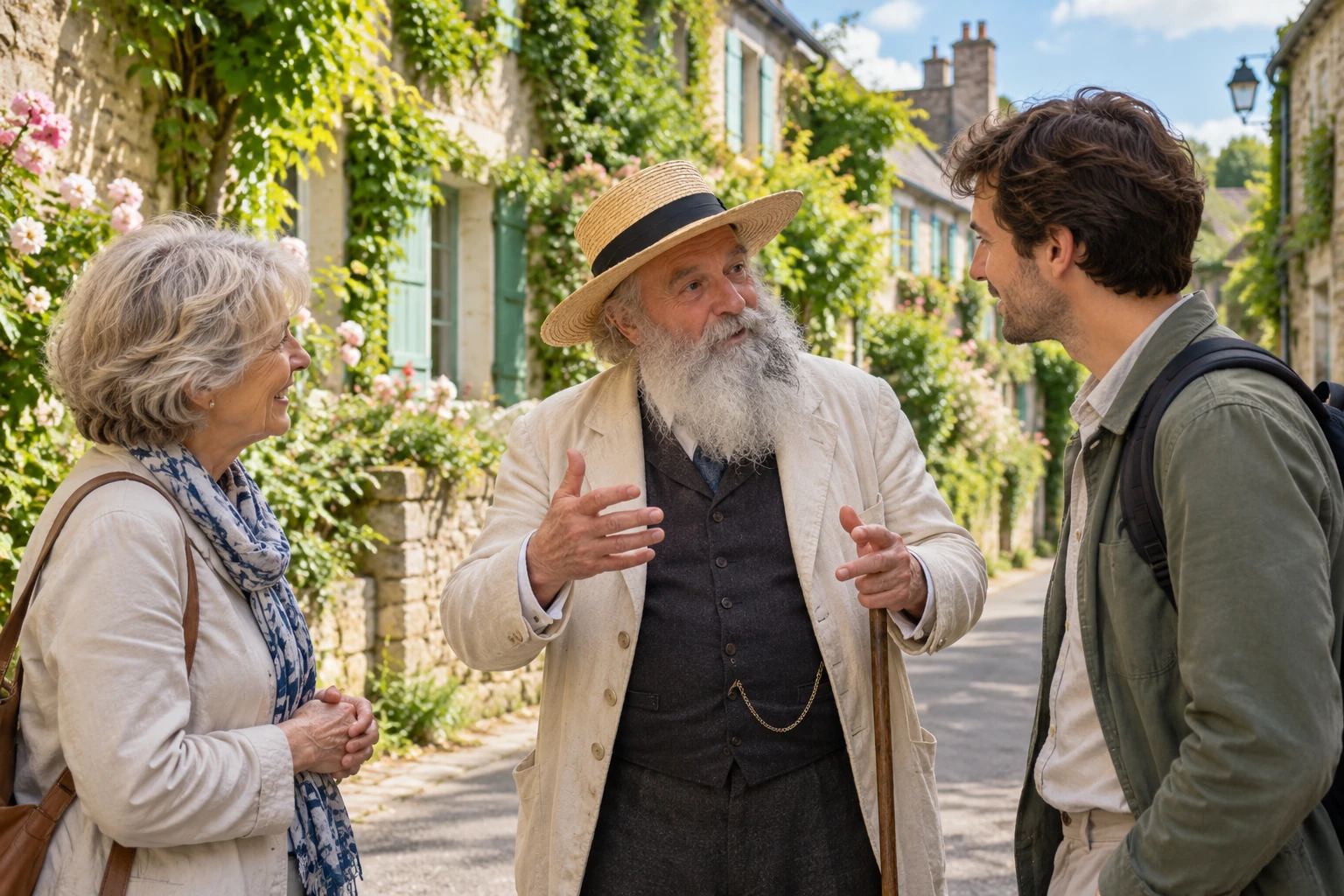
An encounter with a portrayed Monet adds another way to approach Giverny. In Inside Claude Monet’s Giverny, a professional actor embodies the painter during an experience in the village. The published route follows Rue Claude Monet and reaches the area outside the Foundation entrance; it should not be read as a promise of access to the house or water garden. Plan admission separately if you want to add those places to your day.
Read what to expect from the theatrical format and bring a question about how an artist keeps seeing a familiar place differently. Our story about Père Tanguy and an artist’s materials opens another view of the work behind a finished picture. Neither an interpreted voice nor a garden photograph replaces the paintings themselves. Together, those different encounters can make the next patch of reflected sky feel worth a longer look.
Discover an Immmersiv Experience
Explore Inside Claude Monet’s Giverny, with a professional actor embodying Claude Monet. This is an interpreted encounter, distinct from the documents and artworks discussed above. Check the current experience page for practical information before planning your visit. Keep time afterward to compare the places you saw with the questions you brought.