Van Gogh’s Church at Auvers: Seeing the Village Through One Painting
A recognizable building can become an unfamiliar place inside a painting. Van Gogh’s church at Auvers is a particularly rewarding example, because the stone church and the painted image invite different kinds of attention. One belongs to a village you can explore, while the other asks you to follow color, contour, and the pull of two paths. Looking between them gives an Auvers-sur-Oise visit a question to follow rather than only an address to find.
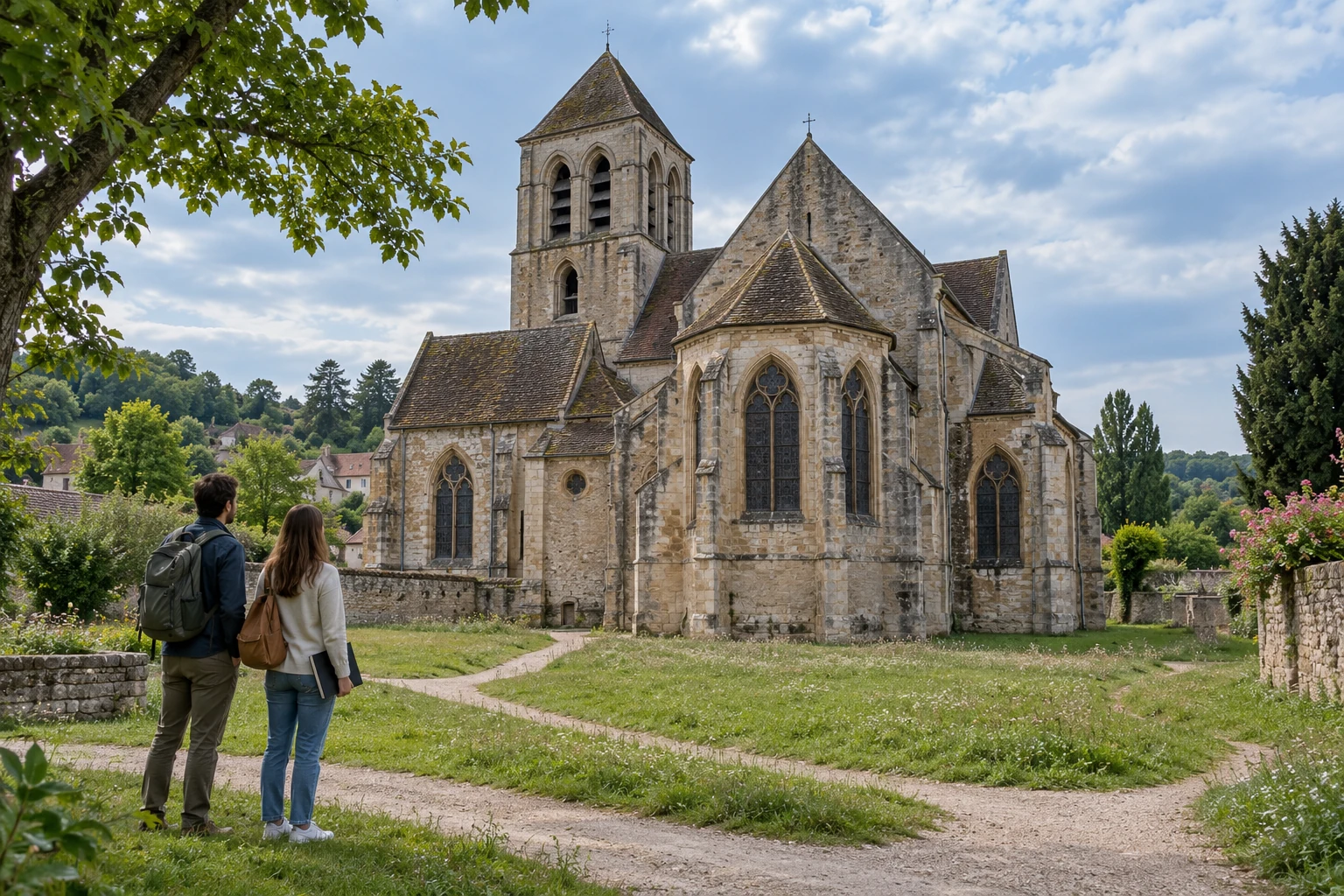
Begin with the picture’s own location and date
The Musée d’Orsay identifies the painting as L’église d’Auvers-sur-Oise, vue du chevet, and dates its execution to June 1890. The title specifies a view from the church’s eastern end, rather than a conventional view of its entrance. The canvas belongs to the museum’s collection in Paris. Those details help separate the place depicted from the place where the artwork is held, before you make plans around either.
The village is not a substitute gallery, and the painting is not a photograph you must duplicate. Each can reward a visit even when you cannot combine them on the same trip. Our guide to Paris for museum lovers offers a broader way to choose among collections. For this particular story, begin with a good look at the museum’s online image and keep practical display arrangements as a separate check.
Follow the paths before interpreting the sky
Notice how the paths divide around the church and how the building occupies the space between them. Then follow the roofline and compare its changing angles with the quieter shape you expect from a stone monument. The museum’s commentary emphasizes the expressive transformation of a building that remains recognizable. That gives you a starting point without requiring a single hidden message to explain every painted line.
It can be tempting to treat an intense color as a direct diagnosis of the person who painted it. Resist that shortcut and describe the visible evidence first. A dark sky, a sloping contour, and a bright path are choices within an image, not medical records or proof of what happened next. Keeping those categories separate lets you discuss the work seriously without making Van Gogh’s health the only subject he is allowed to have.
Bring a looking exercise into Auvers-sur-Oise
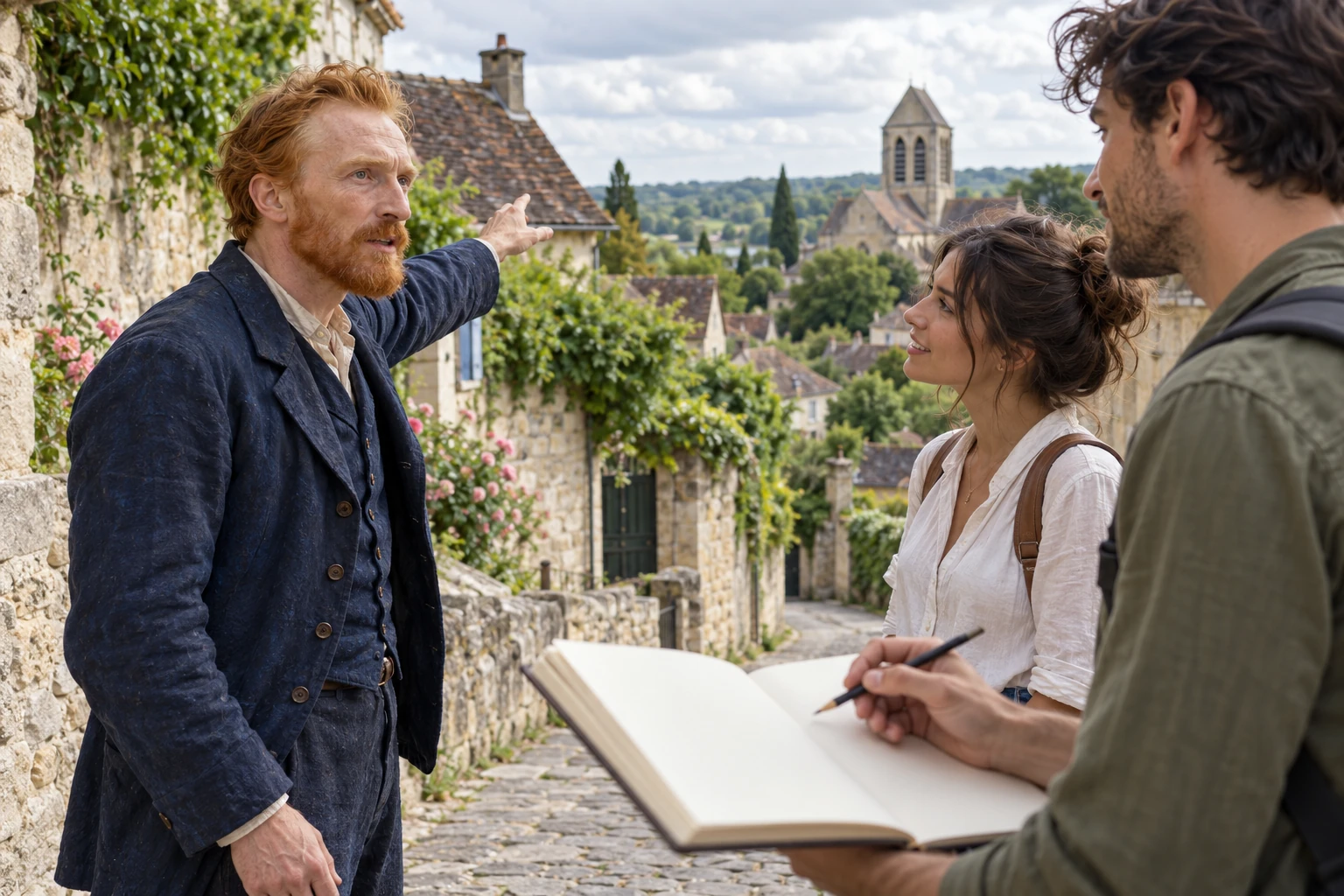
At the village, choose a safe place to pause and notice what your eyes organize first. You might begin with the church’s mass, a roof edge, a patch of grass, or the movement of someone passing. A few lines in a notebook can record that order without attempting an accomplished drawing. The exercise asks you to notice your own looking, rather than claim you are standing exactly where Van Gogh stood.
Use the Auvers-sur-Oise overview to place the church within a wider visit. Keep current access requirements and the needs of worshippers in mind before assuming you can enter the building. The method behind reading a city through its visible layers travels well beyond Paris, even though Auvers has its own setting and history. Leave room for ordinary village life alongside the associations that brought you there.
Let a portrayed artist open a conversation
The story also connects with Van Gogh’s earlier relationships in Paris. Our article about Père Tanguy, the paint seller he portrayed follows a different canvas and a different kind of encounter. Reading the two together can keep the artist’s working life broader than a single final chapter. It also reminds you that a person, a building, and the materials used to depict them can each become a way into art.
For an interpreted continuation, explore Van Gogh’s last days in Auvers-sur-Oise, with a professional actor embodying Vincent. Its published itinerary includes the church, but performance should not be mistaken for original testimony from the painter. Read how an Immmersiv encounter works before choosing the experience for your companions. A useful question to take away is how the painting changed what you noticed about a place that still has a life beyond the frame.
Discover an Immmersiv Experience
Explore Van Gogh’s last days in Auvers-sur-Oise, with a professional actor embodying Vincent van Gogh. This is an interpreted encounter, distinct from the documents and artworks discussed above. Check the current experience page for practical information before planning your visit. Keep time afterward to compare the places you saw with the questions you brought.