Van Gogh’s Bedroom: One Room, Three Paintings, Two Different Years
You may recognize the bed before you notice anything else. Two chairs, a small table, and pictures on the walls complete a room that has become one of Van Gogh’s most familiar images. But Van Gogh’s Bedroom is not a title belonging to just one canvas. Three versions, made in two different years, let you follow the artist returning to a place through painting.
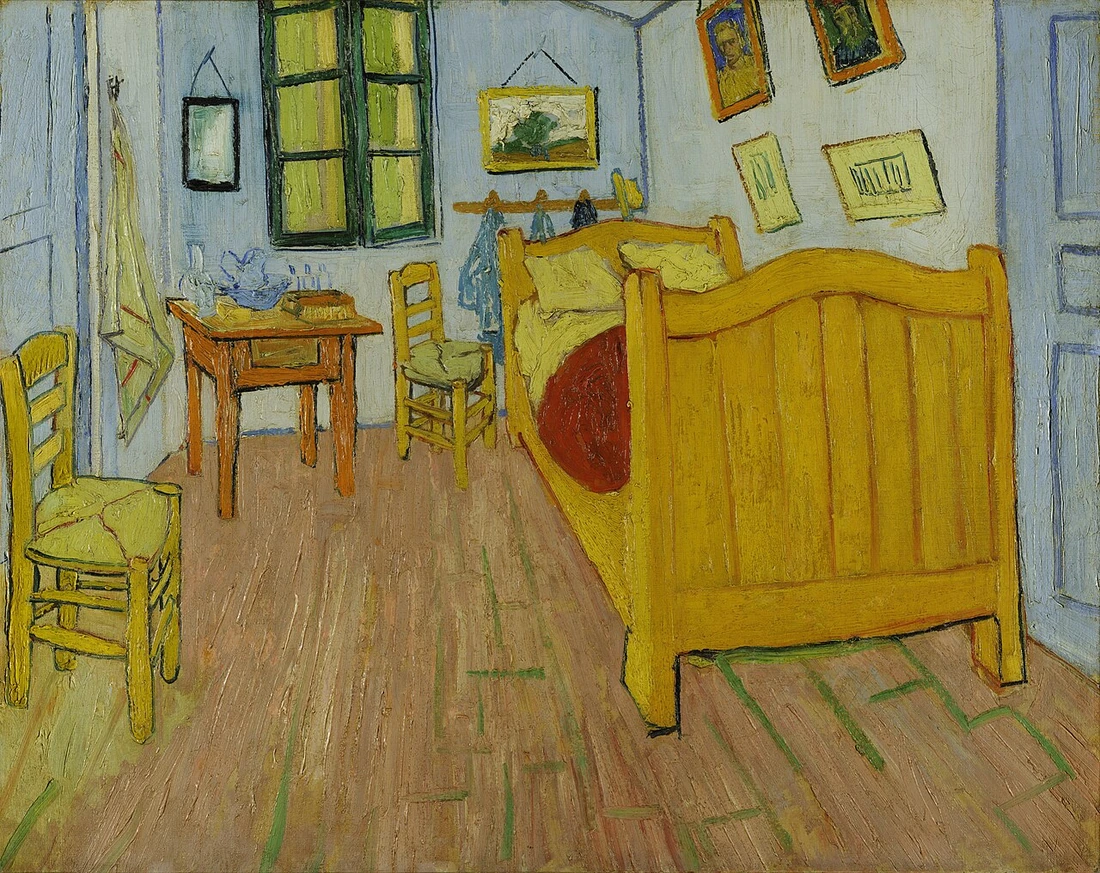
Begin in Arles in October 1888
Van Gogh painted the first version in October 1888, when he was living in the Yellow House in Arles. That canvas belongs to the Van Gogh Museum in Amsterdam. Its furniture and the pictures on the walls gave the artist a familiar interior to arrange in paint. The subject is a room he used, rather than an imaginary suite created to resemble an artist’s life.
The Van Gogh Museum’s account connects the strong color contrasts with the painter’s wish to express rest. That intention is useful background, but you do not have to experience the picture in exactly the same way. Follow the edges of the bed and the floor, then notice how the room seems to open toward you. The distance between a painter’s stated aim and your own first response can make looking more interesting.
Why the artist returned to the room
The Musée d’Orsay explains that the first canvas suffered water damage during flooding. Van Gogh subsequently made two further versions in 1889. One, on approximately the same scale as the first, belongs to the Art Institute of Chicago. The smaller version, made for his family in the Netherlands, is in the Musée d’Orsay in Paris.
The Paris museum’s record identifies its painting as a September 1889 repetition made at Saint-Rémy-de-Provence. That distinction separates the place represented from the place where this later canvas was painted. You are looking at a remembered and reworked Arles interior, not a new bedroom in Saint-Rémy. A repeated subject can therefore carry more than one geographical chapter within a single picture.
Compare the versions without expecting identical copies
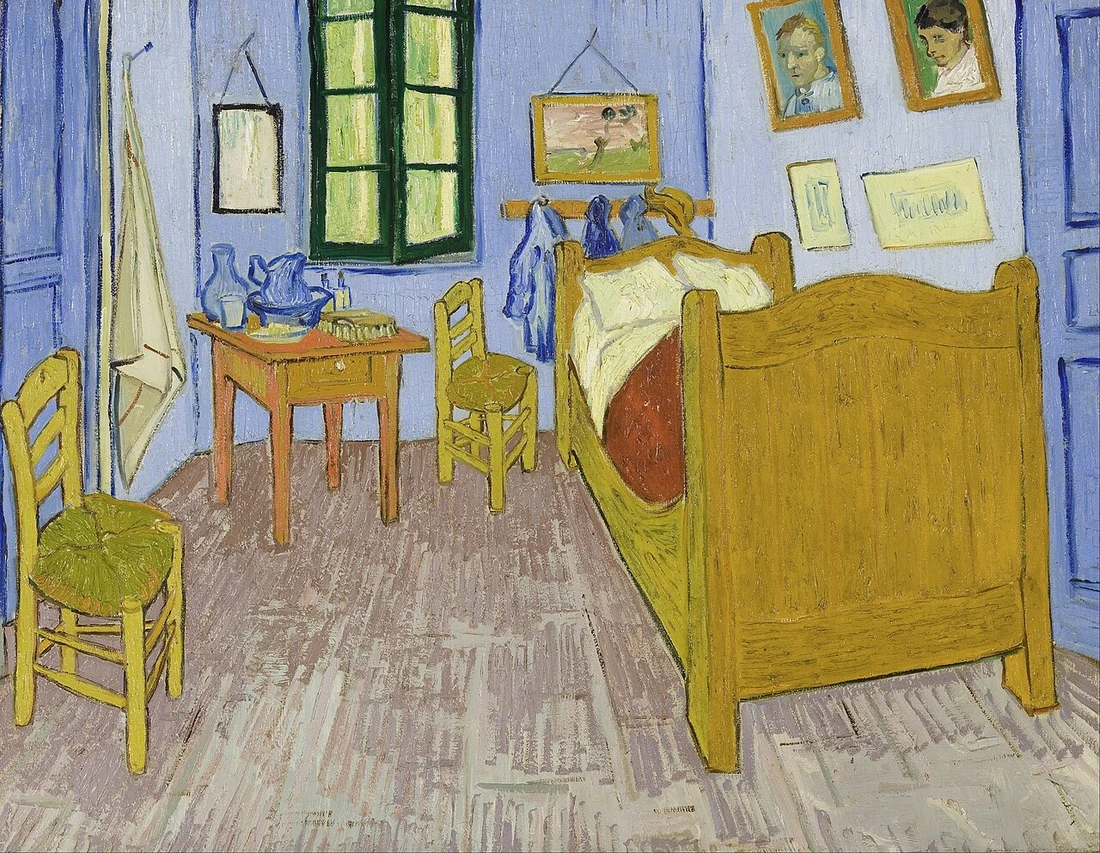
The two reproductions here show the Amsterdam original and the smaller Paris version. Begin with the pictures on the wall, then compare the bed, chairs, and spaces between objects. Their recognizable arrangement makes small differences easier to notice. Repetition gives you a framework for seeing change instead of requiring every later canvas to introduce a completely new subject.
Color needs particular care when comparing these images. The Van Gogh Museum’s conservation account explains that the original painting’s walls and doors have changed from light purple toward blue over time. A present-day reproduction therefore cannot simply stand in for every color the artist first put on the canvas. This is a question about the material life of a painting, rather than a reason to recolor a historical image and present it as the original.
Keep Arles and Auvers as separate chapters
The bedroom belongs to an earlier southern chapter than the village in Van Gogh’s Church at Auvers. The later story also includes his portrait and etching of Doctor Gachet and the unusual viewpoint of Tree Roots. Keeping those works in their different settings helps each landscape or interior retain its own history. A famous artist’s name should connect places without making them interchangeable.
The Auvers-sur-Oise guide introduces the village associated with Van Gogh’s final months. Immmersiv’s Van Gogh’s Last Days in Auvers-sur-Oise explores that later chapter through a professional actor embodying the painter. Read what to expect for the theatrical format and consult its published route when planning. The bedroom paintings leave you with a different invitation: return to a familiar image and see what changes when you give it a second look.
Discover an Immmersiv Experience
Explore Van Gogh’s Last Days in Auvers-sur-Oise with a professional actor embodying Vincent van Gogh. This article provides background for your curiosity. It does not promise stops or access beyond the published experience route. Consult the current experience page for its route and practical details.
Continue Exploring
Sources and further reading
- Musée d’Orsay: La Chambre de Van Gogh à Arles, versions and September1889SaintRémy repetition
- Van Gogh Museum collection account via Google Arts & Culture: firstBedroom, October1888
- Art Institute of Chicago collection account via Google Arts & Culture: threeversions
- Van Gogh Museum: Unravel Van Gogh and color changes in TheBedroom