Paris for Three Generations: Activities for Kids, Parents and Grandparents
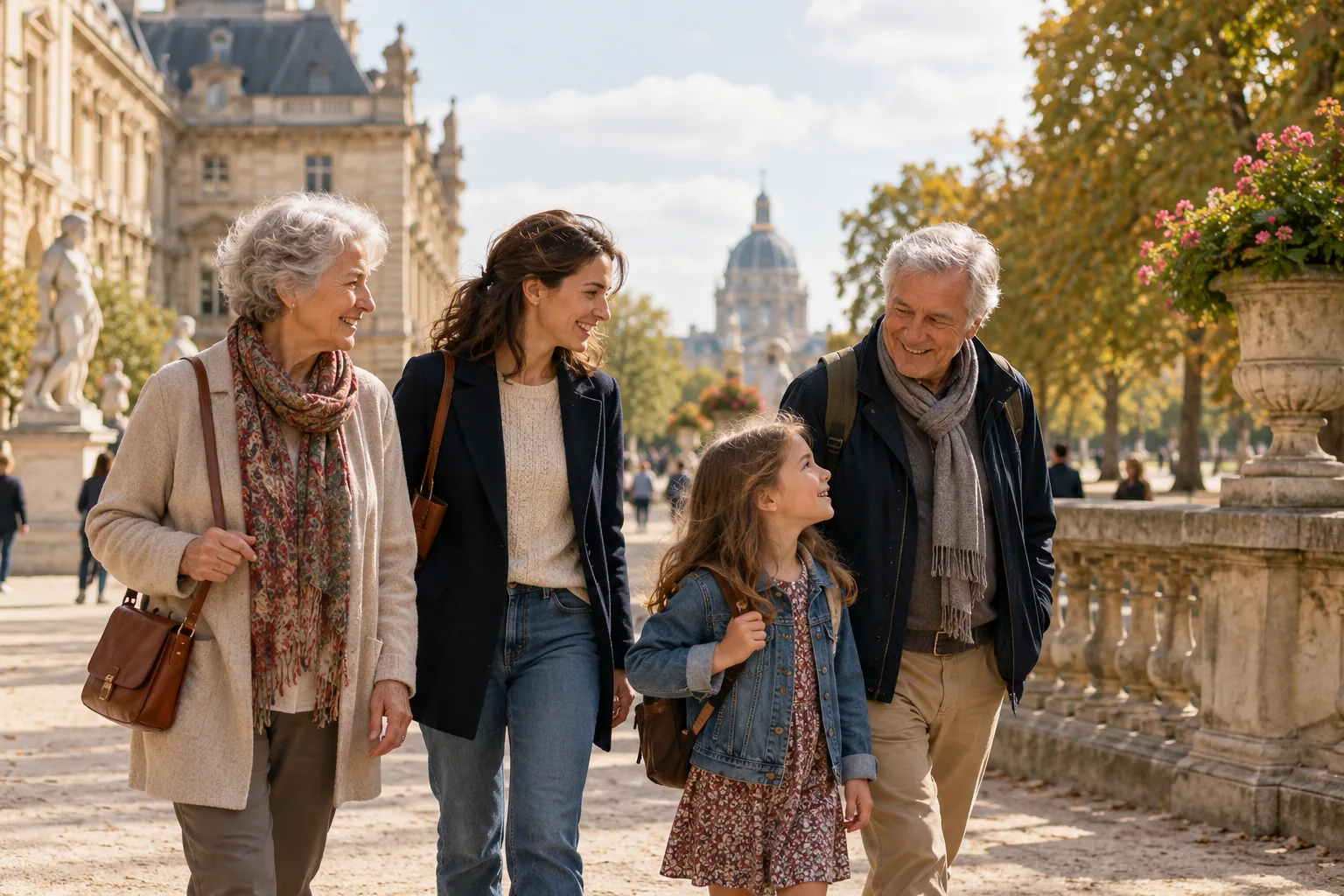
Three generations arrive at the same painting and notice three different details. A grandparent recalls a place, a parent looks at the composition, and a child asks about the person in the corner. A shared Paris trip can make room for all three responses without requiring identical interests or energy. Plan for the people actually traveling together, then choose a cultural subject broad enough to hold their different ways of looking.
Find common ground without assigning interests by age
Ask each person what they would like to explore and which practical conditions matter to them. A grandparent may be the most enthusiastic walker, while a child may prefer a quiet collection visit. Do not let generational labels substitute for those actual preferences. Our guide to activities families can share helps you begin with a common question while keeping individual interests visible.
Choose a subject that offers more than one entrance, such as art, clothing, literature, or everyday city life. An object can prompt a remembered experience without requiring that memory to serve as evidence about an earlier historical period. Children can contribute observations instead of simply receive explanations from the adults. Our family weekend guide offers a framework for placing a small number of meaningful discoveries in a manageable stay.
Check the whole route against the group’s needs
Review travel, arrival requirements, walking, standing, stairs, and opportunities to pause before deciding an activity suits everyone. A central location does not automatically remove those demands, and a map cannot establish whether a route meets a particular access need. Consult the venue's current access information or contact the organizer when a detail affects participation. The Louvre, for example, publishes access guidance and information about facilities and route planning for visitors.
Keep the shared part of the day realistic enough that nobody has to endure an unwanted pace to remain with the family. A small collection selection can give everyone something to discuss without trying to cover a whole museum. Our guide to focused museum visits with children can help you set a clear ending. Use the experience map to consider geography, then verify the actual conditions for the encounter rather than infer them from a nearby landmark.
Agree in advance how optional activities will work if the group wants different things later. Smaller groups can explore separately only when supervision, meeting arrangements, and each person's needs are clear. Present that choice as part of a fair plan rather than a sign that the shared outing failed. Protect a later meal or conversation where the family can bring its different discoveries back together.
Choose a performed story with everyone in view
Browse the character themes for a subject several generations want to approach. Read the Immmersiv format and the selected page to understand the professional actor's embodiment of a historical character. Confirm age suitability, language, current availability, walking and standing requirements, and the nature of interaction for the specific experience. A personality that interests the adults may still need a different introduction for the children.
Keep participation comfortable for each family member instead of requiring everyone to ask a question. Explain that the portrayal is a theatrical interpretation, while objects and historical sources offer other kinds of evidence. A grandparent's recollection or a child's observation can become part of the conversation afterward without being treated as the correct response to the performance. The encounter belongs in the trip when both the subject and the practical arrangements make sense for the whole group.
Paris for three generations can be rich precisely because nobody sees the city in exactly the same way. Give those differences a place in the decisions, verify the practical conditions, and protect time to compare what you noticed. One shared cultural discovery may carry further than a tightly packed sequence of attractions. The family leaves with a story made from several viewpoints rather than one approved version of the trip.
Discover an Immmersiv Experience
If clothing and identity provide common ground, investigate The Chanel Mystery in Paris, with a professional actor embodying Coco Chanel. Read the actual premise before deciding it suits the children and adults in your group. Confirm access needs, language, availability, and practical requirements with the relevant current information. The experience is worth considering when its story and its demands both fit your family's shared day.