The Best Paris Immersive Pass Experiences for Families
A family can leave the same Paris encounter remembering very different things. One child may recall a surprising question, a teenager an unfamiliar point of view, and a parent the moment everyone began listening together. That variety is a useful starting point when choosing experiences, rather than a problem to eliminate. The best Paris Immersive Pass experiences for your family are those that give each generation an entrance into the story while fitting the practical realities of your trip.
Match the character to a shared interest
Begin with the subjects your family already talks about, whether that means paintings, clothes, books, or the way a city changes. A recognizable name can help, but it is not a substitute for a premise that someone genuinely wants to explore. Our guide to family activities adults enjoy too encourages choosing a common question rather than dividing the day into children's entertainment and parental obligations. Ask everyone to suggest an interest before the adults decide which character sounds most important.
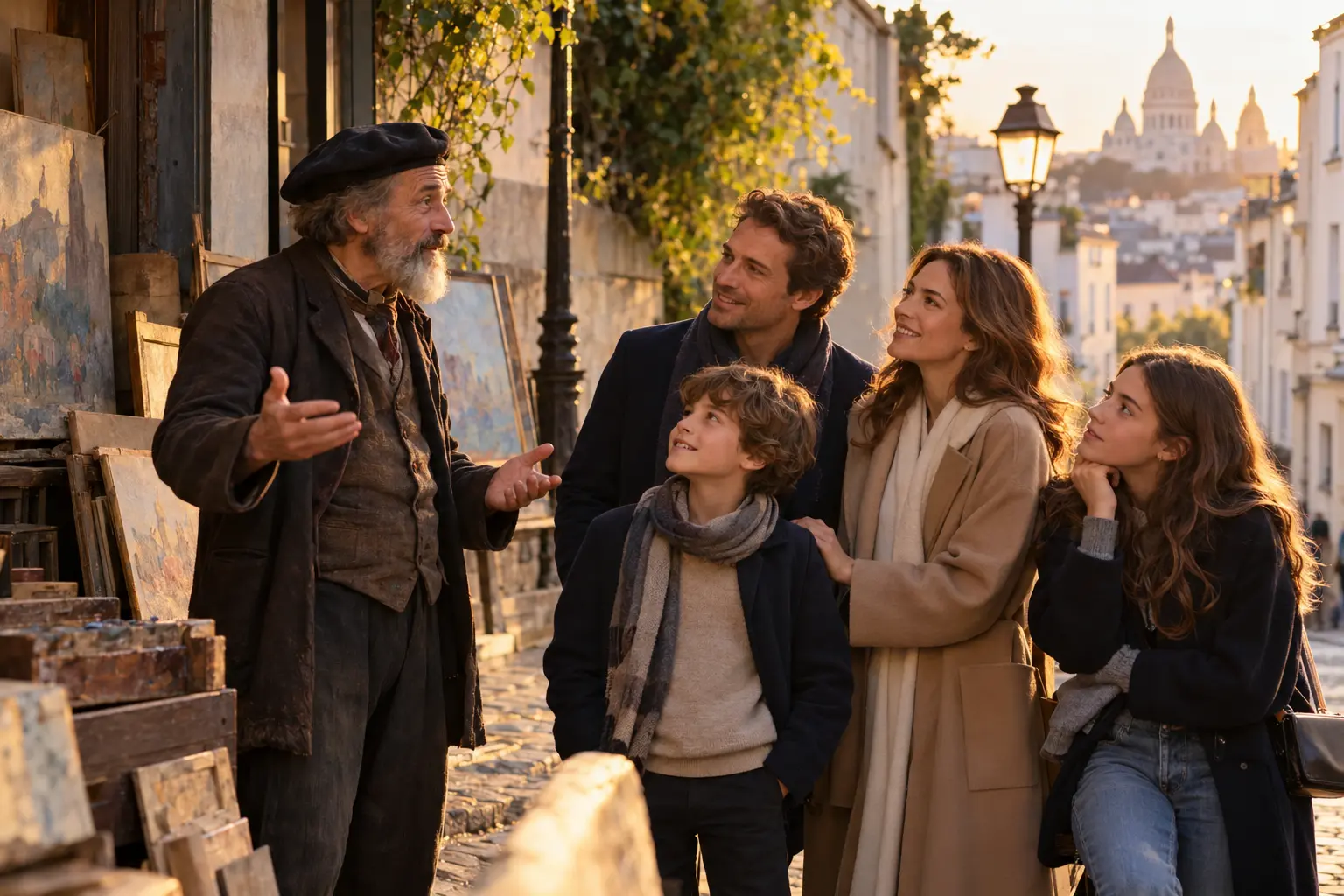
For an art-minded family, the Père Tanguy encounter in Montmartre is one current experience page worth examining. A professional actor embodies the character, so the format is a live performance rather than a museum collection or a literal meeting with a person from the past. Read the actual premise and confirm suitability for your children's ages and interests before proposing it as part of a Pass itinerary. The artistic connection may be promising without making the steep streets or every narrative theme appropriate for every family.

Give older children a meaningful choice
A teenager interested in fashion may prefer the questions around public identity suggested by the Chanel experience at Place Vendôme. Another traveler might be drawn toward the literary perspective of the Hemingway encounter. These are possible themes to investigate, not a claim that either experience is suitable or available for every family on every date. Let younger travelers explain what appeals to them, then ask about content, language, participation, and the practical route before confirming the choice.
Giving a choice does not mean handing a teenager responsibility for the whole vacation. Offer a small number of genuinely workable possibilities and invite them to choose the question they would most like to pursue. Our ideas for Paris with teenagers can help turn that decision into part of the journey itself. Keep an alternative ready when an attractive theme proves unsuitable after you have checked the actual experience details.

Evaluate the whole family day, not only the encounter
A strong character match can still produce a difficult day when meals, rest, and transfers have been squeezed out. Compare the real meeting arrangements with the places you already intend to visit, and ask about access and weather exposure for everyone traveling. Confirm the current Pass conditions directly rather than assuming that an experience page proves inclusion or that private means unlimited adaptation. A smaller sequence of carefully matched stories may create more shared enjoyment than a day built to use every theoretical opportunity.
Plan something simple afterward so that the encounter has room to become a family conversation. A seated break, a sketchbook, or a short return to a detail someone noticed can be enough to keep different ages involved. Our family weekend itinerary shows how those pauses can connect cultural activities without adding another major reservation. Check each museum or attraction separately if you use it as a complement, because its admission conditions are its own.
There is no universal family ranking that can replace knowing the people you are traveling with. Choose a character through a shared interest, let older children contribute, and confirm the experience's actual suitability and arrangements. Then build the day around comfort, curiosity, and space for each person's response. The right encounter is the one your family wants to keep discussing together, even when everyone remembers a different part of the story.