The Balloons above Omaha Beach: The 320th Battalion’s D-Day Role
A photograph of the Normandy invasion can draw your eye straight toward the water. Landing craft, vehicles, and crowded beaches make the scale of the operation immediately visible. Look upward, however, and another part of the story appears in the balloons suspended above the shore. Omaha Beach barrage balloons connect the familiar landing narrative with the specialized work of the 320th Barrage Balloon Battalion.
Recognize the equipment in the sky
Barrage balloons were tethered defensive equipment rather than observation platforms carrying people. Their cables created obstacles for low-flying aircraft approaching a protected area. A pilot facing those obstacles had to account for them instead of treating the air above a beach as unobstructed space. Understanding that purpose changes the balloons from curious shapes in a photograph into part of the invasion’s defensive arrangements.
Their role was different from the job of a landing craft carrying soldiers toward shore. The cables addressed a threat from above, while boats moved people and equipment across the water. These different tasks belonged to the same operation and depended on practical equipment rather than a single dramatic gesture. For the boat’s side of that relationship, explore the Higgins boat and its bow ramp at Omaha Beach.
Meet a unit in a segregated Army
The 320th Barrage Balloon Battalion was an African American unit serving in the segregated United States Army. The National WWII Museum records that men from the battalion landed at both Omaha and Utah on June 6, 1944. Its history makes Black military service part of the landing story itself. It also asks us to remember the unequal institution within which those soldiers performed their work.
A US Army historical account describes the battalion’s training and the practical difficulty of getting its balloon equipment ashore. Heavy standard equipment was poorly suited to the circumstances of an assault landing. The unit’s preparations included adapting lighter equipment to handle the balloon cables. That detail places technical problem-solving beside courage when we consider what service on an invasion beach required.
Read the photographs without making them say too much
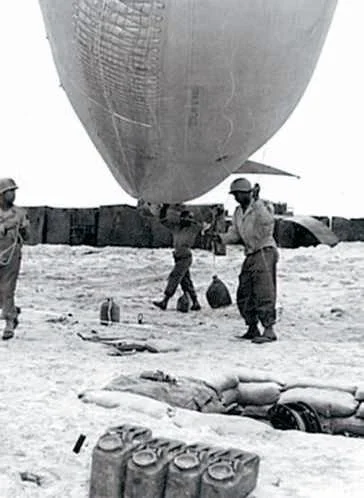
The first photograph reproduced here shows soldiers of the 320th handling a balloon during the Normandy invasion. Its closeness makes the equipment look substantial beside the people working beneath it. Notice the relationship between the balloon, its tether, and the soldiers on the ground. This is a view of work rather than a picture that can explain every movement of the battalion.
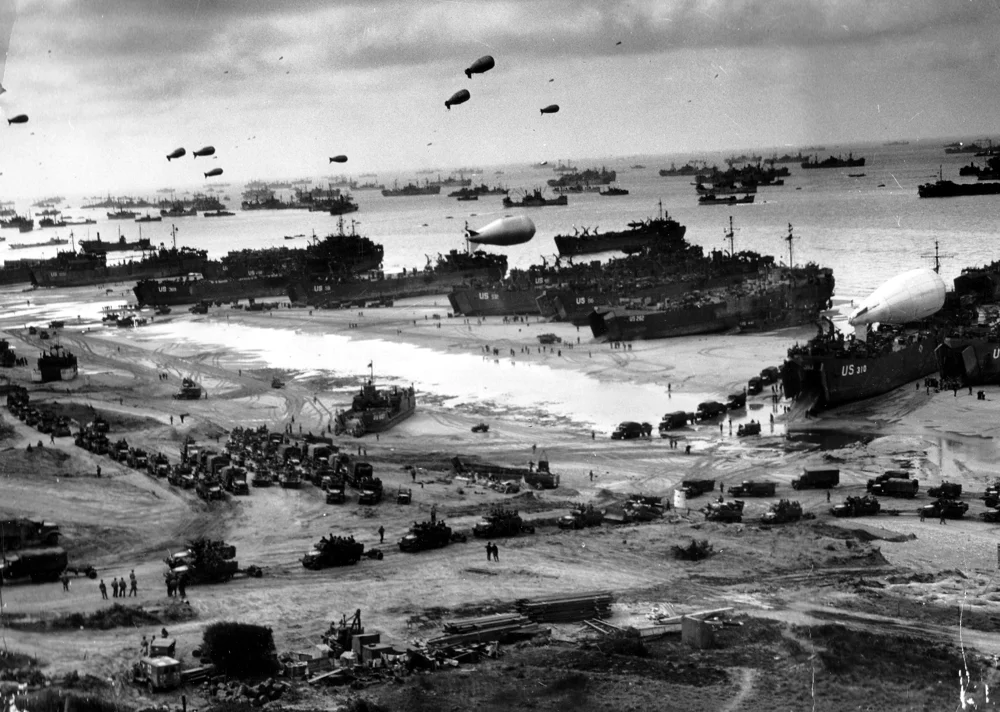
The wider Coast Guard photograph shows a Normandy invasion beach during the first days of June 1944. Boats, vehicles, and supplies occupy the shore while balloons appear overhead. Its source description does not establish that every visible balloon belonged to the same crew, and the scene should not be presented as the opening minutes of June 6. Read it instead alongside the story of Mulberry A at Omaha, as a reminder that keeping material moving remained essential after troops reached land.
Carry a wider history onto the beach
At Omaha Beach, the shoreline offers a powerful setting for considering those connected tasks. The 320th’s story adds an upward dimension to a place often imagined through movement across the sand. It also widens the cast of people whose labor belongs in an account of the invasion. For another French setting shaped by the war, continue with places connected with World War II in Paris.
The Immmersiv Omaha Beach experience is told through a professional actor embodying an American combat medic. That published character should not be confused with a verified member of the 320th. This article supplies historical background, without adding an unlisted balloon site or stop to the route. Read what to expect from an Immmersiv experience and the current itinerary before planning your visit.
Discover an Immmersiv Experience
Explore Omaha Beach – code name : Overlord with a professional actor embodying an American combat medic. This article provides background for your curiosity. It does not promise stops or access beyond the published experience route. Consult the current experience page for its route and practical details.