Mulberry A at Omaha Beach: The Harbor the Allies Brought with Them
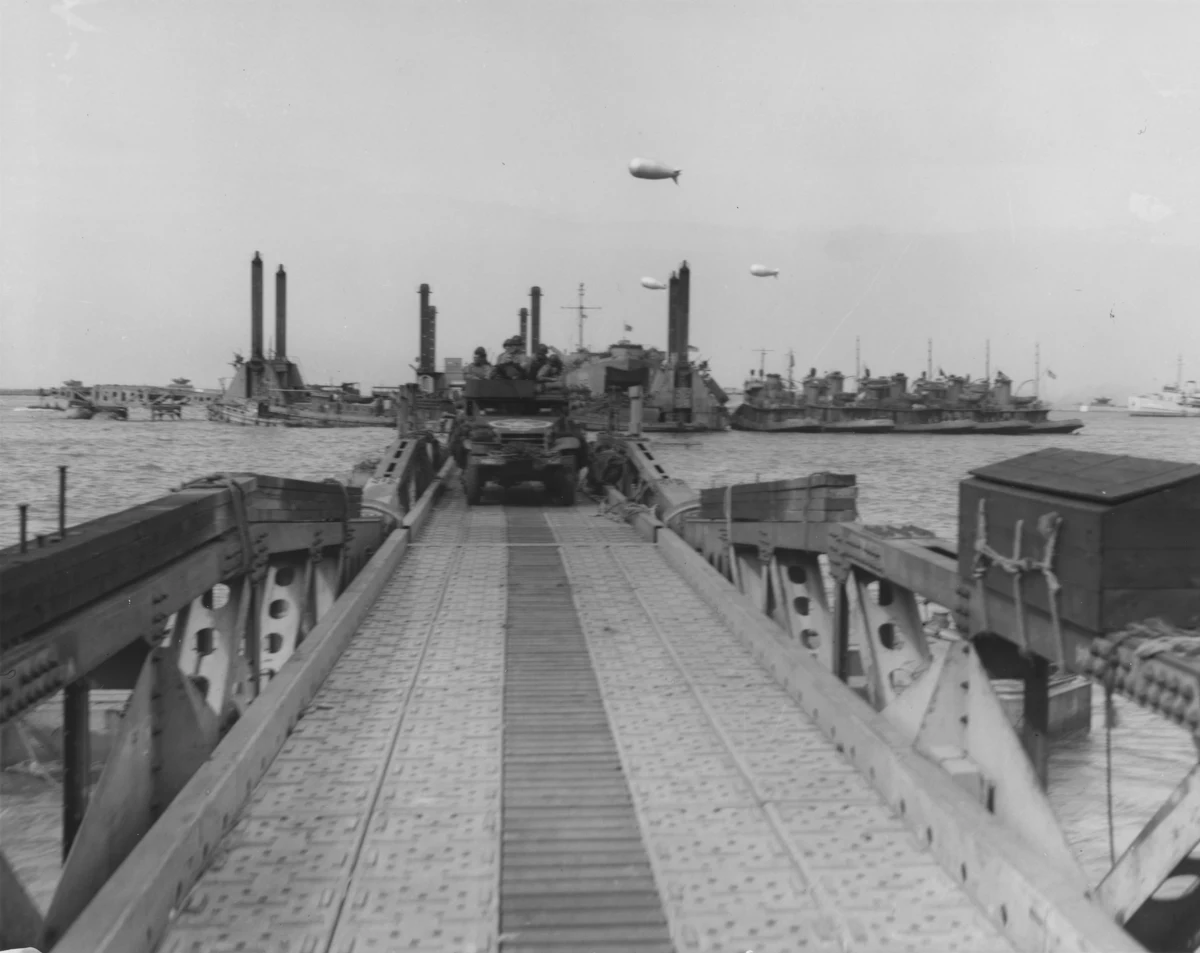
A wartime photograph shows a military vehicle rolling toward Omaha Beach on a road that floats. Beyond it, the water is crowded with structures that look nothing like the familiar image of soldiers stepping from landing craft. This was Mulberry A at Omaha Beach, an artificial harbor assembled to help supply the Allied forces in Normandy. Its brief working life opens a story about engineering, weather, and the effort required to keep an invasion moving after the first landings.
A landing beach was only the beginning
Getting troops ashore did not solve the problem of keeping them supplied. The campaign needed a continuing flow of vehicles, equipment, food, and ammunition as forces pushed inland. A major port could help handle that traffic, but the Allies could not assume they would immediately capture one ready for use. The National Army Museum describes the response: harbor sections built in Britain and towed across the Channel for assembly beside the beachheads.
Two Mulberries served different parts of the invasion coast. Mulberry A was established off Omaha for American use, while Mulberry B served the British and Canadians at Arromanches on Gold Beach. Keep those names and locations separate when you examine a photograph or a museum model. A view of the famous harbor at Arromanches should not silently become evidence of what stood off Omaha, even though both belonged to the same wider logistical plan.
Follow a vehicle across the floating road
The system joined sheltered water, unloading platforms, and a route back to land. Piers allowed ships to unload, while floating road sections linked the platforms with the shore. The Australian War Memorial’s description explains that pontoons supported the roadway and that the pier platforms could move vertically with the tide. Rather than a solid stone dock, imagine a connected system designed to work at the shifting boundary between sea and land.
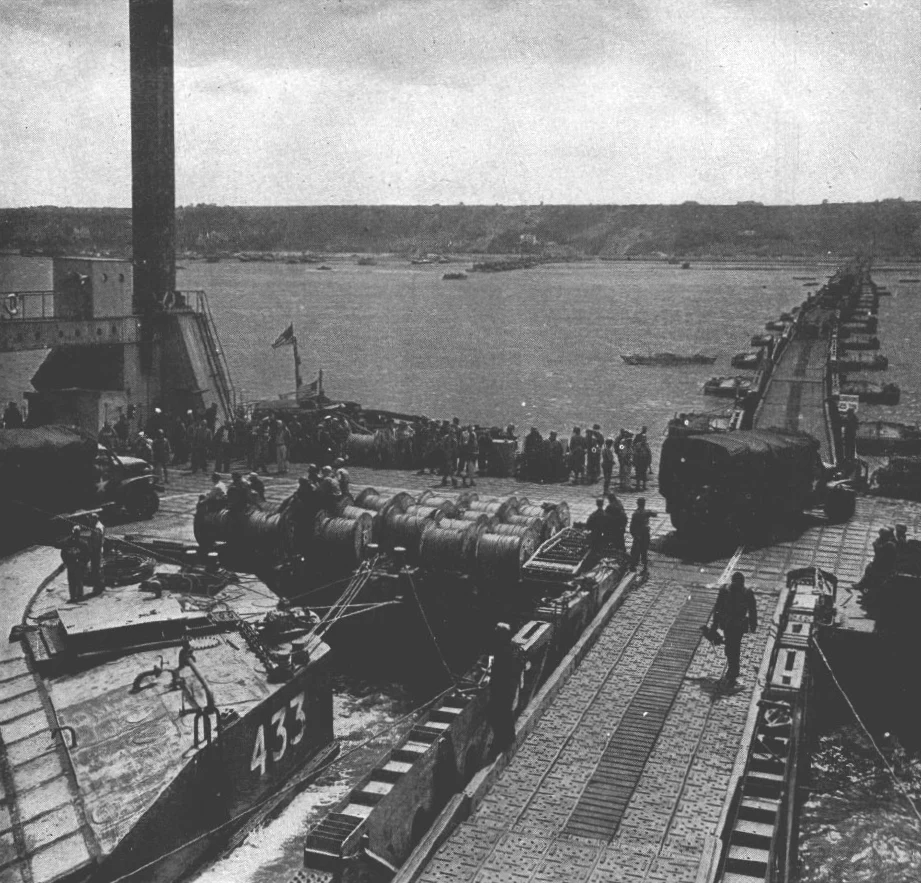
The Army photograph reproduced here is dated June 16, 1944, ten days after D-Day. Follow the half-track along the causeway, then look past it toward the craft and pierhead farther out. That ordinary movement of a vehicle is the point of the structure: equipment needed to pass from a ship into a working supply chain. The second photograph shows a pier from the same American harbor, offering another view of the machinery behind that movement.
The storm changed the plan, not the need
A severe storm beginning on June 19 battered the Normandy coast and wrecked Mulberry A. The National WWII Museum describes floating sections breaking apart and the American harbor being judged beyond recovery. Some of its components were used to help repair the other Mulberry, which continued operating at Arromanches. The destruction of the harbor did not mean that supplies stopped coming ashore at Omaha for the rest of the campaign.
Beach unloading resumed, using landing craft and amphibious vehicles instead of depending on the lost harbor. That continuation is an important part of the story, because the men inland still needed the next delivery. It also places the later liberation of Paris within a campaign sustained by repeated practical work rather than a single dramatic day. Remembering the supply effort gives the photographs a human scale without inventing the thoughts or identity of a particular soldier.
Look beyond the first day when you visit Omaha
Explore the Omaha Beach setting with both the assault and its aftermath in mind. The harbor story offers a way to ask what happened after a beach had been secured, while keeping the losses of June 6 central to the place’s history. Pair that question with our introduction to wartime Paris if your journey continues from Normandy to the capital. Different places preserve different chapters of the war, and their dates deserve the same care as their names.
Immmersiv’s Omaha Beach – code name: Overlord presents the story through an American GI embodied by a professional actor. This article supplies historical context rather than a promise to visit an intact artificial harbor or every location shown in an archival image. Read what to expect from the theatrical format before planning, and continue with other American connections to France when you turn toward Paris. The floating road in that old photograph may stay with you as a reminder that moving history forward also depended on getting the next vehicle ashore.
Discover an Immmersiv Experience
Explore Omaha Beach – code name: Overlord with a professional actor embodying an American GI. This article provides background for your curiosity. It does not promise stops or access beyond the published experience route. Consult the current experience page for its route and practical details.