Marie-Antoinette’s Muslin Dress: The Portrait That Needed a Replacement
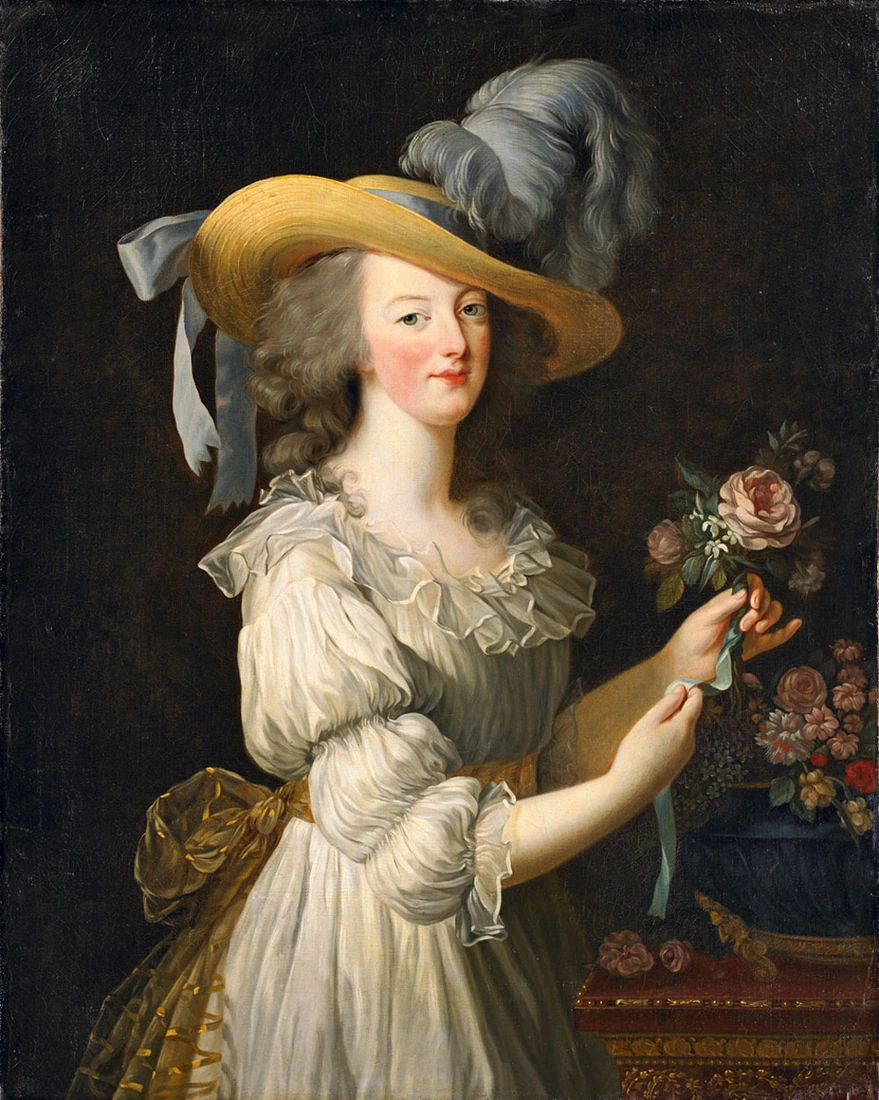
A queen holds flowers and looks toward you beneath a wide hat. Her white dress appears light and comfortable, hardly the costume of a public scandal. In 1783, however, Marie-Antoinette’s muslin dress helped make a portrait too informal for its audience. Compare that painting with its more richly dressed successor and a change of clothes becomes a question about what a queen was allowed to show.
Meet a queen outside the grand costume
Élisabeth Louise Vigée Le Brun painted the muslin portrait in 1783. The queen wears a loose white gown gathered with a broad sash, with flowers held in front of her. A straw hat and the soft fabric give the image a different mood from ceremonial royal dress. Start by looking at these visible choices before deciding what they tell you about the person wearing them.
The dress is often called a robe en chemise or a gaulle. The Palace of Versailles connects this kind of informal clothing with the queen’s life at the Petit Trianon. That setting also helps explain the appeal of the retreat explored in our Queen’s Hamlet article. An image of ease still required wealth and an artist’s labor, so apparent simplicity should not be confused with an ordinary working woman’s life.
Why the Salon audience objected
The muslin portrait was shown at the Paris Salon of 1783 and removed after criticism. The Fashion Institute of Technology’s account explains that the garment resembled the underclothing of the period too closely for an official image of a queen. The resemblance was the problem; it does not make the painting a record of her accidentally appearing undressed. What looked suitable for a private world could carry a very different meaning when placed before a public audience.
Clothing also invited judgments about national identity and royal authority. FIT discusses the tension between imported cotton muslin and prestigious French silk. You do not need to imagine every viewer agreeing on one complaint to understand the difficulty. The picture asked an audience accustomed to reading rank through dress to accept a much softer visual message from the monarchy.
Change the dress and keep the encounter
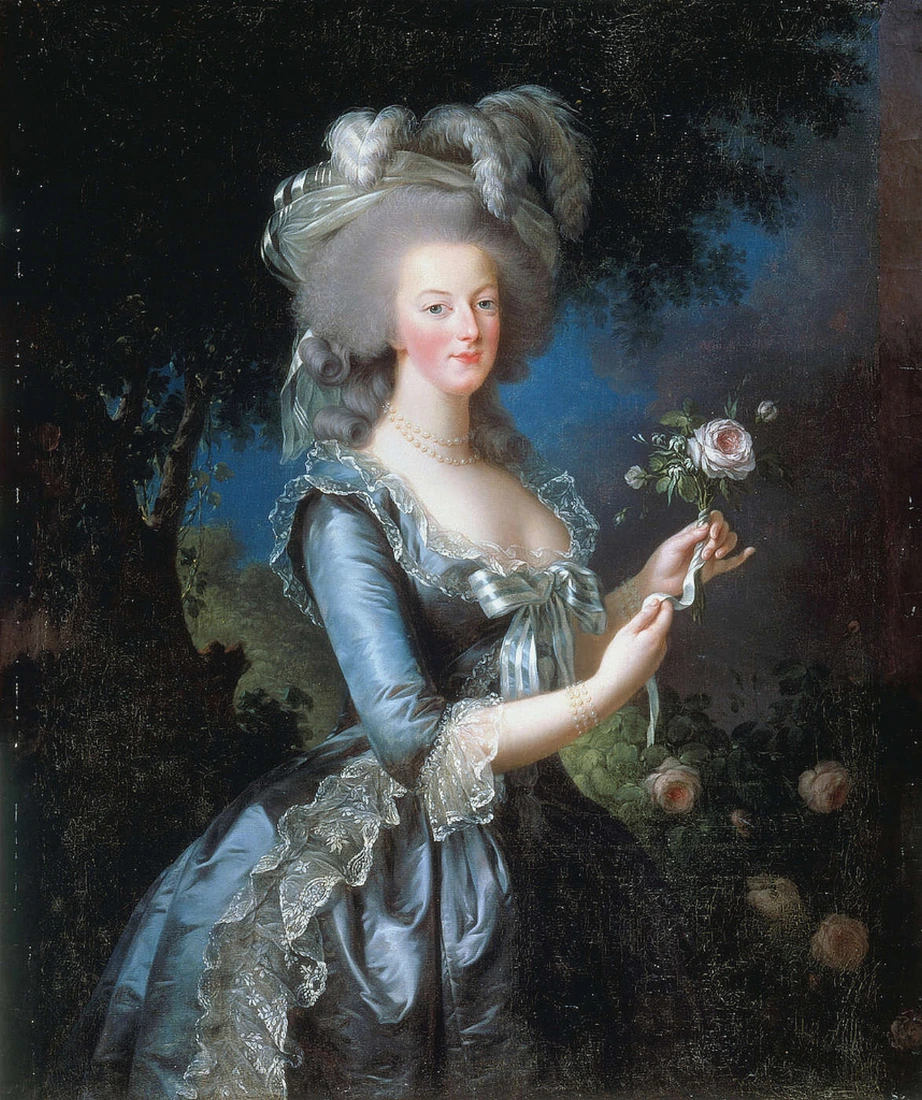
Vigée Le Brun answered with the portrait known as Marie Antoinette with a Rose. The queen keeps a similar pose and continues to hold flowers, but silk, lace, and pearls change the effect. Versailles describes the earlier muslin version as the controversial predecessor to this image. Comparing the two reveals how much a portrait can alter its public meaning without changing its principal sitter or its basic gesture.
The two reproductions here make that comparison possible at your own pace. Follow the neckline, the sleeves, and the shape of the sash or bow, then return to the face. Notice which differences you can actually see and which depend on historical explanation. Another royal image, the queen’s later portrait with her children, raises a different question about how family and public responsibility could share a canvas.
Bring the question of appearances to Versailles
A portrait controversy should not become a shortcut for explaining an entire political collapse. The Diamond Necklace Affair of 1785 belongs to a separate sequence involving fraud and reputation. Keeping those events distinct leaves room to understand each on its own evidence. Here, the revealing detail is the replacement itself: changing what the queen wore was a way of changing how the public encountered her.
As you explore the Versailles story, ask which images present a sovereign and which invite you closer to a person. Marie Antoinette, Rebel Queen brings that curiosity into an immersive theatrical encounter performed by a professional actor. Read what to expect for its format and consult the published route when planning. The portraits leave you with a small but useful challenge: look twice before letting an outfit decide who someone was.
Discover an Immmersiv Experience
Explore Marie Antoinette, Rebel Queen with a professional actor embodying Marie-Antoinette. This article provides background for your curiosity. It does not promise stops or access beyond the published experience route. Consult the current experience page for its route and practical details.