Marie Antoinette and Her Children: The Empty Cradle in a Royal Portrait
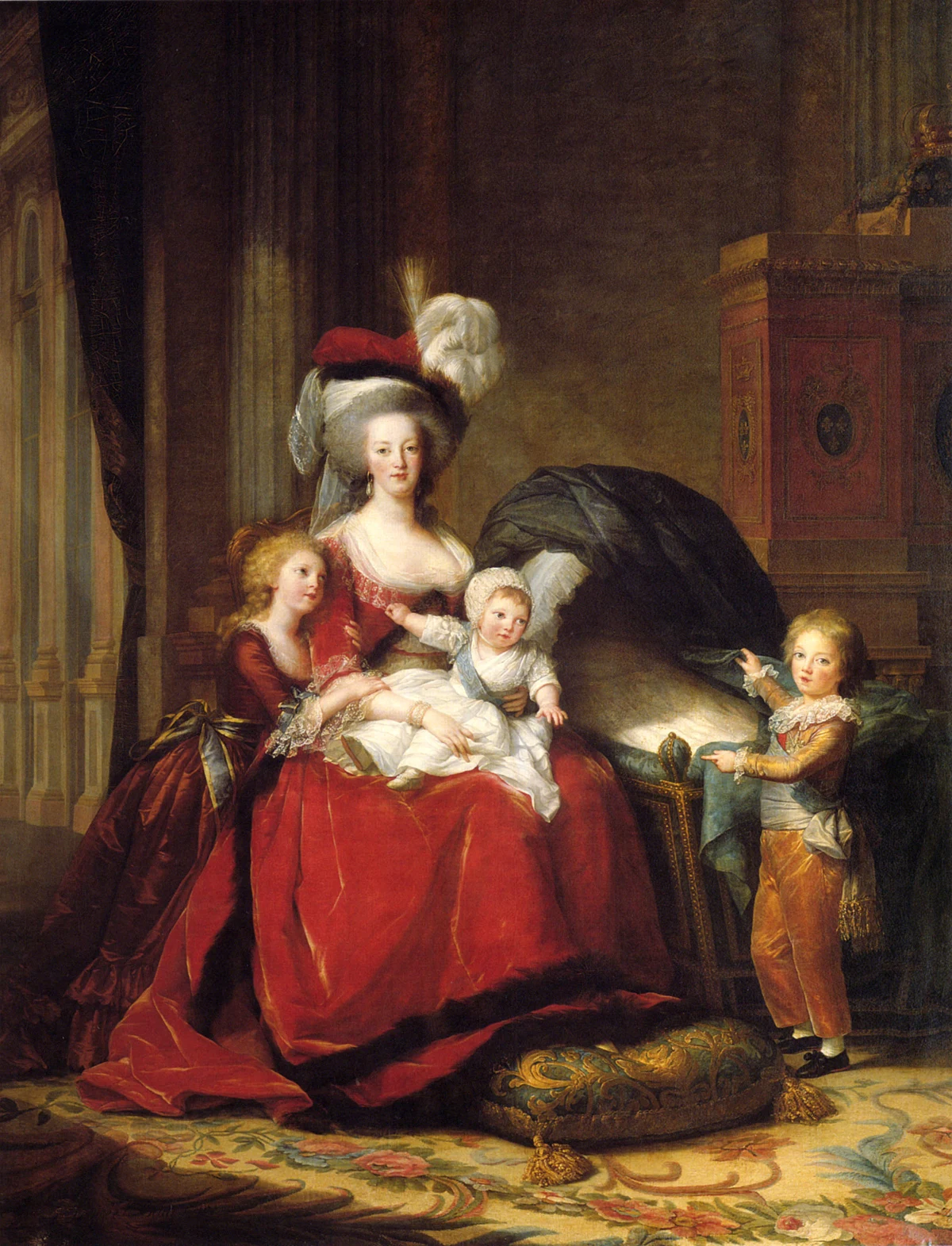
One detail in this royal family portrait can make you pause longer than a crown ever could. Beside Marie Antoinette and her children stands an empty cradle, its curtain drawn aside. Élisabeth Louise Vigée Le Brun painted the group in 1787, giving the queen a public image built around motherhood. Look closely, and a familiar face from French history becomes the center of a much more difficult conversation about family, loss, and power.
Start with the place left empty
The cradle refers to the queen’s daughter Sophie Hélène Béatrix, who died while the portrait was being made. Her older brother draws attention to the vacant space rather than allowing it to disappear into the furniture. The Metropolitan Museum’s exhibition catalogue identifies this gesture as an allusion to the child’s death. It also notes that X-rays found no trace of a painted infant in the cradle, so the tempting story of a baby simply painted out should not be repeated as an established fact.
Try following the pointing gesture before looking back at the queen’s face. Notice how an absence can become the part of a picture that holds your attention. You do not need to imagine a private conversation or supply feelings the artist never recorded. Starting with what is actually visible offers a more thoughtful entry into the woman introduced in our guide to Marie Antoinette beyond the familiar image.
A family scene made for public eyes
This was a royal commission, not a casual glimpse of an afternoon at home. Ordered in 1785 and shown at the Salon of 1787, the painting was intended to strengthen the queen’s reputation by emphasizing her maternal role. Its large scale gave the domestic subject the weight of an official statement. The children represented both a family and the continuation of a dynasty, making personal affection inseparable from the demands of monarchy.
Hold those two purposes together as you study the group. A family portrait can invite sympathy while also asking its audience to accept an idea about authority. Neither purpose cancels the other, and neither makes the painting a transparent record of daily life. Reading it alongside Paris before the French Revolution helps place that carefully arranged encounter within a wider world of rank and public judgment.
Remember the woman who shaped the image
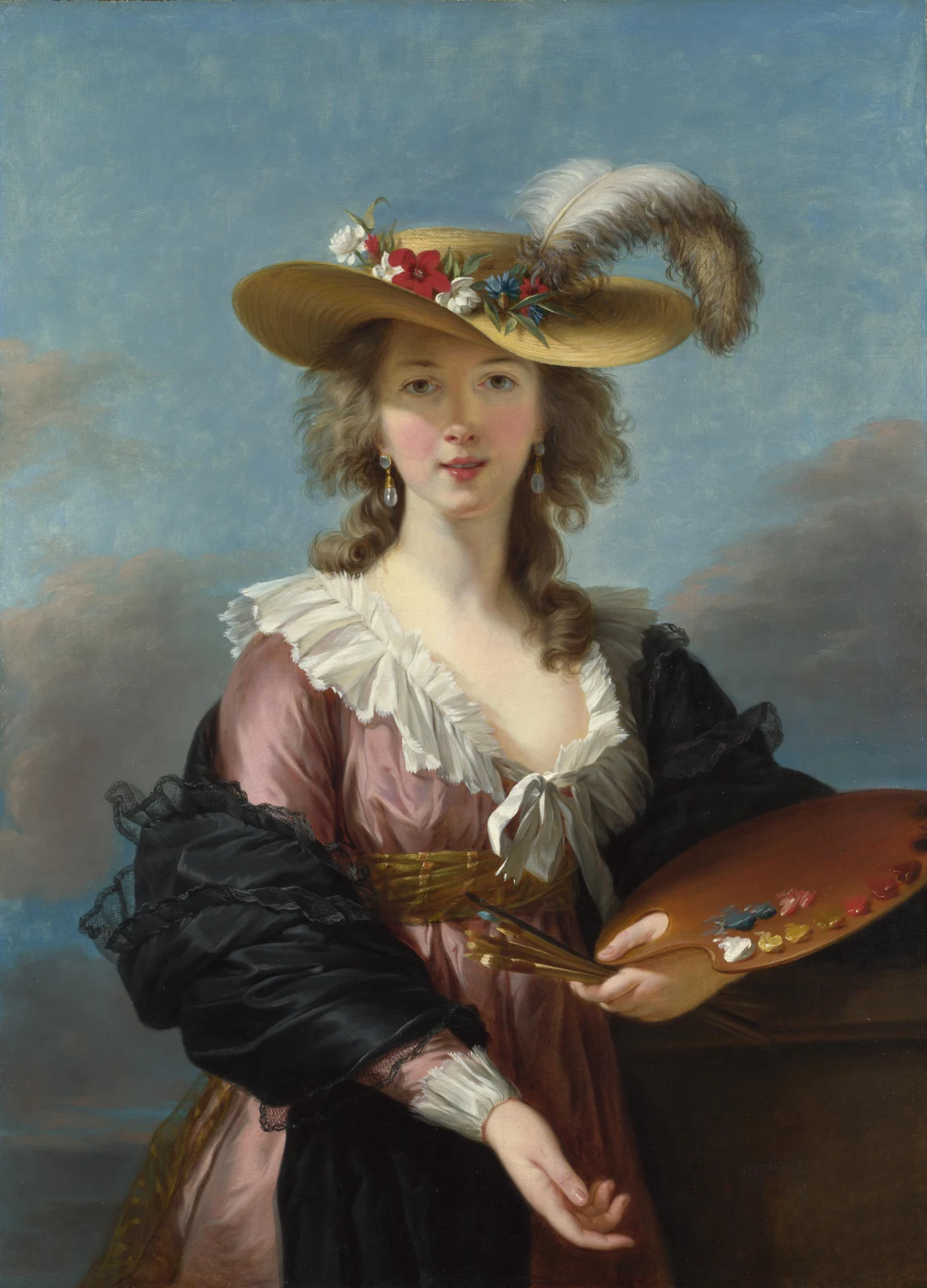
Vigée Le Brun was an accomplished portraitist with a career of her own. Versailles identifies her as the queen’s official painter and records her admission to the Royal Academy in 1783 with Marie Antoinette’s support. Her self-portrait, reproduced here, makes a useful companion to the royal group because it brings the image-maker into view. The painter holding a palette reminds you that every convincing portrait is also the result of skilled work and deliberate choices.
Compare where the two paintings direct your eyes. In the family group, follow the arrangement of faces, hands, fabric, and the open cradle. In the self-portrait, look at the tools that identify the sitter as an artist rather than merely a fashionable presence. That shift offers another way into the women who shaped Paris history, through the people who created its lasting images as well as those who appeared in them.
Carry a better question into Versailles
A painting can sharpen your attention before you ever enter a palace. Explore the Versailles setting with a question about how a public role leaves room for a private person. You might ask what a ruler’s family portrait wants its audience to notice first. Then consider what remains outside its frame, without confusing that question with proof of an unseen event.
Immmersiv’s Marie Antoinette, Rebel Queen offers a theatrical encounter through the streets of Versailles, with the queen embodied by a professional actor. The portrait provides background for your curiosity rather than a promised stop or admission to the palace collections. Read what to expect from the experience before making your plans. Bring the image of that empty cradle with you, and let it change the first question you ask about a queen you thought you already knew.
Discover an Immmersiv Experience
Explore Marie Antoinette, Rebel Queen with a professional actor embodying Marie-Antoinette. The artworks discussed here provide background for your curiosity. They are not a promise of stops, access, or artworks included in the theatrical experience. Consult the current experience page for its route and practical details.