How to Make French History Exciting for Kids
A child pauses beside an old shop sign and asks what people bought there. Suddenly, a city that seemed to consist of grown-up buildings has a door into ordinary life. French history becomes easier to approach when it begins with a recognizable human problem instead of a procession of names. In Paris, a family can build a day around that small opening and let the larger story arrive through things children can actually see.
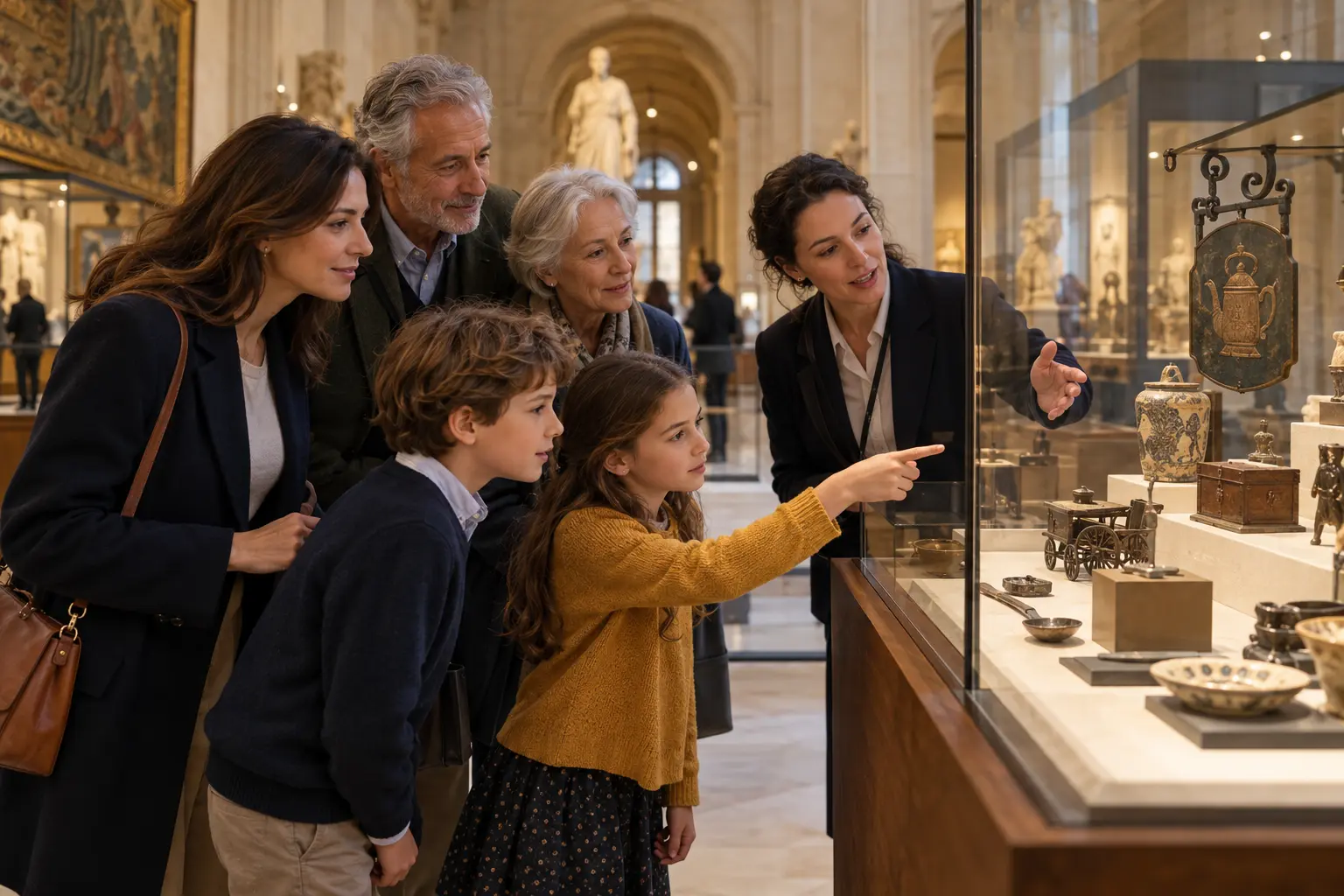
Start with a person and a problem
Choose one question your child can imagine having to answer, such as how to get across a busy city or how to pay for a painting. Explain who the person was and give enough context to make the question meaningful. You do not need to summarize an entire century before allowing the conversation to begin. Our guide to making Paris history fun provides a broader starting point for turning a family outing into an exploration.
Keep a distinction between an engaging hypothetical question and a statement about the past. Asking what a shopkeeper might worry about invites interpretation, while claiming a particular shopkeeper said something requires evidence. Children can enjoy imagining possibilities without being told that every imagined detail is true. When a question leads beyond what you know, admitting uncertainty can become an invitation to look more closely together.
Let objects supply the next clue
At the Musée Carnavalet, the history of Paris is approached through collections connected with the city and its inhabitants. Its family resources include activities and routes designed to help children find their way into the museum. Choose a small selection of objects rather than expecting a child to absorb every room. A visit organized around everyday life can make unfamiliar periods feel less remote without pretending that past lives were identical to ours.
Ask what material an object is made from, what it might have been used for, and which details support that idea. Then compare the observation with the museum's explanation, allowing the answer to change. This is more useful than a guessing game in which the adult already knows everything and the child must perform. For another way to structure the outing, browse Paris activities with kids and choose a nearby change of pace afterward.
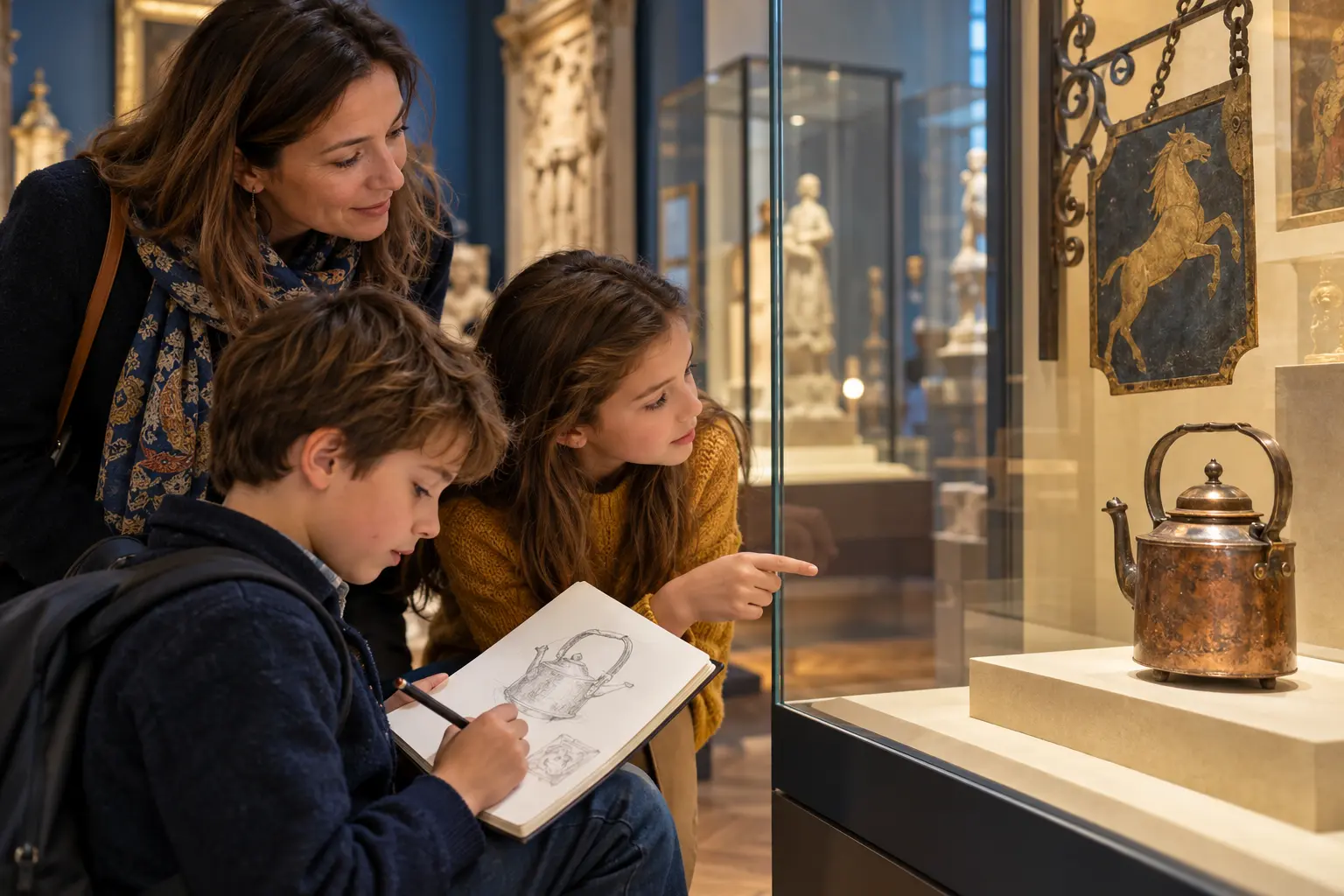
A simple sketch can connect these stages without becoming homework. Before the visit, draw the outline of an object or place your child expects to see, and leave space for an unexpected detail afterward. Compare the two drawings to discuss which assumptions changed, taking care to separate visible evidence from an imagined scene. That small record gives the child a role in the discovery and makes a later conversation more concrete than asking whether they learned anything.
Use a character encounter to open discussion
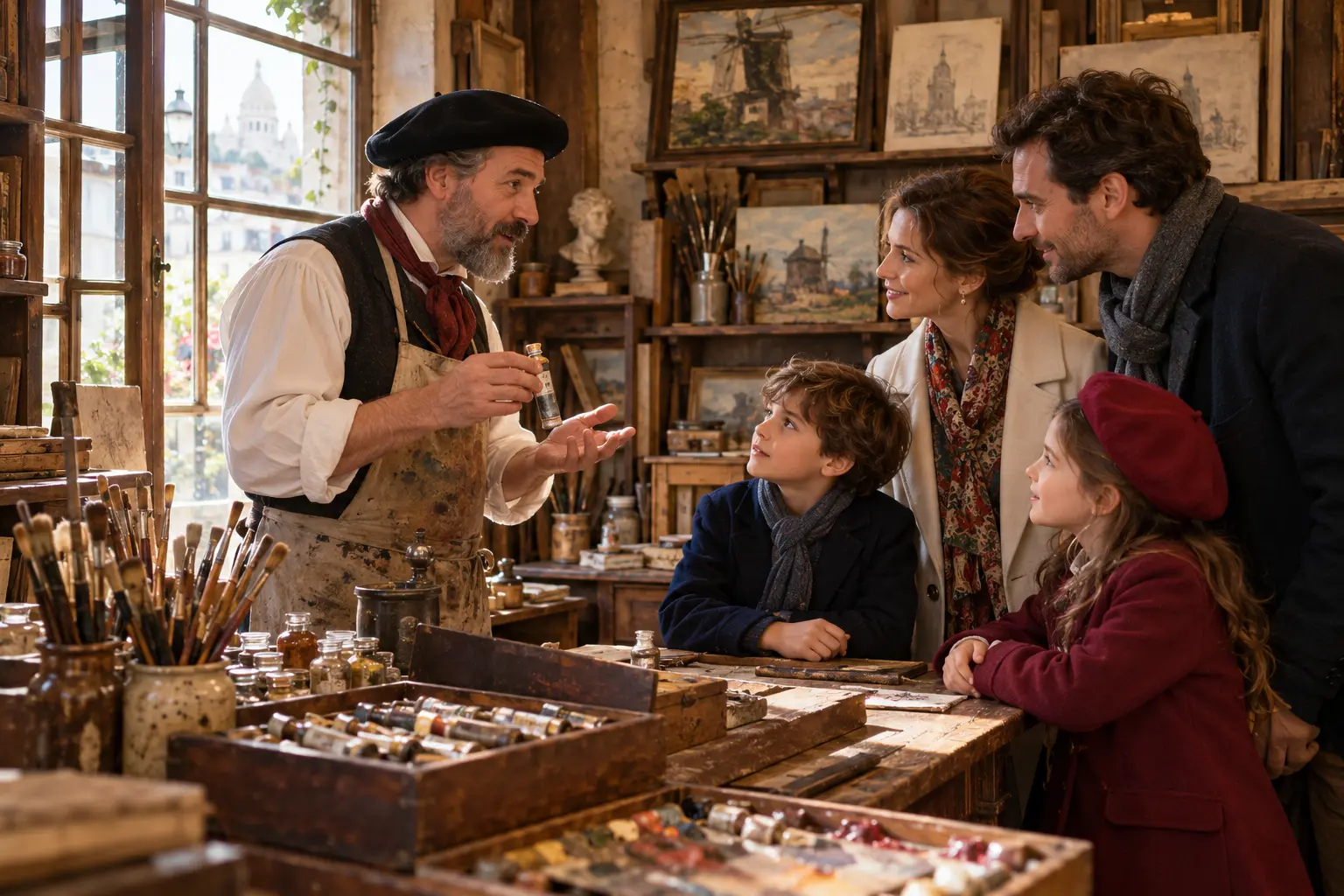
A performed historical character offers another entrance into a subject when the theme suits your family. Immmersiv's Père Tanguy experience can introduce questions about artists and the people around them through its published premise. The performance is an interpretation built around history, not direct testimony from a person who lived in the past. Reviewing what to expect helps you explain that distinction and check whether the format fits your children.
Before choosing, confirm age suitability, language, walking requirements, and current arrangements on the relevant experience page. Give a child the option of thinking of one question, while leaving room for simply listening. Afterward, look for an object, place, or artwork that adds evidence to the subject you discussed. The character collection and our guide to activities adults enjoy too can help you choose a topic that belongs to the whole family.
Finish the outing by asking which detail changed the way your child saw the city. An answer about an ordinary object can matter as much as a remembered royal name. Follow that interest when planning the next day, rather than returning immediately to a fixed checklist. French history becomes exciting when children feel that the questions they bring to Paris can help reveal its stories.