Josephine Baker and the Panthéon: What France Chose to Remember
The most familiar image of a famous performer is not always the one a country chooses to remember. Josephine Baker and the Panthéon tell a story that reaches beyond the stage, toward resistance, freedom, and belonging. On November 30, 2021, France honored her at the Paris monument through a ceremony that brought these different lives together. For a traveler, that moment offers a question worth carrying through the city: what becomes visible when a celebrity is remembered as a citizen?
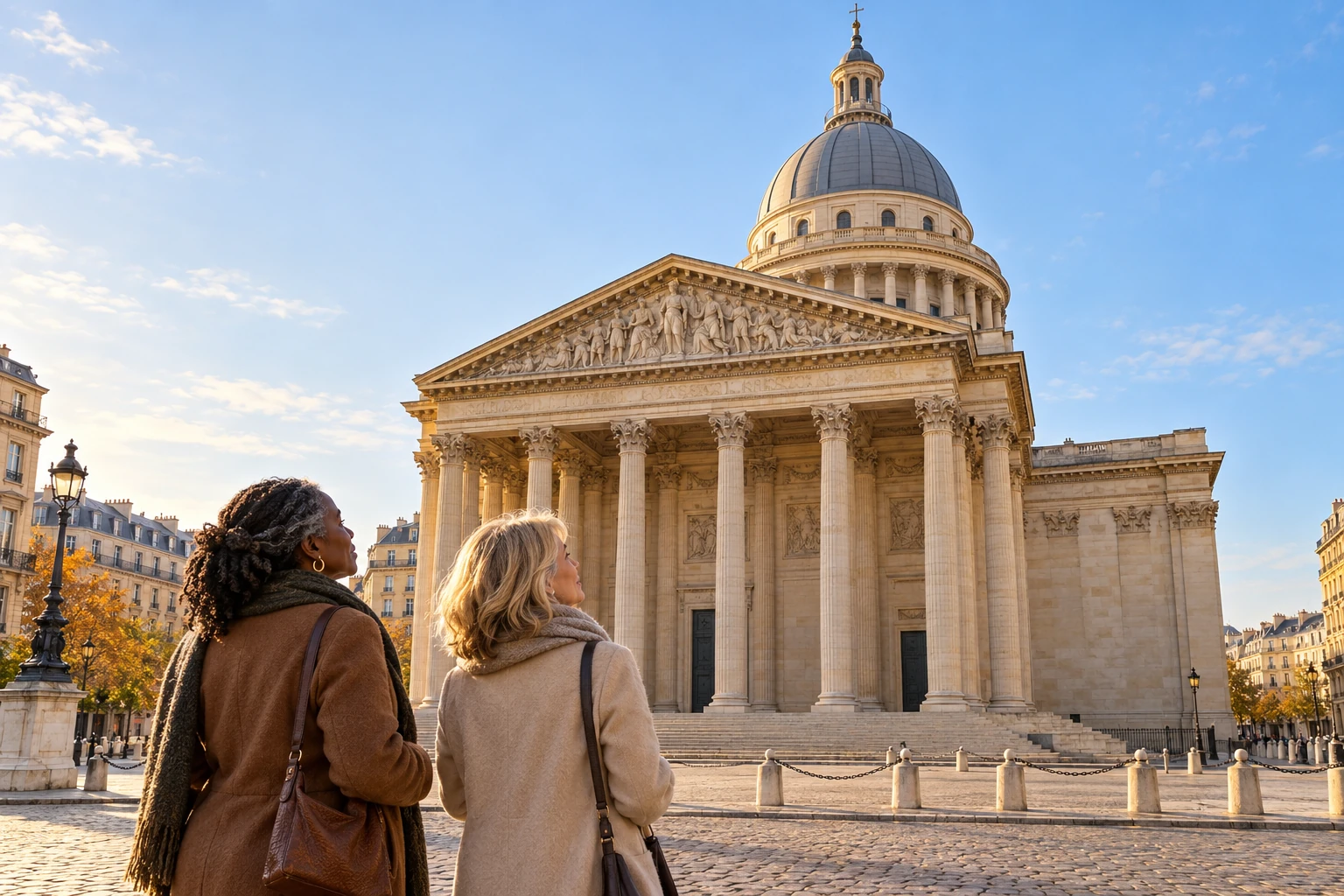
An honor that widened the frame
The official announcement of the tribute described Baker as an internationally known music-hall artist, a participant in the Resistance, and an opponent of racism. These were not separate candidates competing for recognition. They were parts of the same life, placed together in a national act of remembrance. Reading the announcement alongside our introduction to Josephine Baker’s Paris helps explain why the name can mean much more than a celebrated performance.
Begin by noticing your own starting point. Perhaps you first encountered Baker through a photograph, a song, or a mention of her American origins. Ask what that image leaves outside the frame before replacing it with another equally simple symbol. A more generous approach allows an artist’s public success and civic commitments to remain connected without making either a decorative footnote.
Read a commemorative speech as a choice of emphasis
The ceremony’s published address recalled Baker’s arrival in Paris in 1925 and her French citizenship in 1937. It also connected her work for the Resistance with her later engagement in the American civil-rights movement. Those connections explain the breadth of the tribute, but a commemorative address has a purpose of its own. It tells us how a nation chose to present a life in 2021, as well as recounting events from that life.
That distinction can make a monument visit more interesting. Listen for the qualities being praised and consider why they were brought together on that occasion. Then separate the dated event, the historical actions being recalled, and your response to the tribute. Our article on women who shaped Paris history opens a wider conversation about whose contribution becomes visible in the city’s public stories.
Keep the Panthéon and occupied Paris on different timelines
A twenty-first-century ceremony is not a surviving scene from the Occupation. Keeping the dates apart lets you ask better questions about both periods. The tribute looks back, while the wartime story concerns choices made without knowledge of that later recognition. Our introduction to Paris during World War II provides context for that earlier chapter without turning every wartime location into a Baker address.
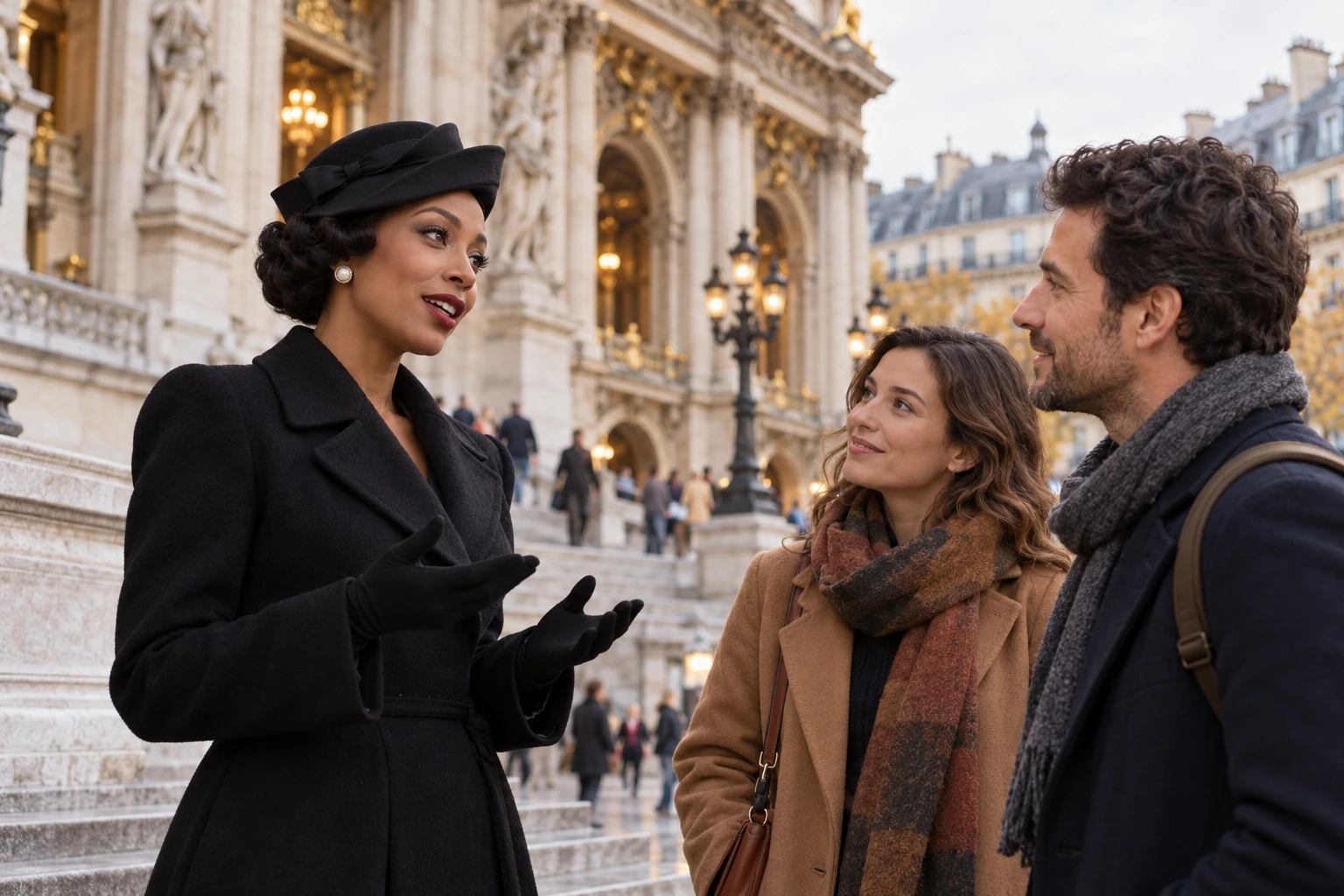
The same care applies to the shape of your visit. A stop at the Panthéon does not establish the route of a separate theatrical experience elsewhere in Paris. Explore the Opéra Garnier setting to understand the starting area of Immmersiv’s Baker encounter. Leave room for the different locations and for the distinct questions each setting raises, rather than treating them as one continuous historical scene.
Bring a question about recognition to the encounter
Immmersiv’s Josephine Baker’s Paris & the Occupation introduces a portrayed Baker through a professional actor and a wartime Paris narrative. Its published premise also considers women whose contributions to resistance were insufficiently recognized. The Panthéon tribute can therefore be a useful point of reflection before or after the experience. It should not be mistaken for a promised stop on the route or for an event Baker herself could have remembered.
Read what to expect from the theatrical format and decide which question you want to pursue. What changes when someone known for entertainment is remembered for political courage? Which parts of a complex life resist being turned into a single emblem? You may leave with a more thoughtful way to look at the next familiar face on a Paris poster, plaque, or monument.
Discover an Immmersiv Experience
Explore Josephine Baker’s Paris & the Occupation, with a professional actor embodying Josephine Baker. This is an interpreted encounter, distinct from the documents and artworks discussed above. Check the current experience page for practical information before planning your visit. Keep time afterward to compare the places you saw with the questions you brought.