Joan of Arc’s Trial in Rouen: Why There Are Two Stories to Follow
A trial can end with a judgment and still leave a city full of questions. In Rouen, Joan of Arc’s story asks you to follow two proceedings, separated by a generation. One condemned her in 1431, while another reexamined that condemnation in 1456. Keeping them distinct makes the streets, the museum narrative, and the familiar image of Joan much more interesting than a single dramatic ending.
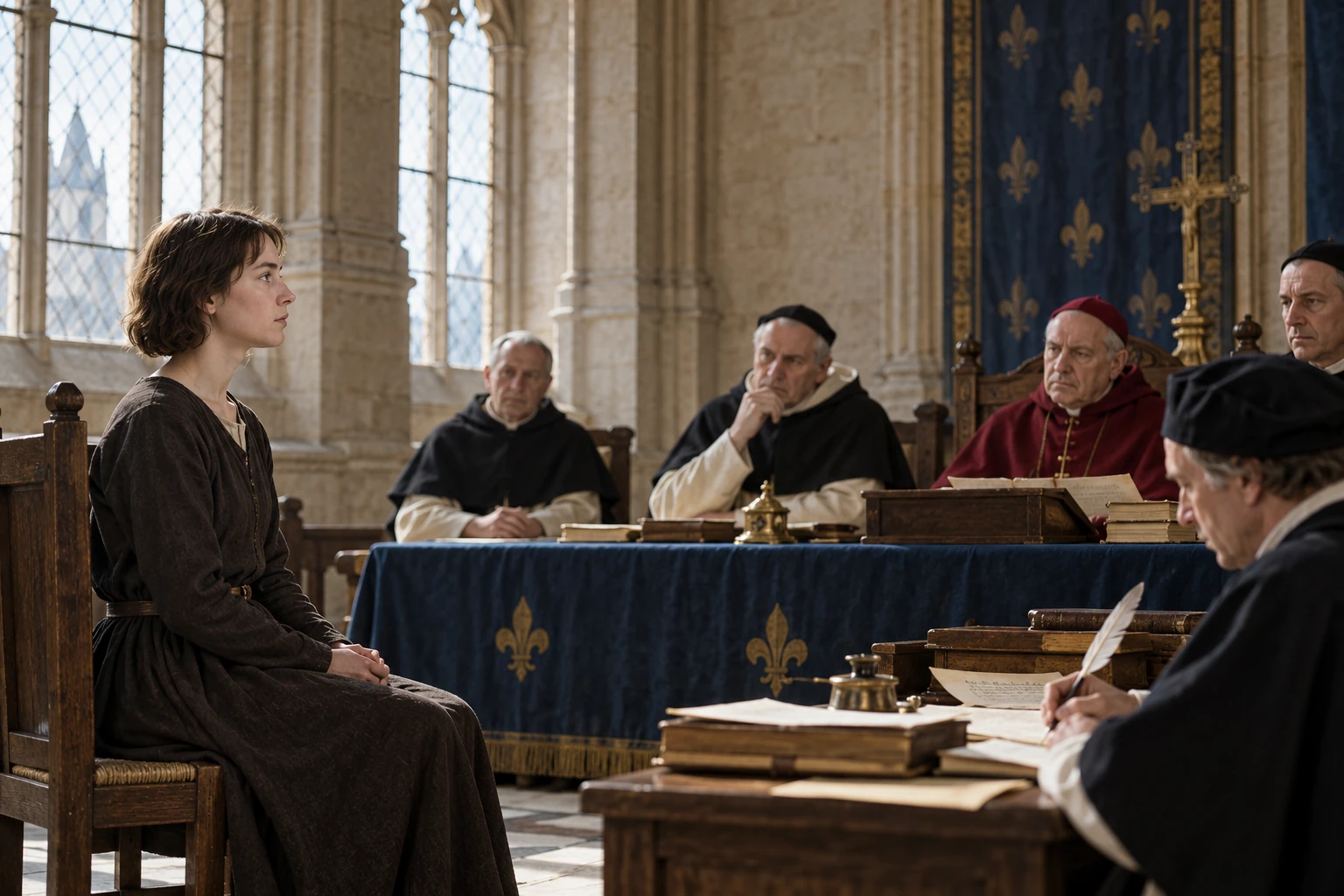
1431 and 1456 ask different questions
The first proceeding treated Joan as an accused person in a case concerning faith. The surviving record names Pierre Cauchon, bishop of Beauvais, and documents the involvement of church officials in Rouen. Its questions and accusations belong to that specific judicial setting. They should not be read as if they were a neutral biography written to help a modern visitor understand her.
The later proceeding looked back at the condemnation rather than placing a living Joan on trial again. The Historial Jeanne d’Arc frames its immersive route around that rehabilitation inquiry in 1456. This creates two useful timelines: what happened to Joan and how people later examined what had happened to her. If you need a wider starting point, our beginner’s guide to French history can help you place the story without turning your visit into a chronology test.
Read the record as evidence, not a recording
An edition of trial proceedings is a mediated source, even when it preserves questions and answers. The International Joan of Arc Society provides an English translation based on the Orleans manuscript, with information about its editor and translator. That is valuable evidence, but it is not an audio recording of every word in the room. Notice who is asking, who is answering, and what kind of answer the question seems to seek.
You can try that approach with a short passage rather than attempting the whole document. Separate the charge being made from the response attributed to Joan, and keep your own interpretation on a third line. A powerful answer does not remove the need to examine how the document reached you. Our discussion of history and legend offers another way to think about evidence without draining a story of its emotional force.
Let Rouen reveal how the story is told
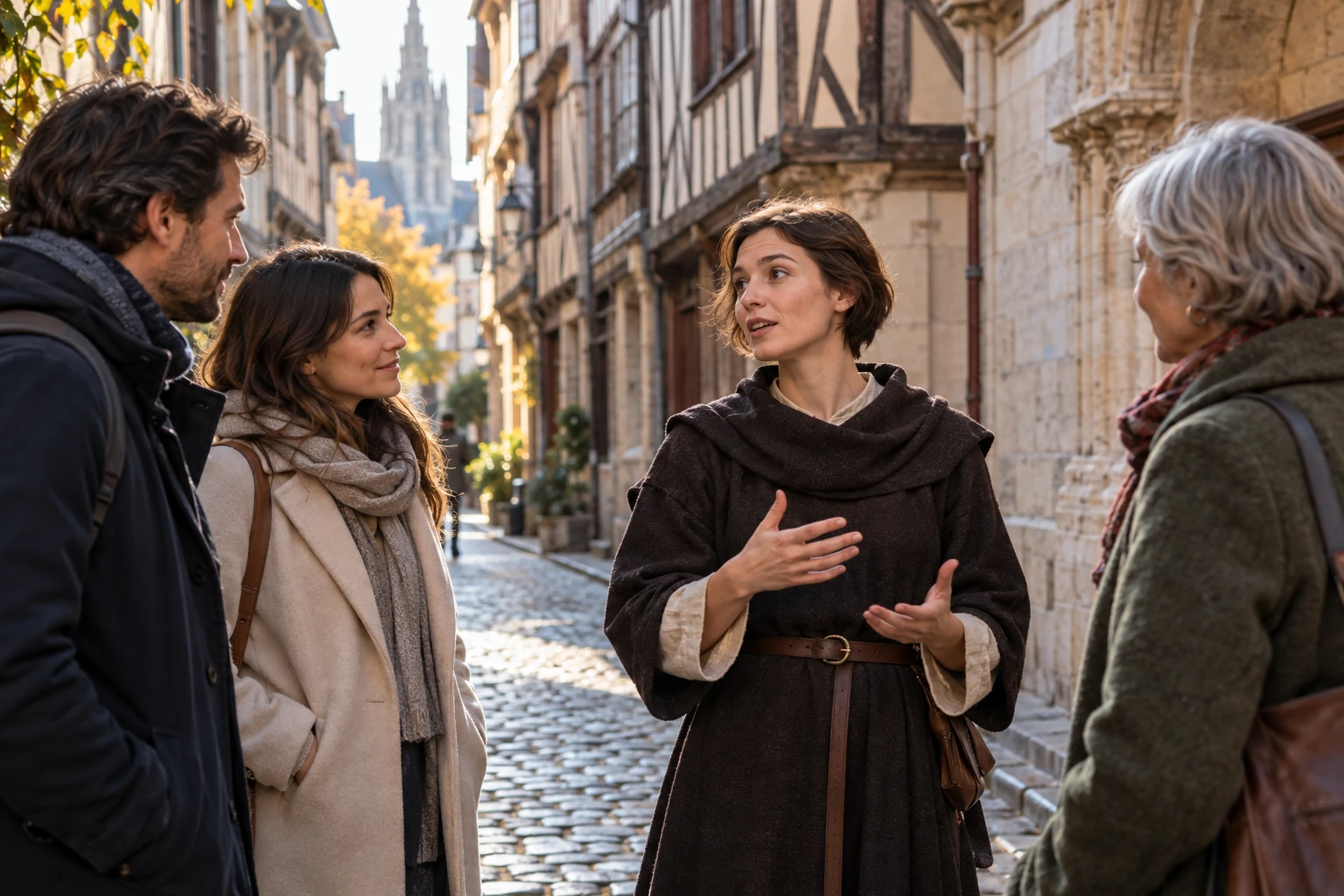
The Historial occupies Rouen’s archiepiscopal palace and uses a digital narrative to draw visitors into the inquiry. Its presentation moves through testimony rather than asking you simply to memorize a verdict. A separate Mythothèque examines Joan’s later image through art, public memory, and popular objects. These are different kinds of discovery: a judicial past, a modern interpretation of it, and the long afterlife of a recognizable figure.
Keep those layers in mind when you look around the city. A surviving place, a memorial, and a dramatized scene do not offer the same kind of historical evidence. Explore our introduction to Rouen to connect the setting with the character before choosing your next stop. Avoid assuming that every medieval-looking building witnessed the trial, or that a present-day room has remained untouched since Joan’s lifetime.
Carry the question into a living encounter
A useful question for the journey home is how your impression of Joan changed between the two proceedings. Did a recorded exchange make her seem more distant, or more human? Did an image you already knew turn out to belong to a later period of remembrance? Our article on Joan of Arc and Paris follows another episode of her life, which helps keep that earlier chapter separate from the events in Rouen.
Immmersiv’s Joan of Arc: The Trial in Rouen offers a theatrical continuation with a professional actor portraying Joan. Read how an Immmersiv encounter works before deciding how it fits your visit. Performance can give a question urgency, while the documents remain essential when you want to test an historical claim. Leave room for both, and Rouen becomes a place to listen carefully rather than merely recognize a famous name.
Discover an Immmersiv Experience
Explore Joan of Arc: The Trial in Rouen, with a professional actor embodying Joan of Arc. This is an interpreted encounter, distinct from the documents and artworks discussed above. Check the current experience page for practical information before planning your visit. Keep time afterward to compare the places you saw with the questions you brought.