How to Introduce Kids to French History Before Visiting Paris
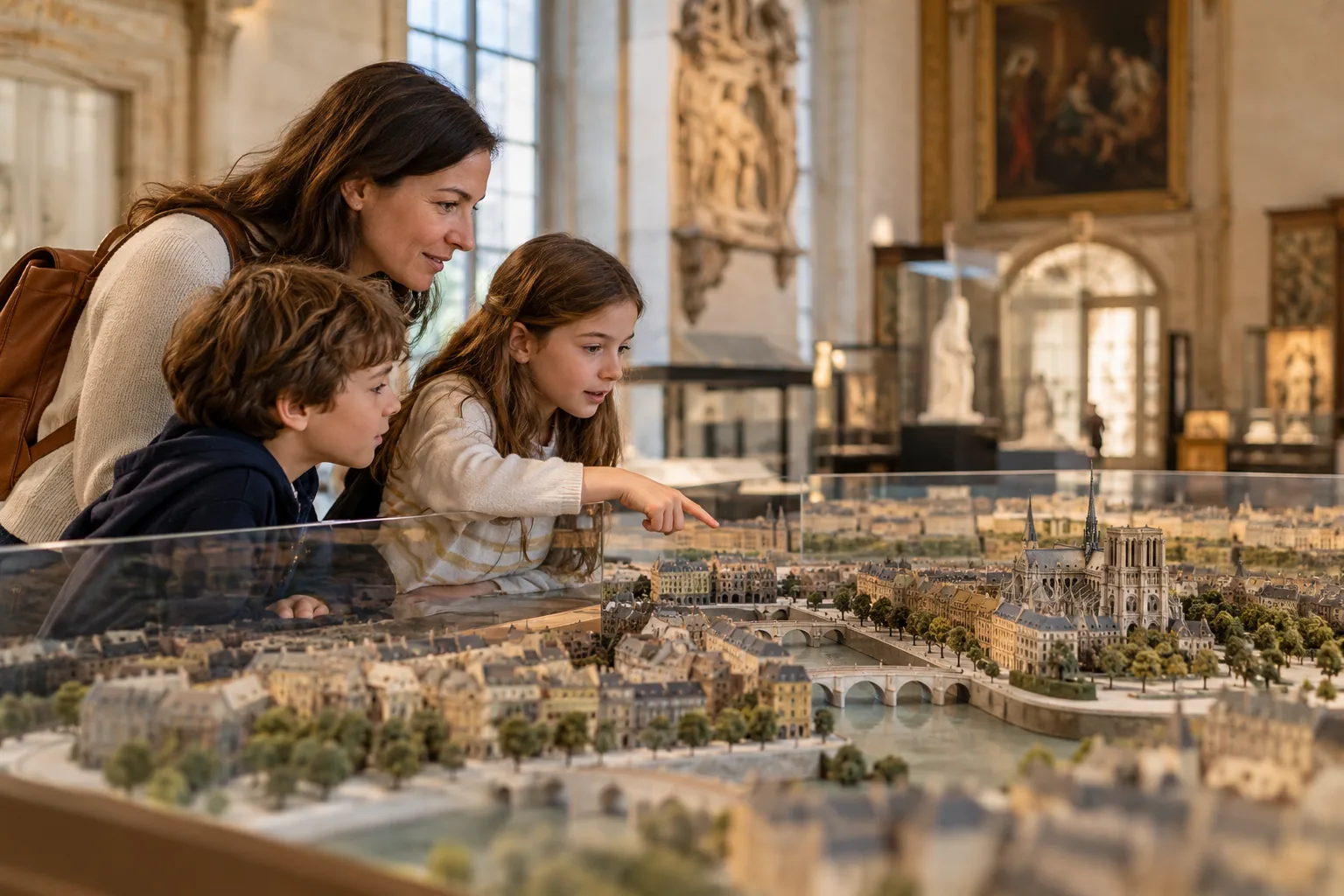
Before your family reaches Paris, a single image can begin a conversation that changes how a child sees the trip. It might show an object from a museum, a portrait, or the outline of a place you plan to visit. The useful preparation is not a demand to understand the whole history of France before departure. It is a small introduction that makes the city's unfamiliar stories feel possible to approach.
Choose one thread and give it a little context
Begin with a subject your child already talks about, such as clothes, paintings, inventions, or everyday life. Choose one person or object connected with that interest and use an authoritative museum or institutional source for the basic facts. Place the subject loosely in relation to the present before adding dates that will not yet mean much to the child. Our guide to making French history exciting for kids shows how a recognizable question can open a larger story.
A small timeline can help when your planned visits belong to different periods. Include only the subjects you actually intend to explore, and explain that it is a selection rather than the complete story of France. Avoid joining personalities in an imagined encounter unless you clearly label it as fiction and have checked whether they could have met. Leave room for the child to ask about everyday details that a broad historical summary would overlook.
Prepare through images and questions rather than a test
Look at a museum object online and ask what your child notices before reading its description together. Distinguish the visible details from the information supplied by the museum, so curiosity does not depend on guessing the correct answer. Carnavalet's collection and family information provide a way to investigate Parisian life before visiting. The Musée d'Orsay's family resources offer another route when artworks are a stronger point of interest.
Make a short record of two or three questions your family wants to investigate in Paris. One can belong to a child, another to an adult, and another to something you do not yet understand together. Do not require the child to memorize the answers before leaving or promise that every question will be resolved during the trip. Our article on ways to interest kids in Paris history offers further options if you want to vary this light preparation.
Keep preparation separate from promises about what an organized activity will provide. A museum collection image does not establish that an object will be on display on your date, and a family resource may require a separate arrangement. Check the current visitor information closer to the visit when those details affect the plan. This lets anticipation remain enjoyable without building it around assumptions you cannot confirm.
Explain immersive theater before choosing an encounter
Explore the Immmersiv character themes if a particular personality connects with your child's interests. Read the relevant experience page and the format guide before making a booking. Explain that a performer portrays a historical character through a narrative interpretation, rather than claiming your family will meet a person from the past. Confirm age suitability, language, current availability, and the practical conditions for the encounter you select.
Use the Paris map to show where the story will sit within the rest of your trip. A child can prepare a question if they want to speak, while listening can remain a comfortable way to participate. Our family weekend guide helps you place an encounter beside another discovery without overloading the schedule. Keep the introduction brief enough that the visit can still contain something genuinely unexpected.
Good preparation gives children a few familiar threads to recognize when they arrive in Paris. It leaves the city room to answer in ways a picture or a page could not anticipate. Follow the questions that grow from your child's interests and allow new ones to replace them during the trip. The aim is to open a door into French history, not finish the story before the journey begins.