The Higgins Boat at Omaha Beach: Why the Bow Ramp Mattered
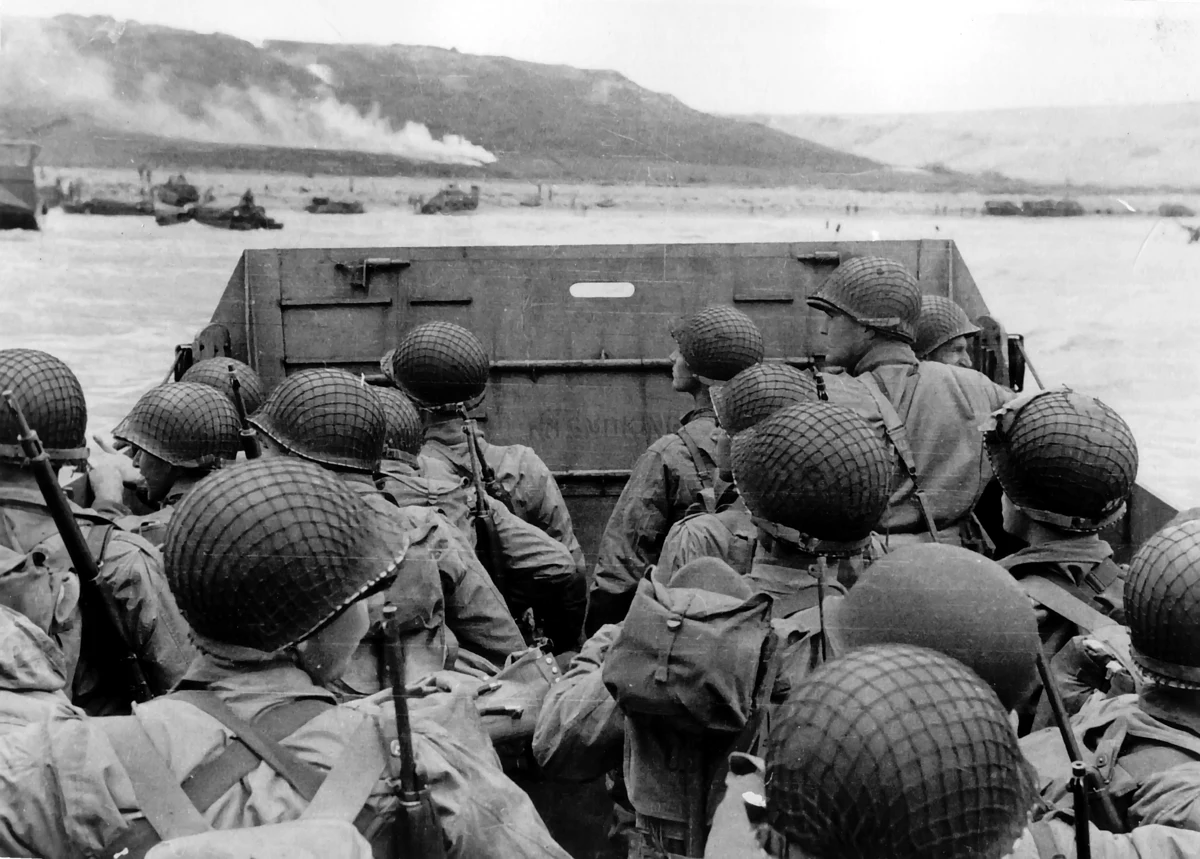
In a photograph taken on the approach to Omaha, soldiers crowd behind a metal bow. The shoreline is visible, but the boat still separates the men from the beach. Understanding the Higgins boat at Omaha Beach begins with that last stretch of water. A small craft and its lowering ramp helped solve the practical problem of moving people from a transport ship onto an open shore.
A workboat became a military landing craft
Andrew Jackson Higgins built shallow-water boats in New Orleans before the war. His designs served work in Louisiana’s marshes and bayous, where a boat had to operate close to the bottom. The U.S. military’s search for a craft able to approach an open beach created a new use for that experience. The result developed through several related designs rather than appearing immediately as the familiar ramp-fronted boat.
The LCP(L), or Landing Craft Personnel (Large), carried troops without a bow ramp. Men had to climb or jump over the sides to leave it. The National WWII Museum explains how Higgins combined features of personnel and vehicle craft in the LCVP, meaning Landing Craft, Vehicle and Personnel. That small landing craft had a different role from the much larger supply infrastructure described in the story of Omaha’s Mulberry A artificial harbor.
The ramp changed the way people could leave the boat
The retractable bow opened into a ramp across the front of the LCVP. Instead of climbing over a high side, troops could move forward out of the craft. Depending on its load, it could carry up to 36 equipped infantrymen, a small vehicle with fewer troops, or cargo. These were alternative loads, so the capacity figures should not be added together as though every boat carried them all at once.
The design also has a history of observation and adaptation. The U.S. Patent and Trademark Office describes Marine officer Victor Krulak’s account of Japanese landing craft with bow ramps as an influence on Higgins’s work. His wartime patents document continuing work on boats and unloading equipment. A useful invention can emerge from bringing an existing hull, a practical problem, and another observed solution together.
Read the photographs without making every barge the same
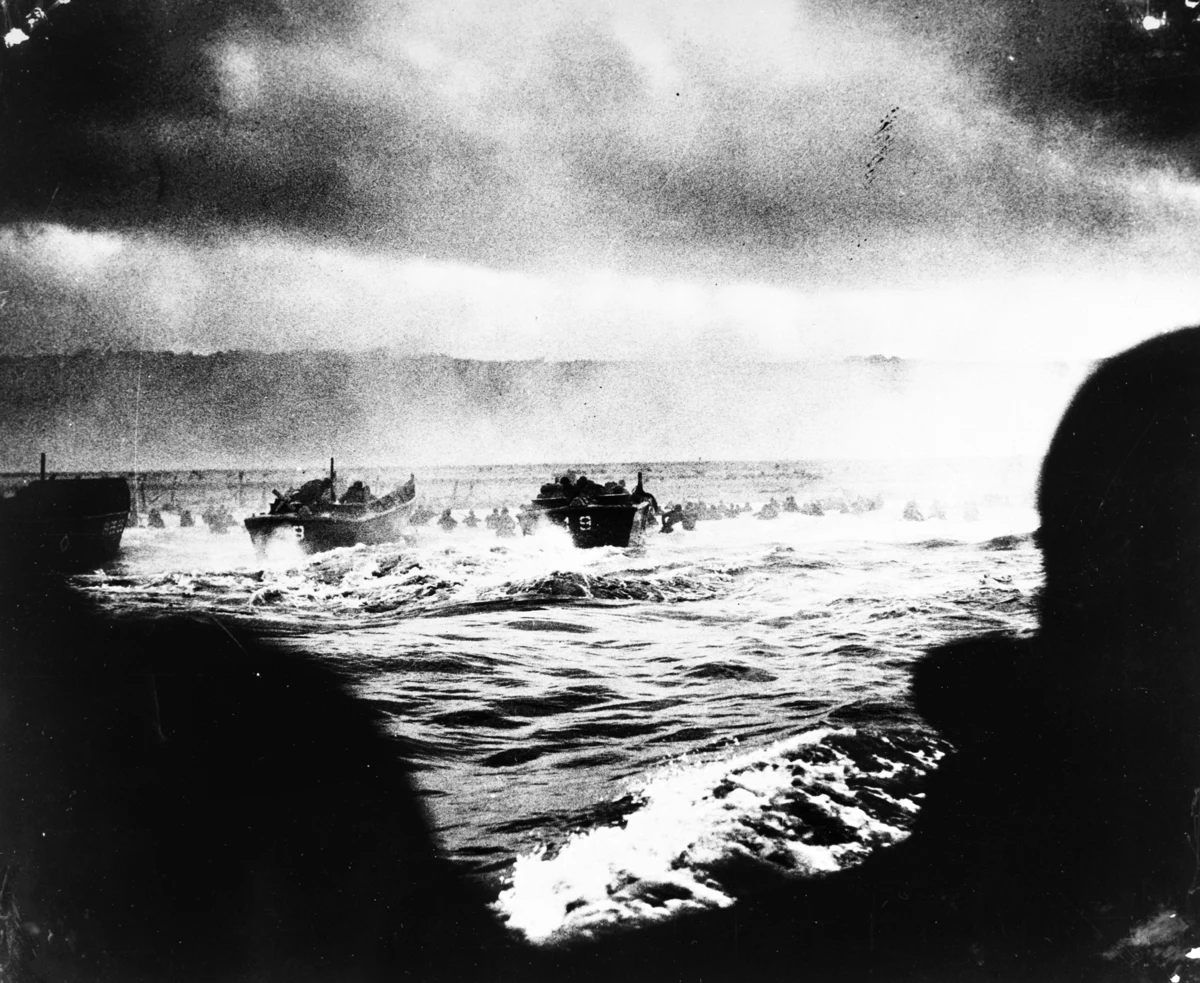
The approach photograph reproduced here is identified in the Army Signal Corps collection as troops in an LCVP nearing Omaha on June 6, 1944. Notice the closed ramp in front of the men and the beach beyond it. The second archival view identifies LCVPs putting troops ashore at Omaha that day. These captions establish a particular kind of craft in a particular setting, rather than making every D-Day landing vessel a Higgins boat.
The LCVP was built mainly of wood, with steel protection in vulnerable areas. Its relatively small size and shallow-water design made it useful for unloading over an open beach. Those characteristics did not remove the danger faced by troops approaching a defended coast. The later story of the liberation of Paris belongs to a wider campaign, whose different stages should not be collapsed into one event at the water’s edge.
Look at Omaha as a place of movement
A quiet beach today can make it difficult to imagine the work of moving people and equipment ashore. Begin with the distance between water and land, then picture the limited space inside the boat. The ramp becomes a concrete detail connecting a mechanical design with a human experience. Reading about places that retain the history of wartime Paris offers another example of how present-day surroundings can invite questions about movements and events that are no longer visible.
Our Omaha Beach introduction provides a starting point for exploring the landscape. For an actor-led encounter with its history, consult Omaha Beach – code name : Overlord and the published itinerary. Read what to expect from an Immmersiv experience for the storytelling format and practical approach. Carry the photographs as historical context, without assuming that a surviving boat or a boat ride forms part of the experience.
Discover an Immmersiv Experience
Explore Omaha Beach – code name : Overlord with a professional actor embodying an American GI. This article provides background for your curiosity. It does not promise stops or access beyond the published experience route. Consult the current experience page for its route and practical details.
Continue Exploring
Sources and further reading
- National WWII Museum — Research Starters: Higgins Boats
- U.S. Patent and Trademark Office — The patented boat that won the war
- U.S. Army Transportation Museum — Landing Craft Vehicle Personnel
- Wikimedia Commons — Army Signal Corps photograph SC 320901
- Wikimedia Commons — U.S. Coast Guard Omaha landing photograph