Family-Friendly Cultural Activities in Central Paris
Central Paris can tempt a family to keep adding one more famous place because everything appears close on a map. At street level, each crossing, queue, and change of direction asks for time and attention. A more rewarding cultural day begins with a small area and a reason to explore it. Choose a collection or character theme that interests your family, then let the nearby city become part of the discovery instead of a race between attractions.
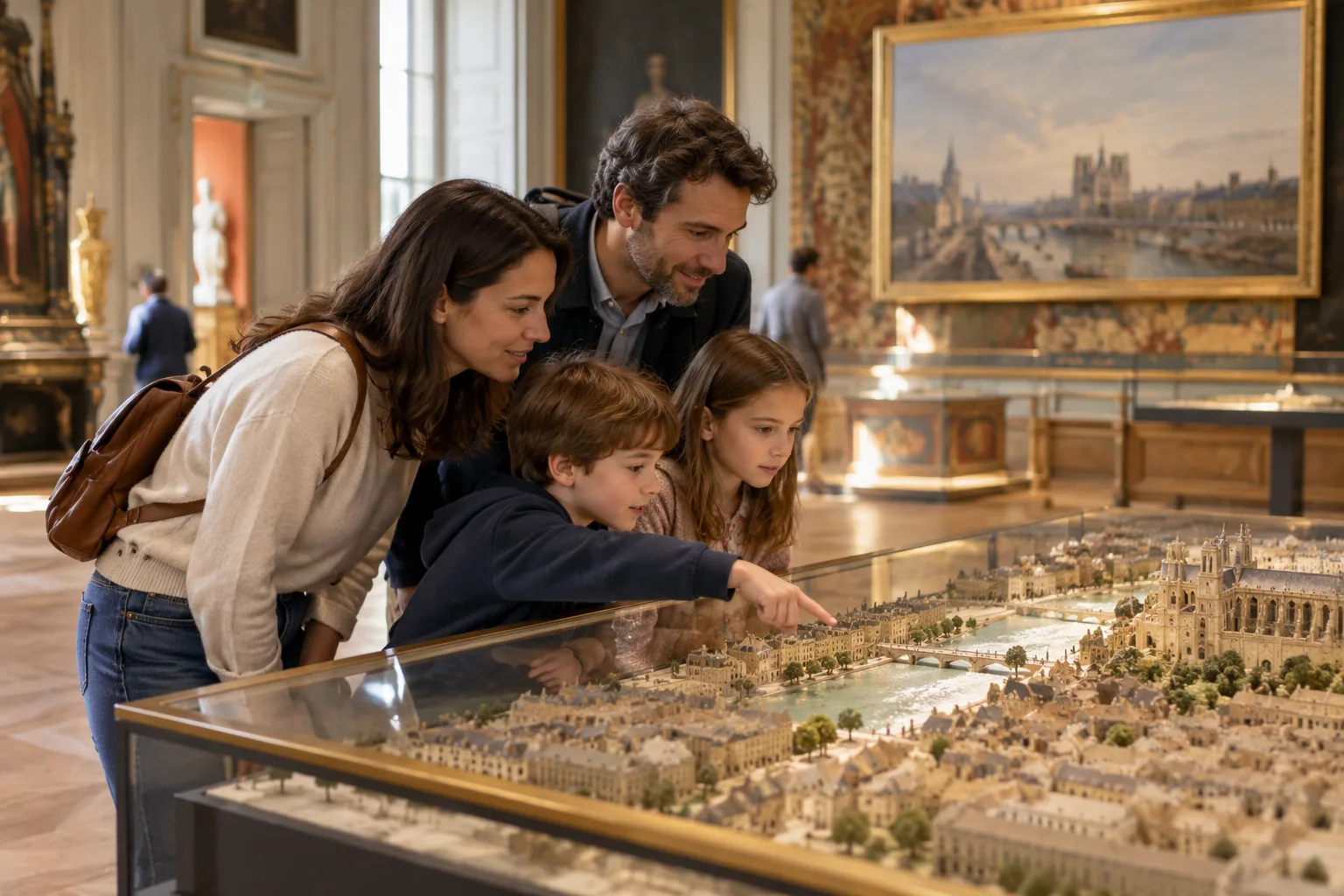
Begin with a compact collection visit in the Marais
Carnavalet is located in the Marais and focuses on the history of Paris, making it one place to investigate for a family interested in how city life has changed. The museum describes family activities and resources that help children approach its collections. Select a manageable group of objects and confirm current visitor information before planning the outing. Our guide to Paris with kids can help you compare this visit with other cultural possibilities.
Use the surrounding neighborhood as a change of setting rather than attaching an unverified story to every facade. Notice materials, signs, and the arrangement of streets, while keeping adults responsible for navigation and crossings. If a building prompts a historical question, note it for investigation instead of inventing an answer that sounds plausible. One accurate connection between an object and city life can be more useful than a long series of colorful claims.
Choose another central theme without combining everything
An art-focused family can investigate the Musée d'Orsay's collection and family resources as an alternative center for the day. A family drawn to techniques and inventions can review the Musée des Arts et Métiers' family information instead. These are different visits with their own subjects and practical arrangements, rather than stops that automatically belong in one compact route. Our guide for curious kids can help you choose by interest before comparing the locations.
Check current admission arrangements, opening information, and the language and age requirements of any organized activity. Family-friendly describes a range of possibilities, not a guarantee that every workshop fits every child. Choose a small selection and leave time for a nearby meal or break that does not require an ambitious transfer. Our article on avoiding museum fatigue helps you keep the collection visit focused enough to enjoy the rest of the neighborhood.
Decide what makes the area practical for your family instead of relying on a vague definition of central. Compare the actual route from your accommodation, the arrival requirements for the visit, and the needs of anyone who finds walking or standing difficult. A famous location can still be inconvenient when the surrounding plan is too demanding. Keep the day's second discovery optional until you know how the first one has gone.
Investigate a central character encounter by its actual location
Use the Immmersiv map to see where the published character experiences fit into the city. The Coco Chanel experience at Place Vendôme is one theme to investigate if clothing, identity, and a performed personality appeal to your family. Read its actual description and confirm age suitability, language, walking requirements, availability, and any other conditions before booking. Do not assume that a central setting makes the encounter suitable for every family or that it shares the admission arrangements of a nearby museum.
Read what to expect so children understand the encounter as theater built around a historical subject. Give each family member room to listen or ask questions according to the actual format and their comfort. A later collection visit may add another perspective to the same theme, but it does not need to happen immediately afterward. A compact cultural plan succeeds when the connections feel meaningful and the practical demands remain manageable.
Central Paris offers enough cultural variety that a family can choose a personal route without trying to complete the city. One collection, a few observed details, and a thoughtfully selected encounter can each open a different story. Match the locations to your practical needs and keep space for breaks and unexpected questions. The neighborhood becomes more memorable when you have time to pay attention to it.