The Best Way to Visit Historical Paris with Children
The family has crossed another street, and the last historical explanation is already fading behind the next crossing. A day can include famous places yet leave little room to understand why they connect. Visiting historical Paris with children works better when you choose a thread and give it a manageable setting. One well-observed neighborhood can offer more to discuss than a route that tries to compress the whole city's past into an afternoon.
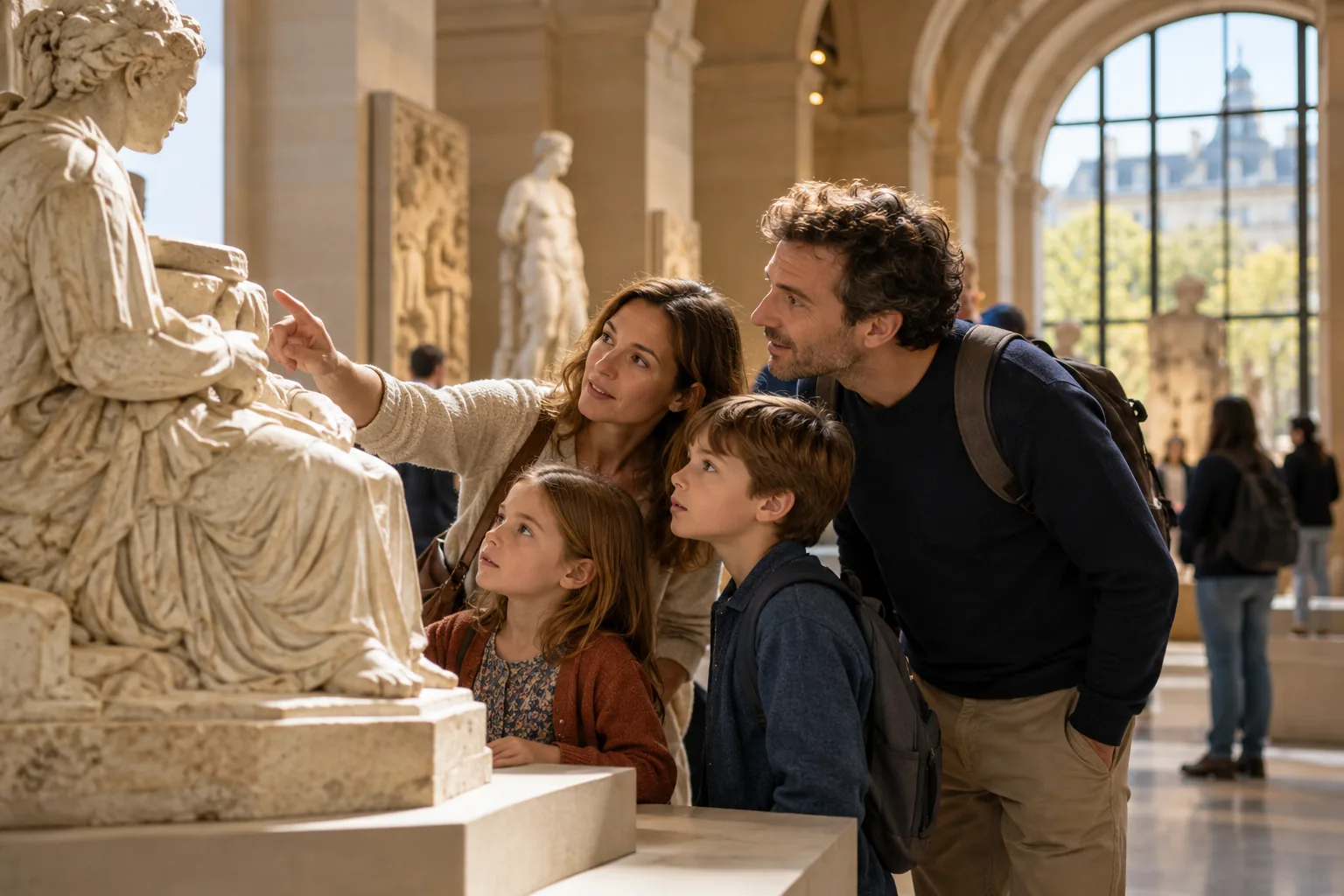
Choose the story before drawing the route
Begin with a question your family can imagine exploring, such as how people worked, how artists found support, or how a neighborhood changed. Select a collection or place that can supply evidence connected with that question. Then check the geography and practical arrangements before adding another stop. Our guide to cultural activities in central Paris helps you think about a compact day rather than assume that everything marked central is close enough to combine.
Separate periods and subjects instead of presenting Paris as one undifferentiated historic backdrop. A shop sign, a painted portrait, and a memorial can open very different questions about the people represented. Explain enough of the context to make that difference clear without beginning the day with a lecture. Our article on preparing children for French history offers a light way to introduce the thread before departure.
Make a small collection visit and a nearby observation connect
Choose a manageable selection of objects and find out what the institution says about them. Ask a child to describe an observable detail before discussing its historical meaning, allowing the label to change a first impression. When you return outside, notice the city without insisting that every facade proves the story you just explored. A connection becomes useful when it is accurate, rather than when it merely makes a route sound more dramatic.
Give each stop a purpose that differs from the previous one. A collection might establish information, a street might raise a question about how people moved, and a later conversation might compare the family's interpretations. Do not invent a private conversation or identify an ordinary doorway as a historic location without a source. Keep an unanswered question in a notebook if that is more honest than supplying a tidy story on the spot.
Plan the movement between stops as part of the visit, including crossings, arrival requirements, and a genuine break. Adults remain responsible for navigation even when children help choose the question or observation. Our guide to avoiding museum fatigue helps you protect attention before adding another cultural stop. The Immmersiv map can show where an encounter sits geographically, without guaranteeing that it fits every family's walking needs.
Add a character only when the theme and format fit
A performed personality offers a narrative viewpoint that can complement the objects and places you have explored. Browse the character themes and read the relevant experience page before deciding which story belongs in the day. Explain that a professional actor embodies the character through a theatrical interpretation, while historical sources establish other kinds of evidence. A recognizable name alone does not make a subject suitable for every child.
Check age suitability, language, current availability, walking demands, and how interaction works for the specific encounter. Read what to expect together if a child is unsure about being addressed by a performer. Listening can be a comfortable way to engage when the format allows, and preparing a question should remain optional. Put the encounter on another day if combining it with the collection would leave too little time for the discoveries you already planned.
The best historical route is one your family can understand and enjoy at a human pace. Let each place add something new to a shared question, and leave enough time to notice what a child finds surprising. The city does not need to reveal every period of its past in one visit. A clear thread carried into tomorrow can make a smaller day feel like the beginning of a much larger story.
Discover an Immmersiv Experience
For a route centered on artistic life, explore The Impressionists of Montmartre, with a professional actor embodying Père Tanguy. Read its published premise before connecting it with another cultural visit. Confirm the practical details and suitability for your family rather than relying on a general description of immersive theater. A well-chosen encounter can provide another viewpoint on the question your route has opened.