The Tennis Court Oath at Versailles: A Room, a Promise, and an Unfinished Painting
A room built for a ball game became the setting for a political promise. The Tennis Court Oath at Versailles belongs to the opening weeks of the French Revolution, when a gathering of deputies challenged the terms on which power was exercised. Its story extends beyond the event of June 20, 1789. A drawing, an unfinished canvas, and a later museum each helped shape how that crowded room would be remembered.
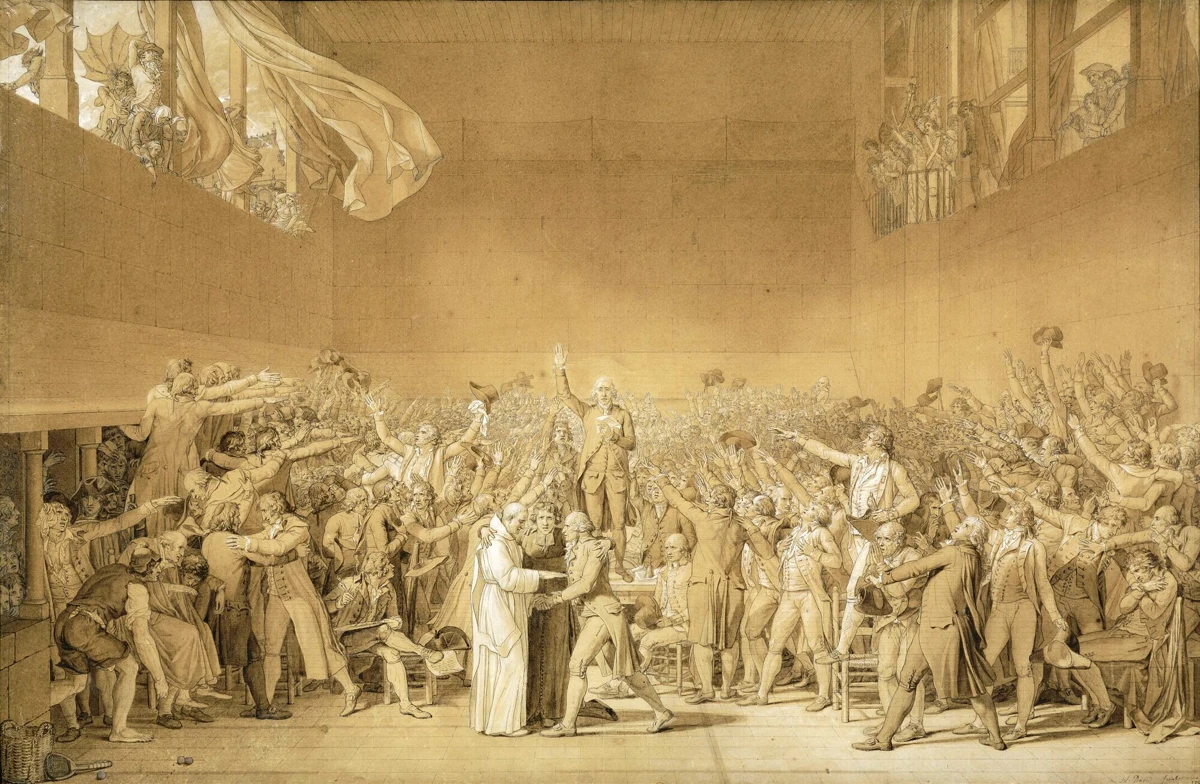
A meeting moved into a sports hall
The Estates-General brought representatives of the clergy, nobility, and commoners to Versailles in 1789. On June 17, deputies established a National Assembly rather than continuing to sit separately by estate. Three days later, finding their usual meeting hall closed, they gathered in a nearby indoor court used for jeu de paume. They pledged to remain together until a constitution had been established for France.
The hall had been built in 1686 and was privately owned. Its association with a royal sport gives the event an unexpected physical setting: a political assembly occupying a place designed for play. The palace nearby remained a seat of monarchical power, making the short distance between the two especially striking. Set that change beside the earlier relationship between Louis XIV and Versailles, and the town’s history begins to stretch beyond a single royal reign.
David gave the promise a visual form
Jacques-Louis David did not witness the oath himself. He later developed a major project to represent it, undertaking research and studies rather than recording the scene as it happened. His 1791 drawing gathers the participants around a powerful central gesture. Raised arms and turning bodies give a shared political commitment the visible energy of a crowd.
Look at the image as a composition as well as a source of historical memory. The arrangement of figures directs your eye, while the room’s height provides space above the gathering. David’s choices helped make an event recognizable to people who had never stood inside that hall. As with the royal family portrait and its empty cradle, noticing an artist’s construction of a scene can deepen the story without confusing the image with the event itself.
The great canvas remained unfinished
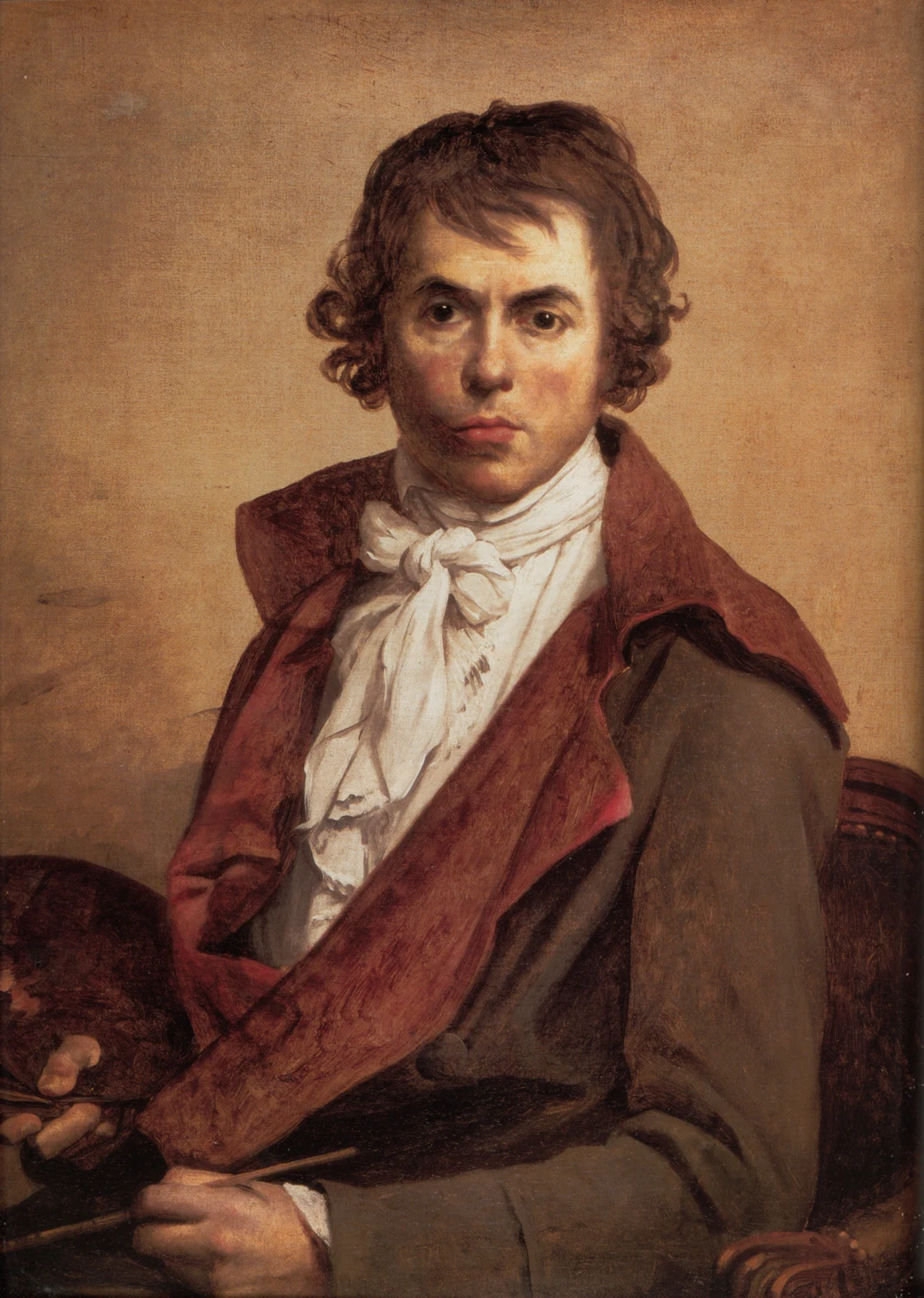
David’s intended painting was monumental, measuring more than seven meters high and ten meters wide. The Palace of Versailles identifies political and financial difficulties among the reasons it remained unfinished. A preparatory drawing, a partially painted canvas, and a completed historical painting are different objects, even when they share the same subject. Recognizing that distinction helps explain why reproductions of the oath can look unexpectedly different.
The unfinished work also makes artistic labor visible. Figures and faces had to be studied, transferred, and developed across an immense surface. The palace’s account describes David inviting deputies to pose or supply portraits for the project. That process turns a seemingly instantaneous scene of collective enthusiasm into a much longer history of research, planning, and interrupted work.
The room became a monument to its own history
In 1883, a museum of the French Revolution opened in the historic court. Luc-Olivier Merson produced a monumental painting based on David’s composition for this commemorative setting. The room’s later decoration therefore belongs to the history of remembering 1789, rather than to the sports hall exactly as the deputies encountered it. This is one way to broaden an inquiry into Marie Antoinette and her world toward the political changes that transformed it.
For a wider introduction to the town, begin with our Versailles overview and distinguish each historic site from the route of a particular experience. Marie Antoinette, Rebel Queen introduces her life through a theatrical walk in the royal streets. Read how the actor-led format works, and consult the monument’s own information separately for access arrangements. The oath offers a compelling question to carry through Versailles: how does a place built for one purpose acquire an entirely new public meaning?
Discover an Immmersiv Experience
Explore Marie Antoinette, Rebel Queen with a professional actor embodying Marie Antoinette. This article provides background for your curiosity. It does not promise stops or access beyond the published experience route. Consult the current experience page for its route and practical details.