Shakespeare and Company in Paris: Two Bookshops, Two Different Stories
A familiar bookshop name can send you to the wrong decade. Shakespeare and Company in Paris links two remarkable literary stories, but the shop near Notre-Dame is not the room where Sylvia Beach welcomed the writers of the 1920s. Her store belonged to a different address and an earlier chapter of the Left Bank. Knowing the difference makes a literary outing richer, because it replaces one blurred legend with two places worth understanding on their own terms.
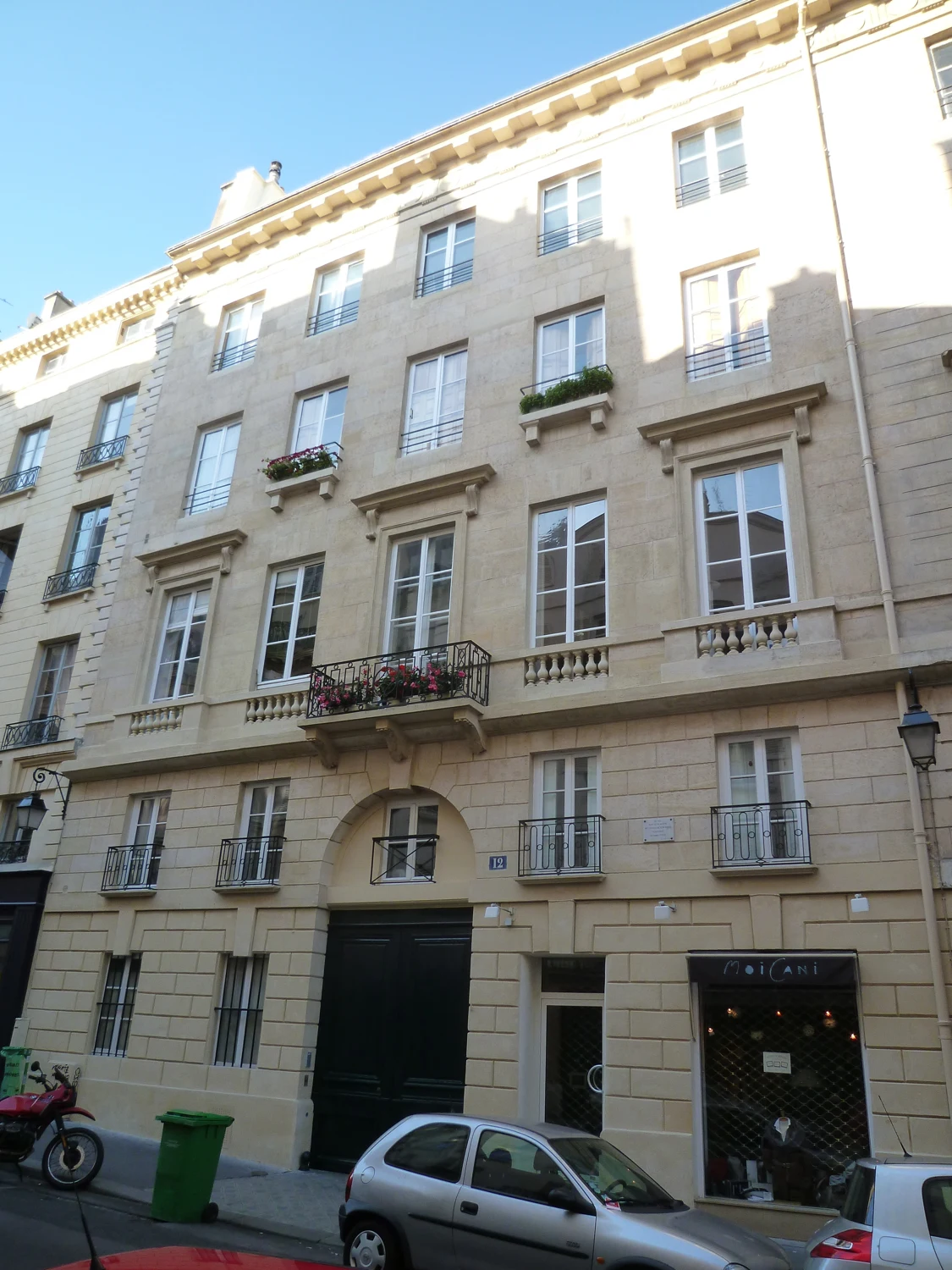
Sylvia Beach’s shop belonged to the interwar city
Beach opened an English-language bookshop and lending library in 1919 at 8 rue Dupuytren. In 1921, she moved it to 12 rue de l’Odéon, across from Adrienne Monnier’s French-language bookshop and lending library. The two addresses introduce the beginnings and expansion of her business rather than two unrelated Sylvia Beach stores. Her better-known rue de l’Odéon location became part of the creative world explored in our introduction to Paris in the 1920s.
The shop’s importance was practical as well as social. Readers could borrow English-language books instead of having to purchase every volume they wanted to read. Princeton’s reconstruction of its lending system uses surviving cards and records to recover this everyday activity. Behind the celebrated names was a working business that made books circulate, with memberships, deposits, return dates, and the occasional overdue notice.
Hemingway was a reader, not just a famous visitor
Princeton’s Shakespeare and Company Project identifies Ernest Hemingway among the lending library’s members. Its member record lists periods of activity beginning in 1921 and notes that he received a press copy of the first printing of James Joyce’s Ulysses. Beach published that novel under the Shakespeare and Company imprint in 1922. The bookshop therefore belongs to a story about reading and publishing, not simply a list of places where writers gathered.
That difference gives you something more interesting to bring to a literary walk. A famous author was also a person choosing books, encountering other writing, and depending on a network of people who made literary work possible. Explore Hemingway’s Paris beyond the famous cafés with that quieter activity in mind. The records establish a connection with Beach’s library, while any imagined conversation across her counter remains an interpretation rather than a transcript.
George Whitman opened a different shop after the war
Beach closed her bookshop in 1941 during the German occupation, and it never reopened. George Whitman established the later bookshop at 37 rue de la Bûcherie in 1951, initially calling it Le Mistral. In April 1964, he adopted the name Shakespeare and Company in honor of Beach and her literary community. The name expresses a chosen continuity of spirit, not the relocation of her original business from rue de l’Odéon.
The later shop has its own history of welcoming writers and readers near Notre-Dame. It deserves to be seen as a living literary place rather than a substitute set for a scene from the twenties. A photograph of its façade cannot illustrate the actual doorway through which the young Hemingway entered Beach’s library. If you enjoy following people through the city, Victor Hugo’s Paris offers another reminder to connect a writer, an address, and a date before joining them into a story.
Keep the addresses separate and the curiosity connected
Write down the two principal addresses before you head out: 12 rue de l’Odéon for Beach’s interwar shop and 37 rue de la Bûcherie for Whitman’s later one. The former is a historical location, not a promise of access to a surviving bookshop interior. The latter belongs to the wider setting around Notre-Dame and Île de la Cité, across the river from the island. Allow each place to tell its own story instead of asking a single storefront to stand for every generation of literary Paris.
Immmersiv’s Explore Hemingway’s Paris introduces the writer through a professional actor in the Montparnasse and Luxembourg setting. Neither Shakespeare and Company address is presented here as a promised stop on that experience’s route. Read the explanation of the theatrical format and the current route details before choosing your plans. You can bring Beach’s lending library into the conversation as a question about the books and people behind a writer, then continue exploring the city’s literary places at your own pace.
Discover an Immmersiv Experience
Explore Explore Hemingway’s Paris with a professional actor embodying Ernest Hemingway. This article provides background for your curiosity. It does not promise stops or access beyond the published experience route. Consult the current experience page for its route and practical details.