Rouen’s Joan of Arc Tower: Why Its Name Can Mislead You
The Joan of Arc Tower in Rouen seems to offer an easy answer before you have even stepped closer. A famous prisoner, a medieval tower, and a name on a map appear to fit neatly together. Yet the surviving keep was not the tower where Joan was held during her captivity. Discovering that difference makes the monument more interesting, because it asks you to picture a lost castle instead of letting one surviving building stand for the whole story.
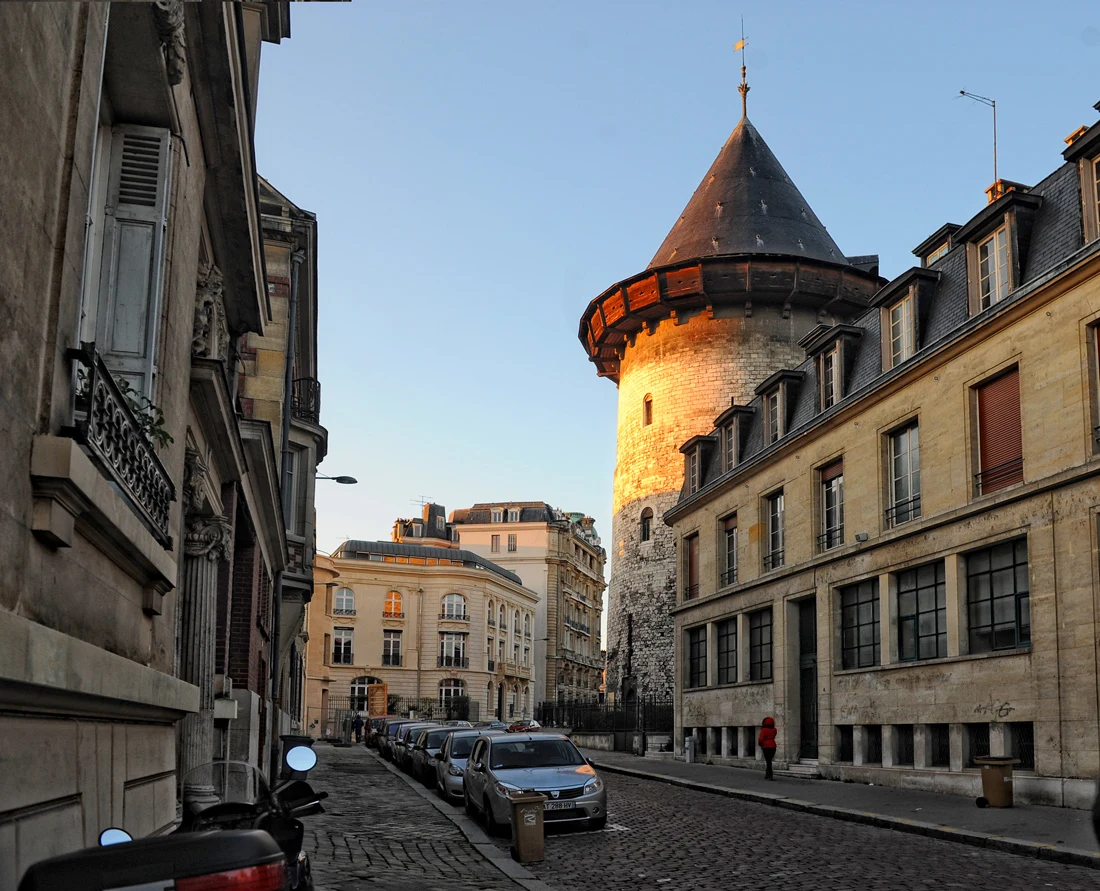
One surviving tower, a much larger vanished castle
The Donjon, also called the Tour Jeanne d’Arc, survives from the castle built by Philip Augustus in the early thirteenth century. Rouen’s tourism office identifies that fortress as the Château Bouvreuil and dates the beginning of its construction to 1205. What remains visible belongs to a complex that once occupied considerably more ground than the isolated tower suggests. Begin by recognizing that you are looking at a surviving part, not a complete medieval prison preserved around a single famous event.
That change of scale affects how you read the surrounding streets. A building can be strongly associated with a person without containing every episode of that person’s time in the city. The name tells you that Joan belongs to the tower’s history, while the evidence must establish the particular connection. It is a useful distinction to carry alongside our guide to Joan’s trials in Rouen, which follows the legal history rather than the castle’s surviving geography.
Her prison tower had a different name
Rouen’s official account places Joan’s detention in another tower of the castle, later known as the Tour de la Pucelle. It identifies surviving traces associated with that tower at 102 rue Jeanne-d’Arc. The Donjon and the prison tower therefore should not be treated as interchangeable labels for the same room. A map that shows both locations can reveal a distinction that the more memorable monument name tends to hide.
A historical address does not by itself promise an accessible interior or a visible cell. Use it to understand the castle’s layout and the difference between a documented location and a visitor attraction. If you continue following Joan beyond Normandy, the account of Joan of Arc and Paris introduces another setting with its own sequence of events. Keeping the places distinct helps prevent a compelling life from being compressed into one imaginary stage.
The Donjon’s connection was real, but specific
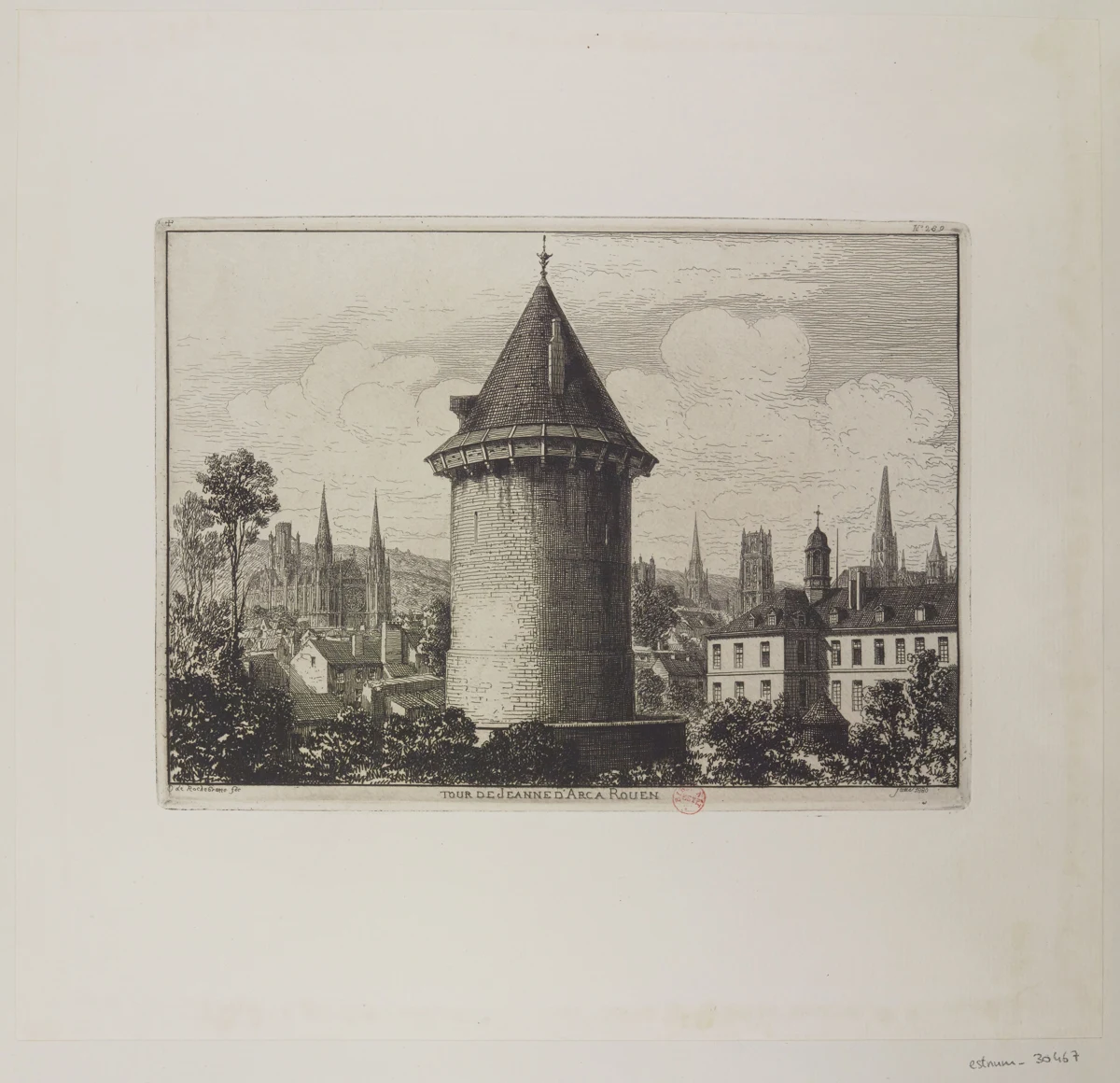
Joan’s association with the surviving tower is not simply an invented label. The local heritage accounts connect it with an episode during her 1431 trial when she was confronted with instruments of torture. They distinguish that threat from the torture being carried out, which the judges did not proceed with. That is a serious historical connection, and it deserves a more precise description than a casual claim that this was her everyday prison.
The two illustrations in this article also need their dates kept apart. The photograph presents the surviving monument, while Octave de Rochebrune’s etching is dated January 1880. Neither is an eyewitness image of Joan’s captivity in 1431. Looking at the later print as a record of how the tower was pictured centuries afterward adds a second history, one about the preservation and representation of a remembered place.
Let the missing parts stay visible in your imagination
Explore the Rouen setting with a simple question: what part of the story does this particular place support? An absent building, a surviving keep, and a later image can each answer something different. The approach resembles reading Paris like a history book, where gaps and altered surroundings matter as much as the best-known façade. You can acknowledge what has disappeared without inventing the exact appearance of a lost room or a conversation within it.
Immmersiv’s Joan of Arc experience in Rouen introduces her story through a professional actor in the historic center. The discussion here does not promise entry to the Donjon, the former prison site, or every location mentioned in the article. Check the current route and the explanation of the theatrical format before planning. The tower may become more memorable once you know exactly which part of Joan’s story it can tell, and which parts ask you to look elsewhere.
Discover an Immmersiv Experience
Explore Joan of Arc: The Trial in Rouen with a professional actor embodying Joan of Arc. This article provides background for your curiosity. It does not promise stops or access beyond the published experience route. Consult the current experience page for its route and practical details.