Poe’s Dupin: Learning to Read a Fictional Paris
A city street can be a place to walk, but it can also be a place to think. In The Murders in the Rue Morgue, Paris supplies the setting for an unusual partnership between a narrator and a man who notices what others overlook. Poe’s Dupin makes that act of noticing central to the reader’s pleasure. His Paris belongs to fiction, and recognizing that distinction makes the encounter with its streets more interesting rather than less.
Meet the amateur detective in an American magazine
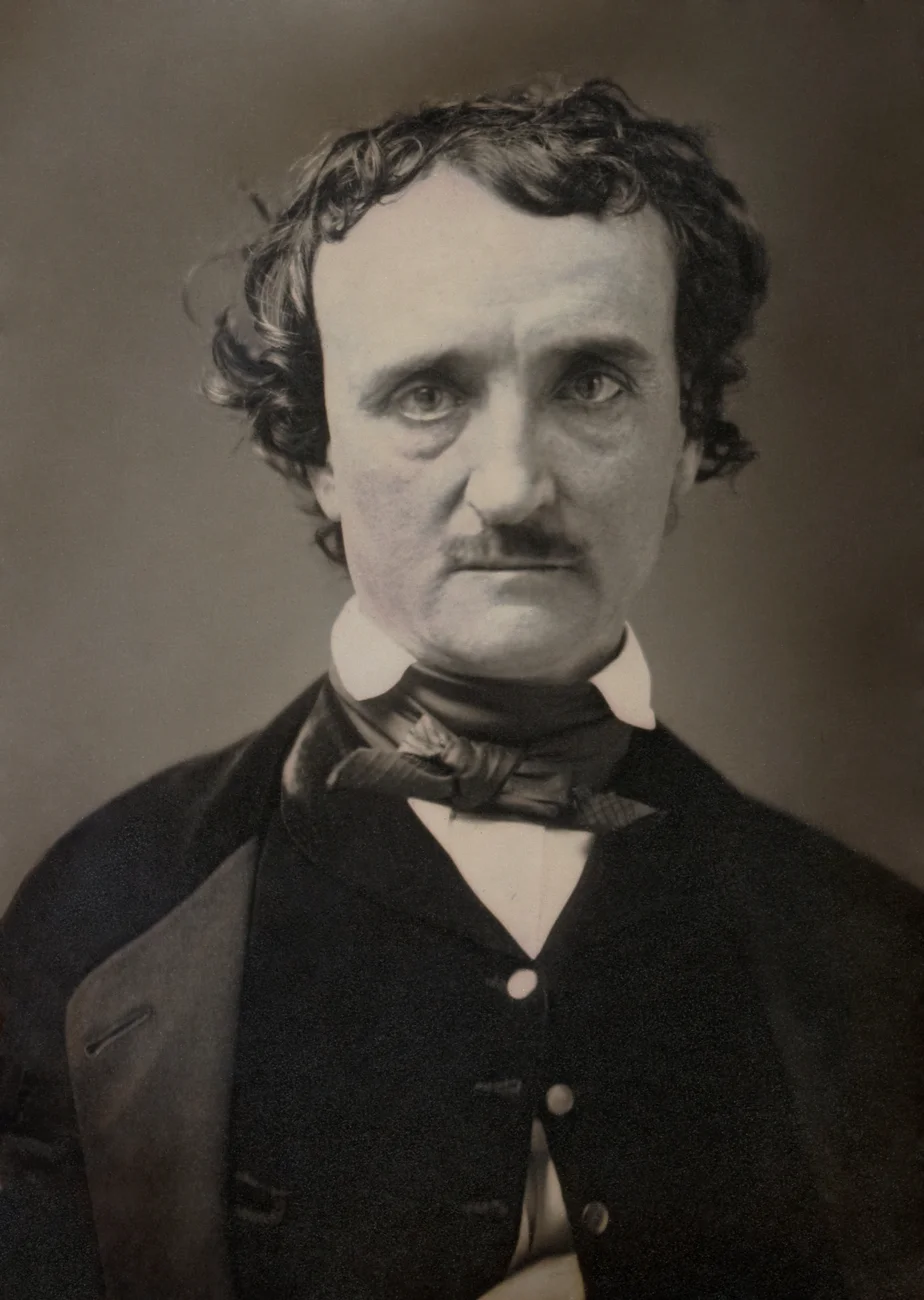
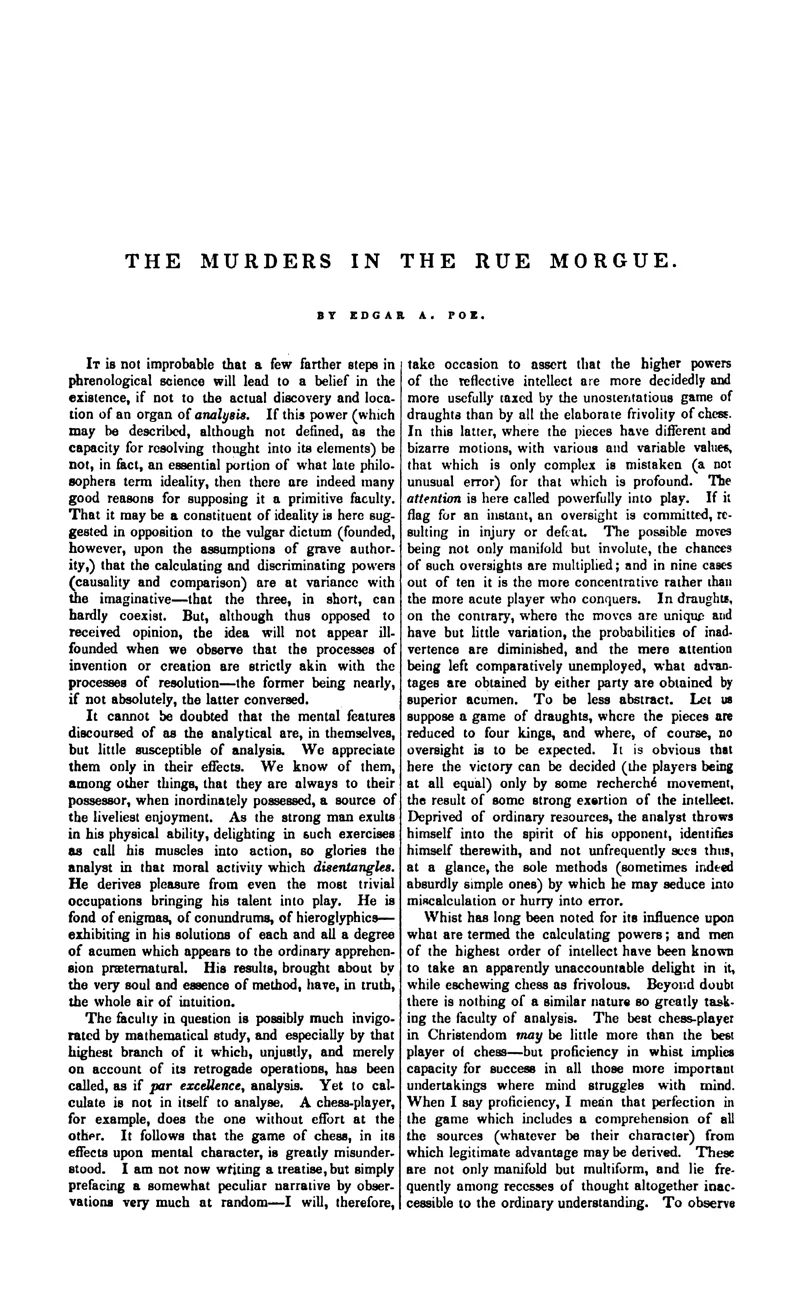
The Murders in the Rue Morgue first appeared in the April 1841 issue of Graham’s Magazine in Philadelphia. The Bibliothèque nationale de France identifies the chevalier Dupin as its amateur detective, later returning in The Mystery of Marie Rogêt and The Purloined Letter. He is a literary character rather than a historical member of the Paris police. His significance begins with the way the story invites us to follow a mind at work.
The opening page reproduced here is evidence of that original publication, not a contemporary report of an actual Paris crime. Its compact columns also place the story within the material world of nineteenth-century magazine reading. The portrait beside it shows Poe years later, in the restored image of a daguerreotype usually dated 1849. For the different question of how his work traveled into French, continue with Poe and Baudelaire’s relationship through translation.
Watch the narrator discover a way of thinking
The unnamed narrator meets C. Auguste Dupin while both are looking for the same rare volume in the Rue Montmartre. Their shared interest in books leads to a closer friendship and a shared residence. Before the central investigation begins, the narrator has already introduced Dupin’s reading, imagination, and unusual habits. The detective’s appeal therefore grows through companionship as well as through the eventual explanation of a mystery.
One early walk gives the reader a demonstration before the main puzzle arrives. Dupin seems to know what his companion has been thinking, then retraces a chain of observations and associations to explain how he reached that conclusion. The scene turns apparently extraordinary knowledge into a process that can be followed. As a reading experience, it asks us to distinguish the observation itself from the interpretation that someone builds upon it.
A Paris made of print, conversation, and attention
In the story, the companions read an account of the killings in an evening newspaper. The printed testimony introduces multiple voices, making the case something to compare and interpret rather than a scene available from one all-knowing viewpoint. Dupin then brings his own attention to the problem. Without disclosing the resolution, we can notice how the narrative moves between reported information and the work of drawing conclusions from it.
The Poe Museum discusses the tale’s combination of analysis, ingenuity, and imagination. That combination is a useful reason to read beyond the frightening implications of its title. Paris becomes a setting for uncertainty and for attempts to make that uncertainty intelligible. The distinction also matters when exploring the darker side of Paris history: a story’s atmosphere does not by itself establish that the event it describes really happened.
Keep the literary city distinct from a sightseeing address
A named city can contain invented events, characters, and places. Reading Poe with that in mind lets us enjoy the precision of a street scene without converting the narrative into a historical itinerary. There is no reason to present Dupin’s investigation as a documented crime or to treat his residence as a verified address to visit. The same habit supports a thoughtful approach to Paris legends and the distinction between story and evidence.
Our introduction to Notre-Dame and its setting offers a separate starting point for the island’s past. Consult The Dark Legends of Paris for the actor-led experience and its published route, then read what to expect from Immmersiv for the format. The experience presents a theatrical encounter with Poe; it does not turn his fictional detective into a real investigator. Bring one question from your reading: which details are being observed, and which conclusions are being imagined?
Discover an Immmersiv Experience
Explore The Dark Legends of Paris with a professional actor embodying Edgar Allan Poe. This article provides background for your curiosity. It does not promise stops or access beyond the published experience route. Consult the current experience page for its route and practical details.