Marie Antoinette’s Theater at Trianon, Versailles
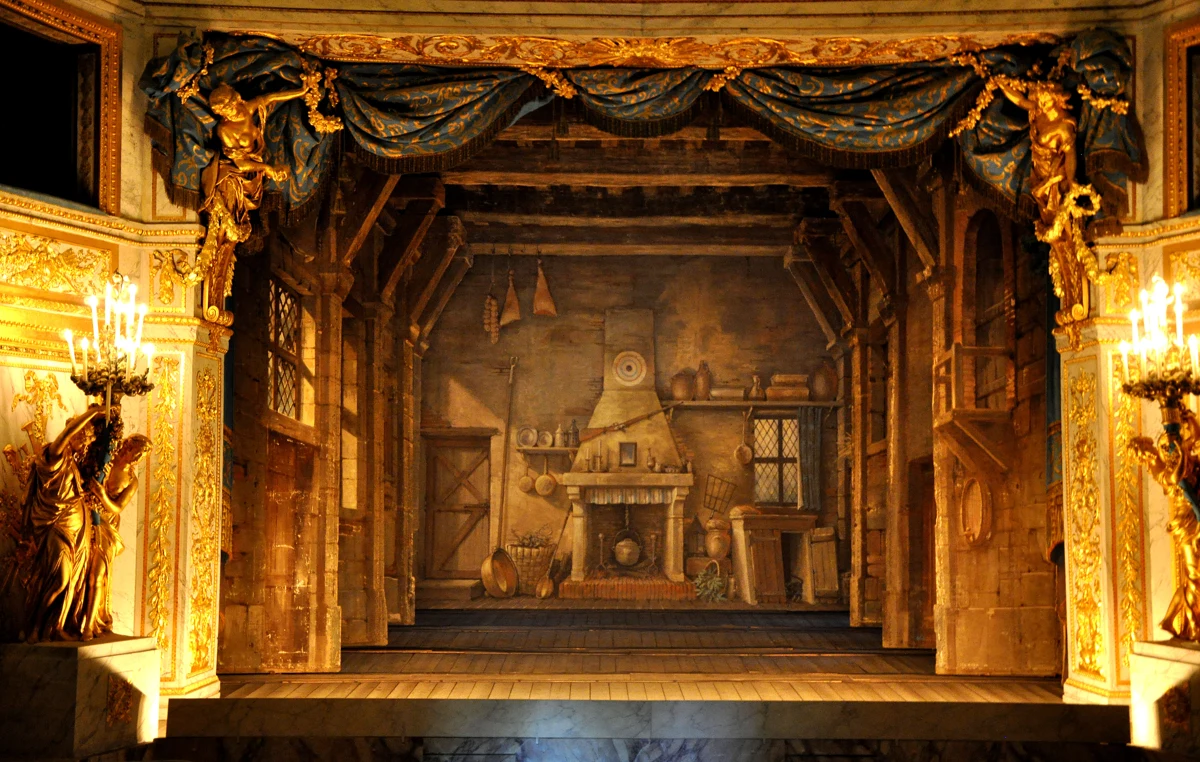
Marie Antoinette’s theater is the Queen’s Theatre at Trianon, an intimate stage within the Versailles estate. Completed by Richard Mique in 1780, it hosted commissioned works and amateur performances in which the queen took part. It is distinct from the palace’s Royal Opera. Its modest exterior conceals blue, white and gold decoration and the craft of theatrical illusion. Theater access must be checked separately from an Immmersiv walking experience.
Find the smaller stage within the Versailles story
The Queen’s Theatre stands within the estate of Trianon, away from the palace’s great ceremonial rooms. Versailles curator Raphaël Masson describes the surprise of discovering an elaborate theater behind an apparently unremarkable exterior. The contrast is part of the pleasure of looking at it. A building does not need an imposing facade to contain a carefully constructed world.
The surrounding estate has its own layered history. Ange-Jacques Gabriel completed the Petit Trianon in 1768, before Marie Antoinette became queen. Louis XVI later gave it to his wife, who changed the gardens and made the place her favored retreat. That background also helps place the Queen’s Hamlet and its working farm within a broader landscape shaped by successive choices.
Separate the Queen’s Theatre from the Royal Opera
The smaller theater should not be confused with the palace’s Royal Opera. Designed by Gabriel, the Royal Opera opened for the festivities surrounding the dauphin’s marriage to Marie Antoinette on May 16, 1770. Its machinery allowed the space to serve different ceremonial purposes, including a theater, ballroom, and banquet setting. That grand public context makes an illuminating comparison with the more intimate stage at Trianon.
For the queen’s own theater, architect Richard Mique completed the work in spring 1780. Its official inauguration took place on June 1 of that year. The room held about 250 spectators, with a decorative scheme of blue, white, and gold. Rather than imagining every Versailles performance in the same vast hall, picture two settings designed for different relationships between performers and their audiences.
Look for the craft behind the illusion
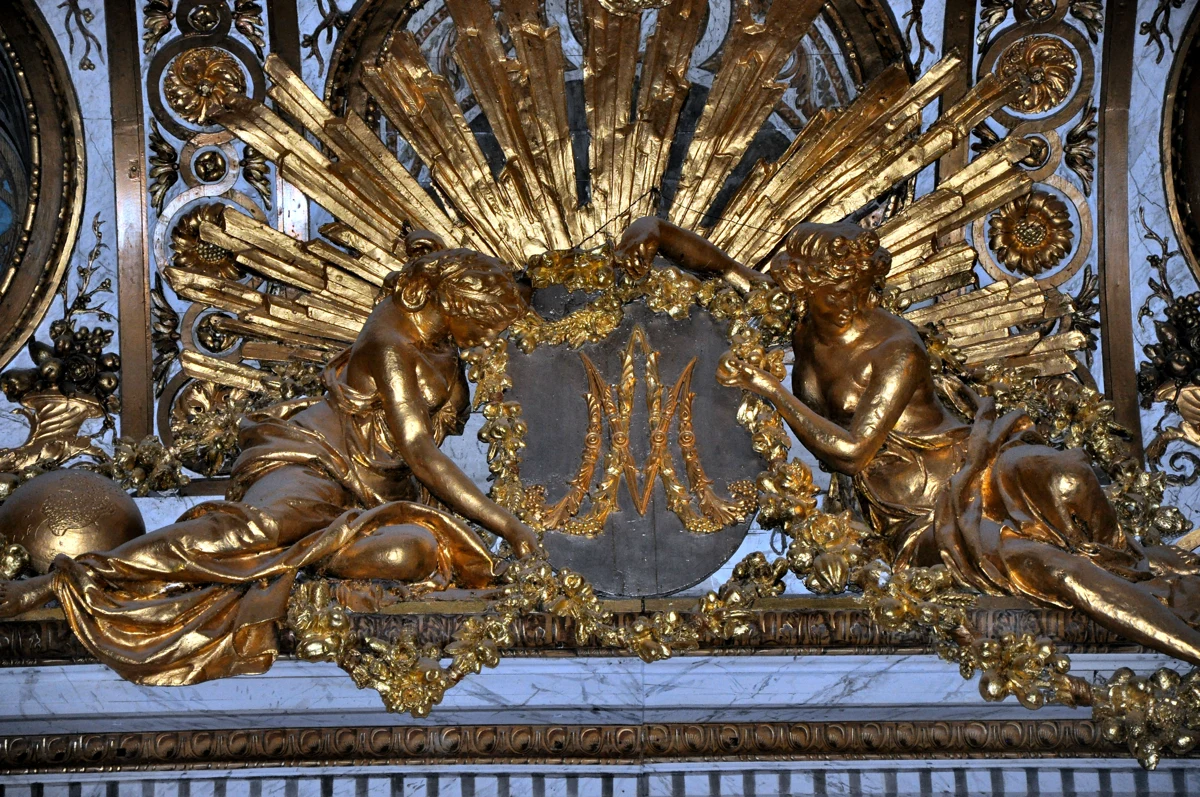
The Palace of Versailles identifies papier-mâché sculpture and false marble among the techniques used in the theater’s decoration. These materials remind us that theatrical splendor can depend on surfaces that persuade the eye. They also direct attention toward makers whose work supported the spectacle. Looking at a gilded ornament becomes more interesting when you ask how it was formed, painted, and positioned.
In Starus’s photograph of the stage, successive scenic openings draw the eye toward a painted distance. The royal monogram shown in the second photograph brings identity into the decorative frame. Those two views invite different questions: how does a stage suggest depth, and how does ornament identify its patron? For another carefully composed royal image, compare Marie Antoinette’s portrait with her children, where objects and arrangements also guide the viewer’s attention.
Imagine the queen as both patron and performer
Marie Antoinette wanted a venue for commissioned works as well as amateur performances with friends. The palace records both uses during the years from 1780 to 1785. The theater therefore belongs to the history of artistic patronage as well as royal leisure. A queen could watch a performance, support its production, or become one of the people appearing before an audience.
That change of viewpoint offers a useful way into the woman behind Marie Antoinette’s familiar image. Begin with our introduction to Versailles, then consult Marie Antoinette, Rebel Queen for its published walking route. Our explanation of what to expect from an Immmersiv experience describes the actor-led format. If you also plan to visit the theater itself, check the palace’s current access arrangements separately, since the walking experience does not promise admission to its interior.
Discover an Immmersiv Experience
Explore Marie Antoinette, Rebel Queen with a professional actor embodying Marie Antoinette. This article provides background for your curiosity. It does not promise stops or access beyond the published experience route. Consult the current experience page for its route and practical details.