Marie Antoinette’s Hamlet: A Royal Retreat with a Working Farm
A cottage reflected in a lake can seem a world away from the grand rooms of Versailles. At Marie Antoinette’s Hamlet, that change of atmosphere was carefully designed. Rustic buildings offered a royal retreat, while a working farm gave the setting a practical purpose. Looking closely at both sides of the village reveals more than the familiar image of a queen escaping into a picturesque countryside.
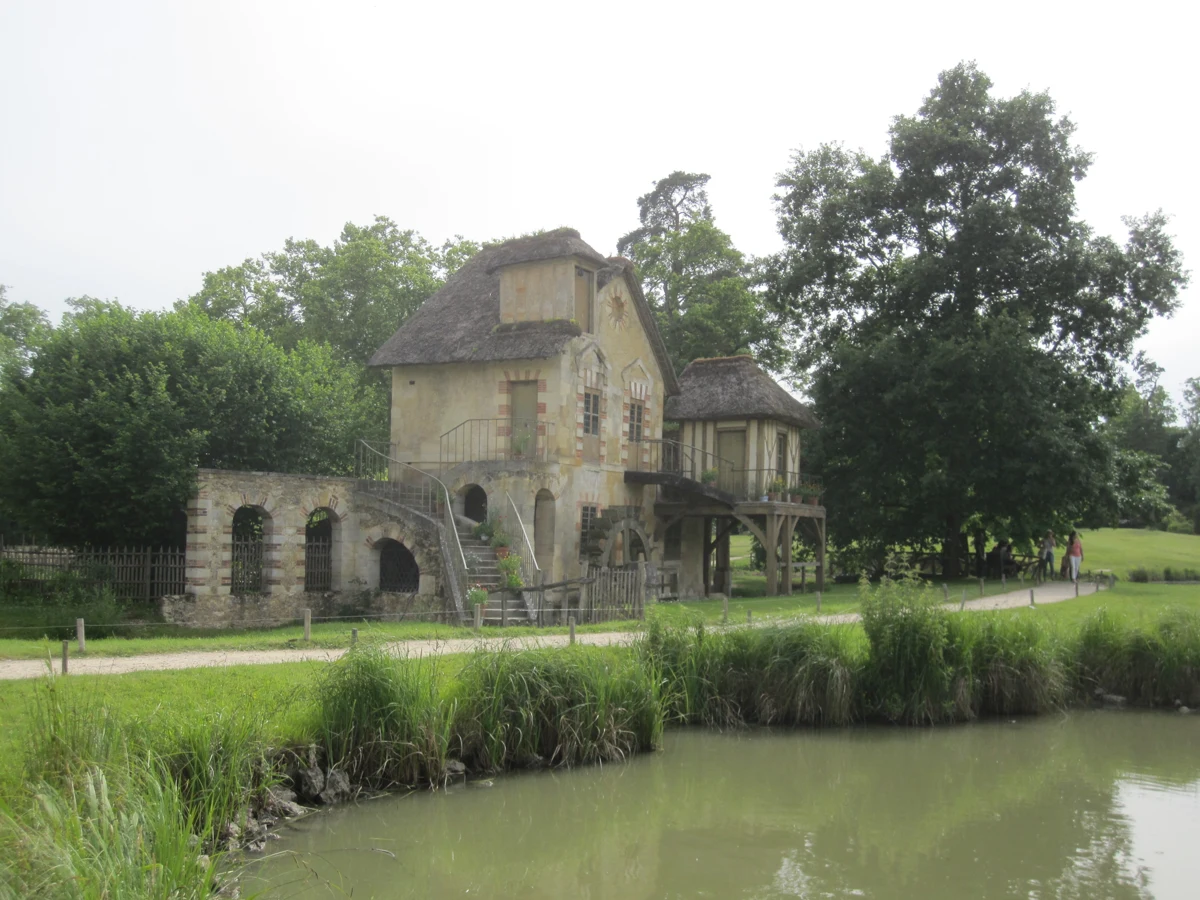
A landscape composed around a lake
In 1783, Marie Antoinette asked architect Richard Mique to extend her Trianon gardens with a village around an artificial lake. The project followed the creation of her English garden, begun in 1777. Its cottages combined several rural architectural influences rather than copying one regional village exactly. Seen across the water, their arrangement creates a coherent picture whose apparent informality was an architectural choice.
That contrast offers a useful starting point for exploring the wider history of Versailles. As the story of Louis XIV before Versailles reminds us, a royal estate could contain several different ideas of how a landscape should feel. Here the eye moves among cottages, water, and planted surroundings rather than along a monumental palace facade. The setting belongs within the estate’s history even when its intimate scale seems to invite a different pace of looking.
Rustic walls did not mean simple interiors
The buildings near the southern side of the bridge included spaces for receiving selected guests. The Queen’s House and the billiard house were separate structures connected by a gallery. Their outward rustic character concealed rooms designed with considerable elegance. As with the queen’s family portrait, the first impression becomes more interesting when you examine how a royal image was constructed.
The house visible today also carries the history of a later resident, Empress Marie-Louise. Marie Antoinette’s furniture was dispersed during the Revolution. The refurnishing associated with the major 2015–2018 restoration therefore returned furnishings commissioned for Marie-Louise in 1810. A furnished room here should be read through that history, rather than treated as an untouched arrangement left by the queen.
The farm was more than a decorative backdrop
The estate’s agricultural side included areas for raising animals and producing food. Farm buildings had practical functions, alongside the cottages used for sociability and retreat. The Palace of Versailles describes the farm as a working concern and emphasizes its educational role for the royal children. That evidence gives a more grounded explanation than the enduring story of courtiers merely dressing up as farmers.
The queen used the hamlet for walks and small gatherings, according to the palace’s historical account. This was a privileged rural retreat, but agricultural work was part of its organization. Keep those two facts together instead of allowing one to erase the other. Our introduction to Marie Antoinette beyond the familiar clichés offers a broader setting for asking how her personal life and public reputation became entangled.
Read the surviving village in layers
Weather, neglect, demolition, and restoration have changed the hamlet since the eighteenth century. Napoleon ordered work in the early nineteenth century, and further intervention followed in the twentieth. The farm itself was reconstructed in 2006, so a photograph of its present buildings does not show an unaltered eighteenth-century ensemble. Even a convincing historical setting can contain several different moments of preservation and rebuilding.
Before planning a day around the estate, distinguish this architectural story from the route of Marie Antoinette, Rebel Queen. The published experience introduces her life through a theatrical walk in the royal streets of Versailles. Consult what to expect from an Immmersiv encounter for the actor-led format, and check palace information separately for access to its buildings. Carry one question into your own exploration: which details belong to the queen’s retreat, and which tell the later story of keeping it standing?
Discover an Immmersiv Experience
Explore Marie Antoinette, Rebel Queen with a professional actor embodying Marie Antoinette. This article provides background for your curiosity. It does not promise stops or access beyond the published experience route. Consult the current experience page for its route and practical details.