THE LANDMARK
A place with a story.
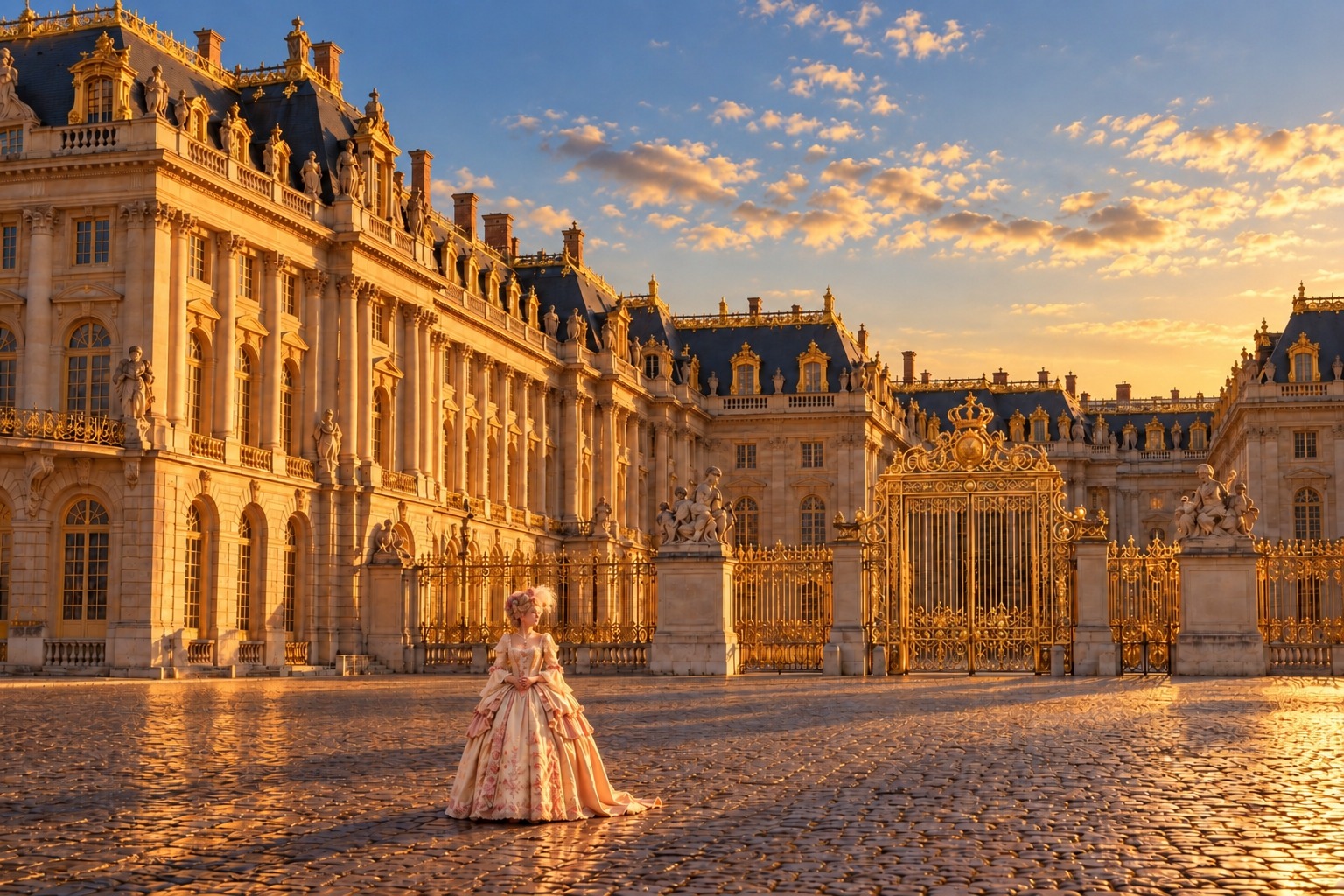
Versailles is a palace, a royal town, and a carefully ordered landscape. Approaching from the town, the broad spaces and long views create a sense of ceremony before the palace itself comes into close focus. Courtyards, gates, and façades form a sequence of thresholds, making arrival part of the architectural experience. The scale is impressive, but the organization of that scale is equally revealing.
Louis XIV transformed an earlier royal residence into a vast seat of government and court life. The palace and its gardens expressed authority through symmetry, perspective, and carefully arranged spaces. The surrounding town developed alongside them, accommodating the people, services, and institutions needed to support the royal household. Versailles was therefore a working environment as well as a display of power.
Opposite the palace, the Great and Small Stables show how far this royal world extended beyond the apartments. Their prominent position gives horses, transport, and court ceremony an architectural presence of their own. The avenues converging toward the palace also make the relationship between town and monarchy visible in the layout of the streets.
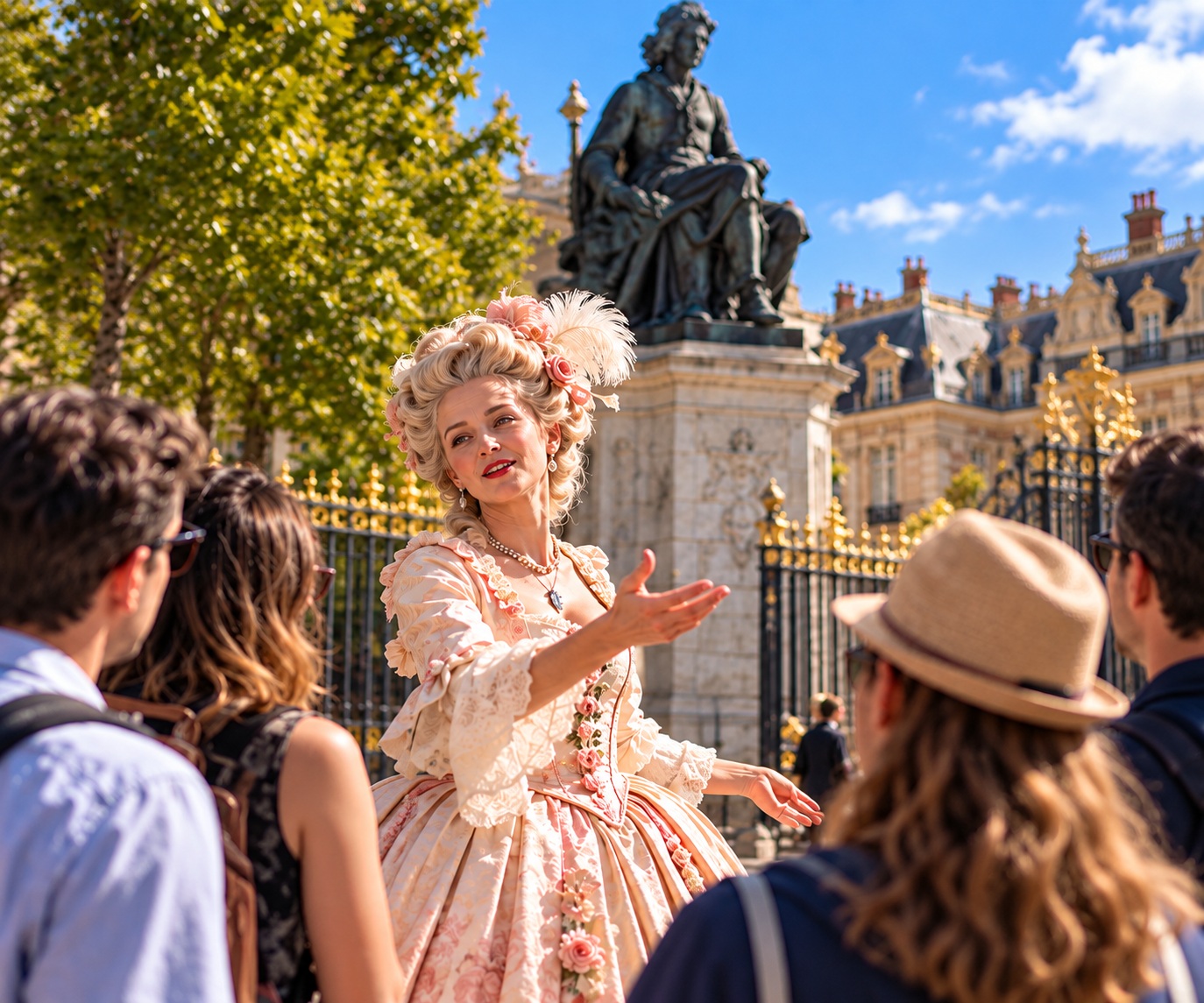
Walking outside the palace with Marie-Antoinette’s story in mind introduces a more personal scale. Notice the distance between open public space and guarded entrances, between an imposing façade and the individual expected to live behind it. The royal streets offer a distinctive introduction to the estate: they let you consider how beauty, ceremony, duty, and the desire for freedom could occupy the same extraordinary setting.