THE LANDMARK
A place with a story.
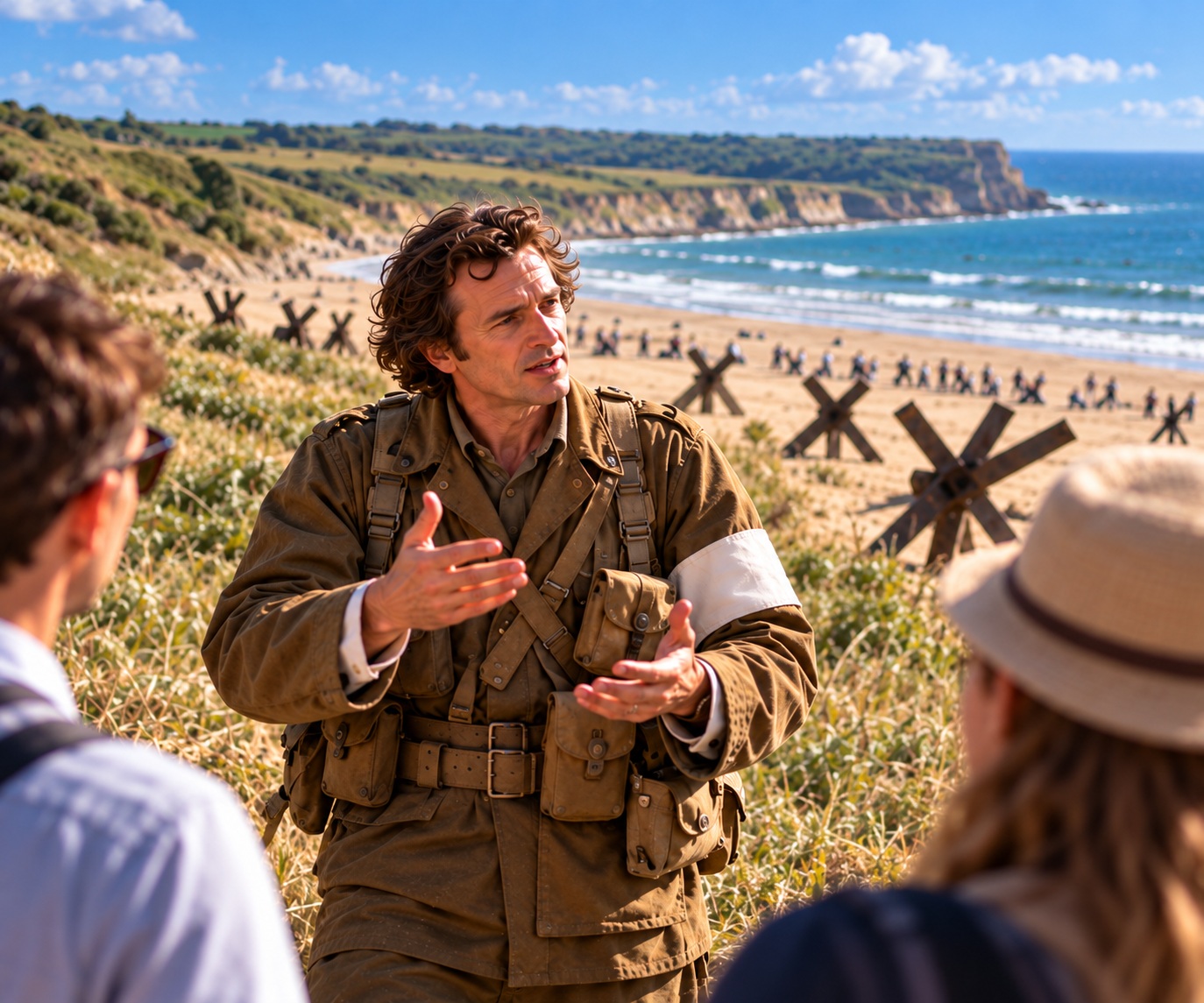
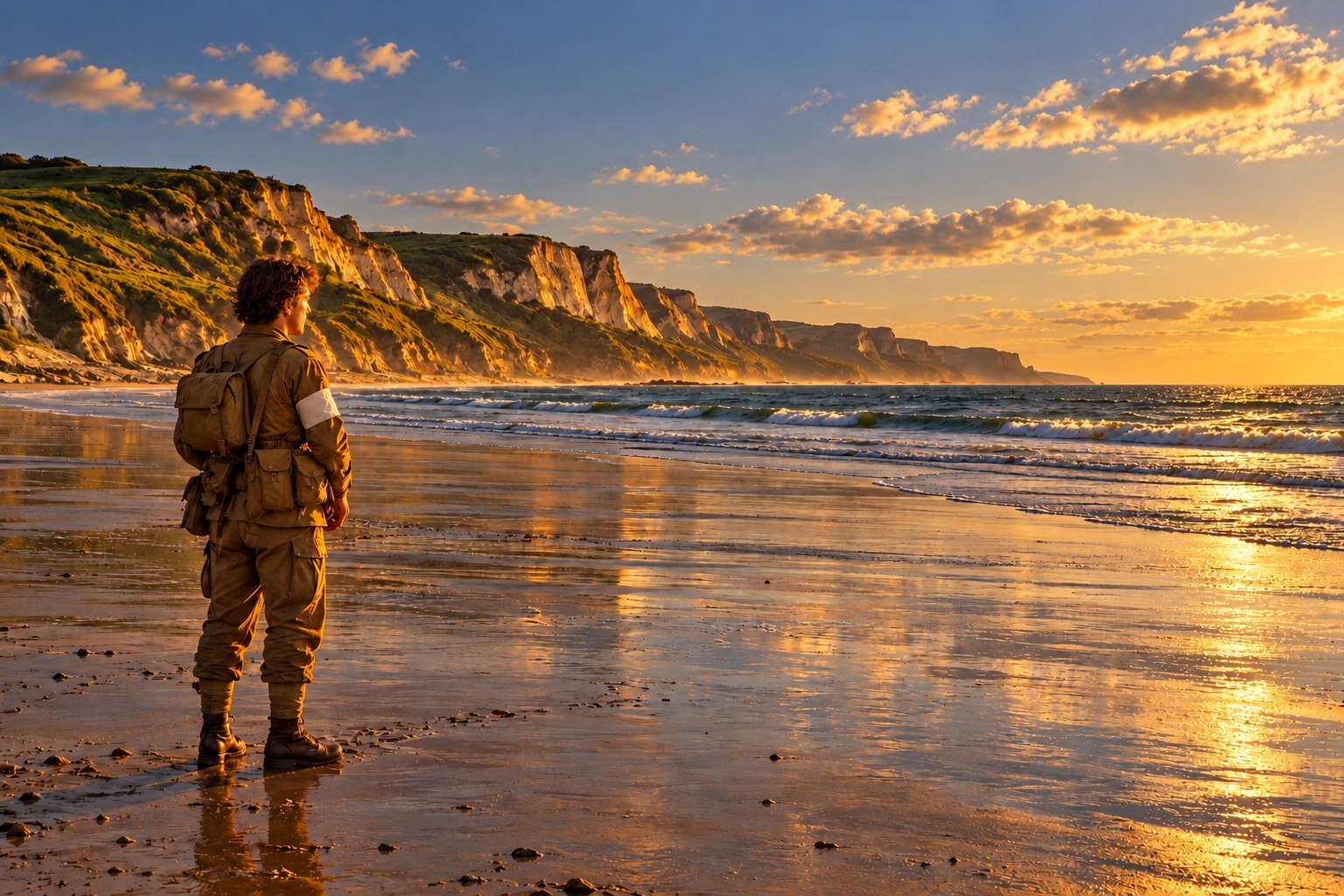
Omaha Beach stretches along a broad section of Normandy’s coast, with open sand, tidal water, and rising ground behind the shore. Its scale is immediately striking: the distance across the beach, the exposure to the sea, and the slopes inland give the landscape a strong physical presence. Looking carefully at these features is essential to understanding why this place matters.
On June 6, 1944, Omaha was one of the Allied landing areas during the invasion of Normandy. American forces faced severe difficulties here as they tried to cross the exposed shore and establish routes inland. The terrain was more than a backdrop to the fighting. Its shape influenced movement, visibility, and the challenges faced by individual soldiers during the opening hours of D-Day.
Today, the coastline offers a powerful contrast between its natural openness and the events it witnessed. The sea continues its ordinary rhythm, while memorials and the wider landscape preserve the significance of the landings. This contrast invites a careful and respectful approach: the beach can be understood both as a physical environment and as a place of remembrance.
The perspective of an American combat medic brings attention to the human decisions within that vast setting. Notice the distances, the shelter available, and the relationship between the shoreline and higher ground. The theatrical experience connects those visible features to questions of care, responsibility, and courage. A date in a history book becomes a clearer understanding of what people had to face, and why their actions are still remembered here.