THE LANDMARK
A place with a story.
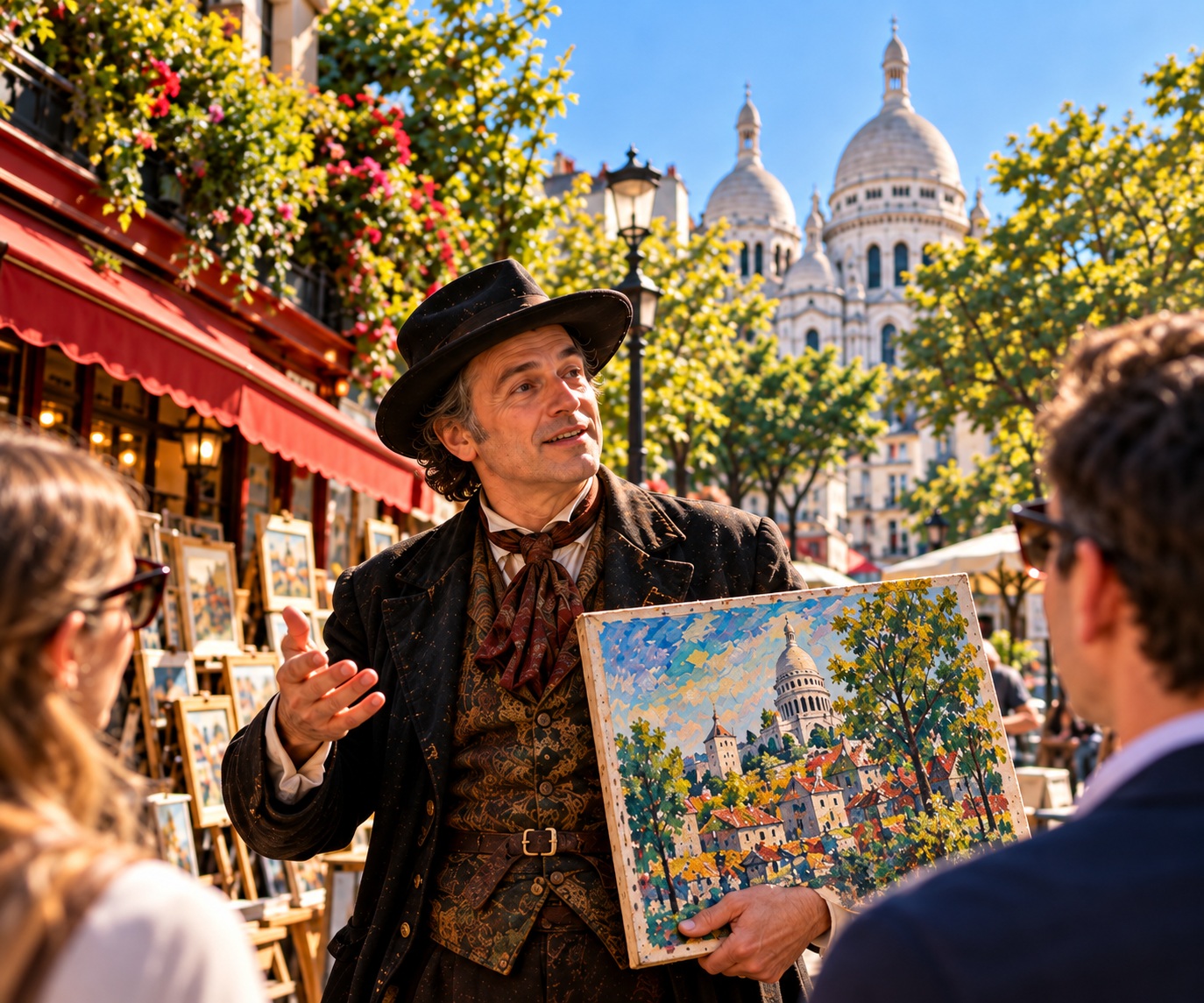
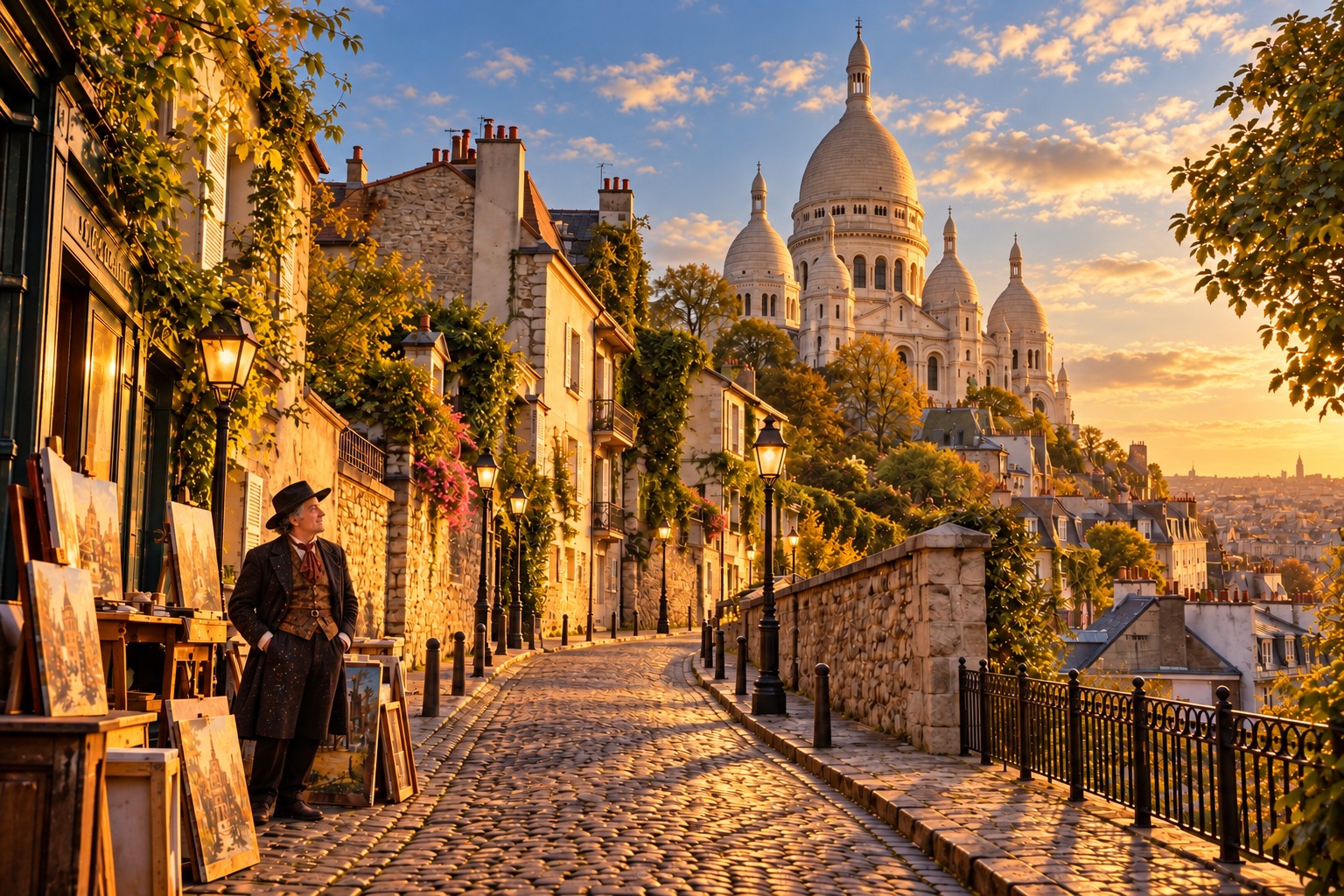
Montmartre rises above northern Paris in a landscape of steep streets, staircases, small squares, and unexpected viewpoints. The white domes of Sacré-Cœur define its skyline, but the hill’s character also lives at street level: a curve in a lane, a modest façade, a café corner, or a glimpse across the roofs. Its changing gradients give a walk here a rhythm unlike the broad boulevards below.
The neighborhood’s artistic reputation grew in the late nineteenth and early twentieth centuries. Painters, writers, and performers were drawn to its studios, cafés, and relatively affordable working spaces. Their exchanges helped turn the hill into a place of experimentation, where established expectations about painting and modern life could be challenged. Cabarets and popular entertainment added another current of creativity.
Père Tanguy belongs to this world of artistic relationships. As a supplier of painting materials and a supporter of artists, he offers a perspective on the practical life behind famous canvases: finding supplies, securing credit, sharing ideas, and continuing to work when recognition was uncertain. The neighborhood becomes a setting for those everyday connections as well as for celebrated achievements.
Look beyond the busiest squares and notice the intimacy of the streets. Doorways and windows suggest the scale of a working room; a staircase shows how the hill shapes daily movement. Montmartre is especially rewarding when the landscape and the artistic story are considered together. Its village-like corners offer a way to imagine the neighborhood as a lived environment, full of effort, conversation, and possibilities.