THE LANDMARK
A place with a story.
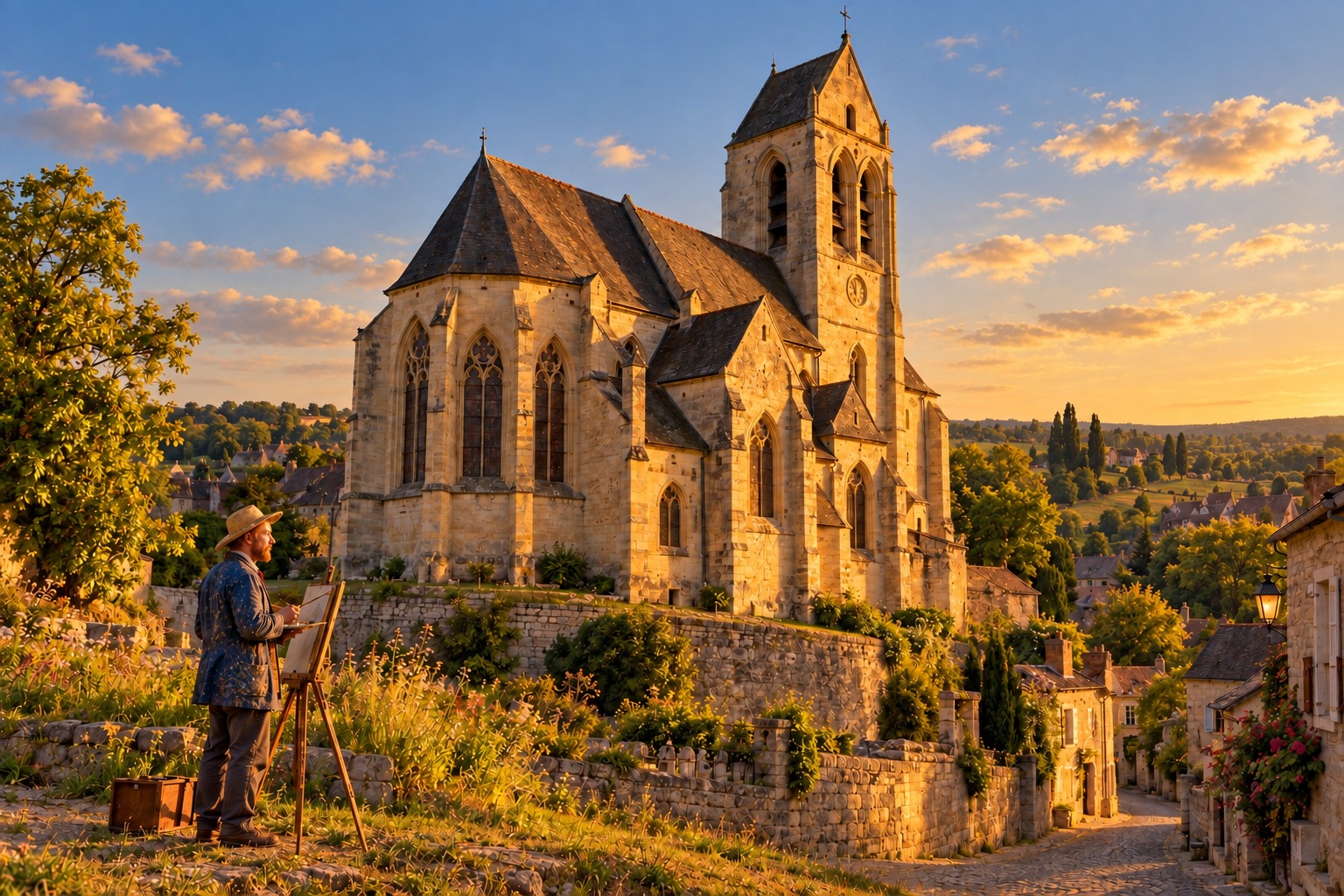
Auvers-sur-Oise unfolds between the river valley, village streets, and the fields above the town. Its houses, church, and changing levels create a landscape that feels intimate even when it opens toward the countryside. Here, small details matter: a wall following a lane, the shape of a roof, or the way a path turns toward an open view.
The village became associated with painters during the nineteenth century, including Charles-François Daubigny and, most famously, Vincent van Gogh. Its appeal was rooted in ordinary surroundings that could become subjects for art. Riversides, gardens, houses, and cultivated land offered artists a way to explore color, light, and the character of a place beyond the major city.
Van Gogh spent the final period of his life here. The church, Auberge Ravoux, and nearby countryside connect recognizable locations with the works and experiences of those last months. Vincent and his brother Theo are buried in the village cemetery. These landmarks give Auvers a particular emotional weight, linking a familiar artistic legacy to a compact and walkable setting.
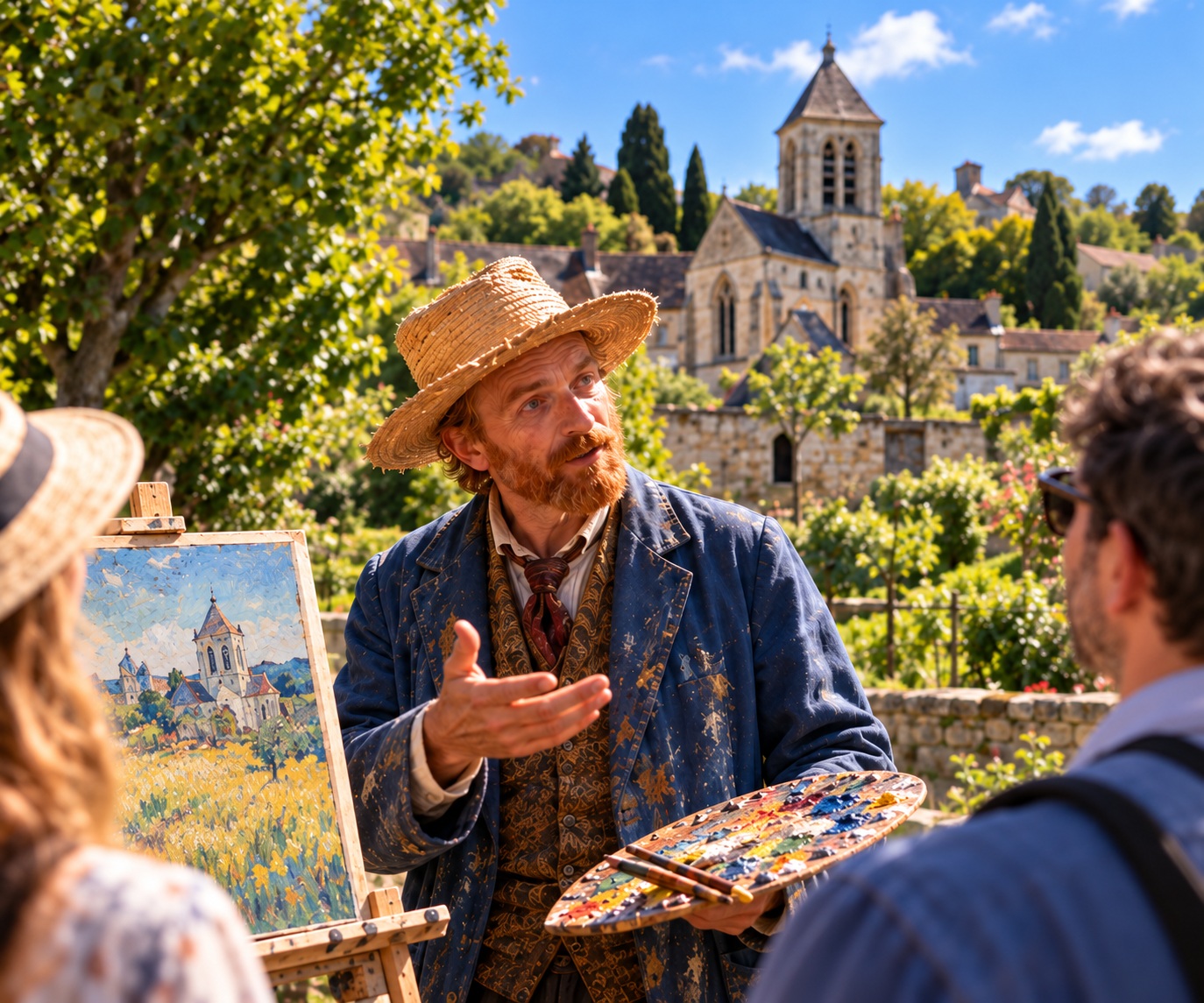
The most rewarding approach is to compare the place before you with the act of seeing it as an artist. Notice how a roofline meets the sky or how a field changes the balance of a view. Through Van Gogh’s theatrical perspective, the village becomes more than a sequence of memorial sites. It offers a way to consider the attention, urgency, and feeling that can transform everyday surroundings into images remembered around the world.