A Moveable Feast: Why the 1964 and 2009 Editions Tell Different Stories
A familiar book can make a city feel immediately recognizable. A Moveable Feast has done that for generations of readers imagining Hemingway’s Paris. Yet the book also has a history that belongs outside the 1920s streets it recalls. Looking at its editions reveals how memory, unfinished writing, and editorial decisions help create the Paris we carry in our heads.
Keep the remembered city and the published book apart
Hemingway’s memoir looks back at Paris in the 1920s. Its first publication came posthumously in 1964, a date confirmed by the publisher’s account of the book. Those two time frames belong beside one another whenever the memoir is used as a guide to a historical city. A scene recalled in later writing is an artistic construction with a perspective, rather than an unmediated recording made as events unfolded.
That does not make the memoir less rewarding to read. It gives the reader a more interesting question than whether a street simply matches a page. Consider what a remembered place allows a writer to emphasize, arrange, or leave outside the frame. Our broader account of Hemingway’s Paris beyond the famous cafés provides a starting point for separating literary association from a complete map of the city.
An unfinished work reaches readers through other hands
The Kennedy Library’s September 20, 2009 forum discussed the memoir and its new restored edition. During that conversation, editor Seán Hemingway acknowledged that the work had not been completely finished. The discussion also considered different drafts and the choices involved in selecting material. Such choices matter because an unfinished work does not arrive with every question of sequence and inclusion already settled.
The practical lesson is to look at the edition information before treating a chapter order as inevitable. A title page, introduction, and editorial note can explain what kind of text a book presents. Compare those explanations with what the main narrative asks you to feel about its people. This approach keeps attention on the actual pages without requiring a reader to imagine a final authorial decision that the surviving work cannot securely establish.
What the restored edition adds to the conversation
The publisher identifies Seán Hemingway as the editor of the restored edition and Patrick Hemingway as its foreword writer. It also describes the inclusion of previously unpublished, unfinished Paris sketches. That description helps explain why the 2009 discussion concerns more than a new cover for an unchanged book. The materials offered to readers can alter the balance of a remembered life even when the city remains nominally the same.
Restored is therefore an edition label worth investigating, rather than a shortcut to declaring every interpretive question resolved. Read the editorial account, note the status of added material, and distinguish a draft from a finished passage. The separate story of Hemingway’s lost suitcase of manuscripts concerns a different episode in the survival of his writing. Keeping those histories separate makes both more precise.
Let the book complicate a visit to Paris
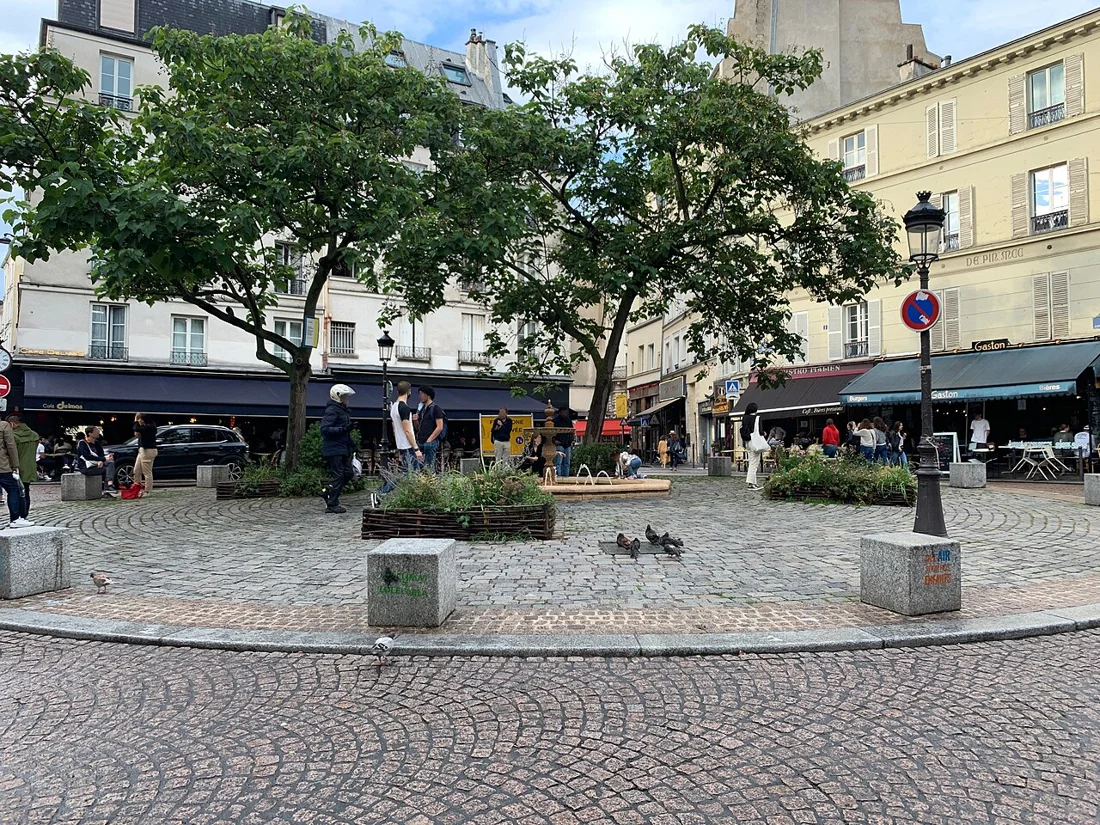
The photograph here shows Place de la Contrescarpe in 2021, not the square during Hemingway’s young adulthood. Its date is part of what the image tells us. Pair that awareness with the history of Paris’s two Shakespeare and Company bookshops and the Montparnasse landmark guide. A modern place, an earlier institution, and a literary recollection can overlap without becoming interchangeable.
Immmersiv’s Explore Hemingway’s Paris experience uses a professional actor to bring a historical character into an encounter with the city. The experience format guide explains that approach, while the published experience page supplies the actual route. Reading the memoir adds questions and context rather than a promise of extra locations or access. Before your next literary walk, check the edition on your shelf and consider which version of remembered Paris it has invited you to see.
Discover an Immmersiv Experience
Explore Explore Hemingway’s Paris with a professional actor embodying Ernest Hemingway. This article provides background for your curiosity. It does not promise stops or access beyond the published experience route. Consult the current experience page for its route and practical details.