Cézanne’s Card Players: Why One Subject Became Five Paintings
The men lean toward their cards, giving very little away. There is no theatrical winner, no obvious argument, and no invitation to guess a dramatic ending. Cézanne’s Card Players asks you to linger over a quieter kind of event. Comparing two versions reveals how the same ordinary subject could keep a painter occupied across an entire series.
A familiar game becomes a sustained project
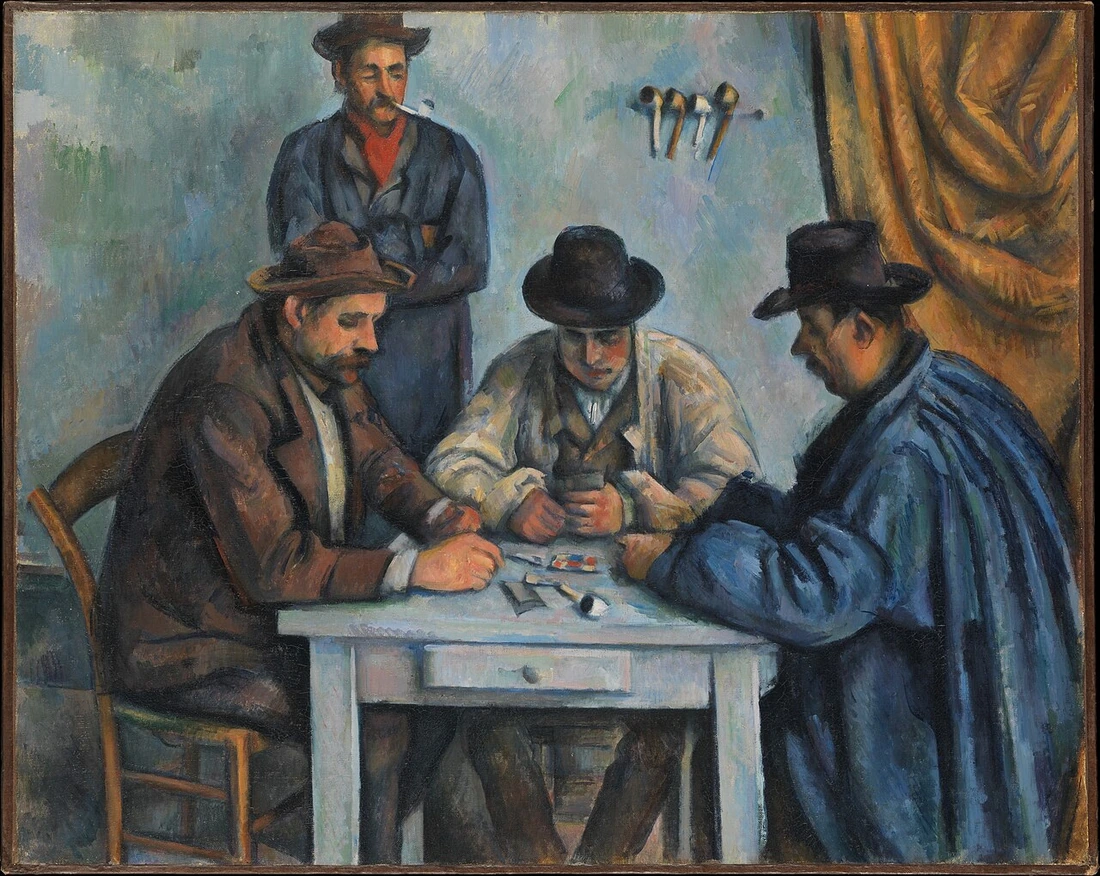
Cézanne completed five paintings of card players during the 1890s, according to The Courtauld. The Met dates its version, reproduced here, to 1890–92. It presents three men playing at a table with another standing behind them. The scene offers several relationships to follow before you even begin to examine the cards themselves.
The museums connect the models with the workers around the Cézanne family’s estate in Provence. That background gives the figures a specific connection to the painter’s world. It does not tell us the rules of this particular game or the private thoughts of each sitter. Start with the men’s positions, their clothes, and the table instead of inventing a conversation to fill the quiet.
Notice how much work holds the figures still
The Met explains that Cézanne assembled the composition from individual figure studies. Its technical examination also found repeated changes to the contours of people, chairs, and table. The finished arrangement can look settled while preserving the results of a demanding process. What seems like a moment of stillness was something the artist actively worked to create.
Look at the pale tabletop against the men’s darker coats, then follow the bends of elbows and shoulders. Several objects establish horizontal and vertical directions, while the figures create more complicated connections between them. This is a useful comparison with the viewpoint in Caillebotte’s Floor Scrapers. Both artists give sustained attention to working people, but their subjects and arrangements lead your eye in different ways.
Reduce the gathering to two players
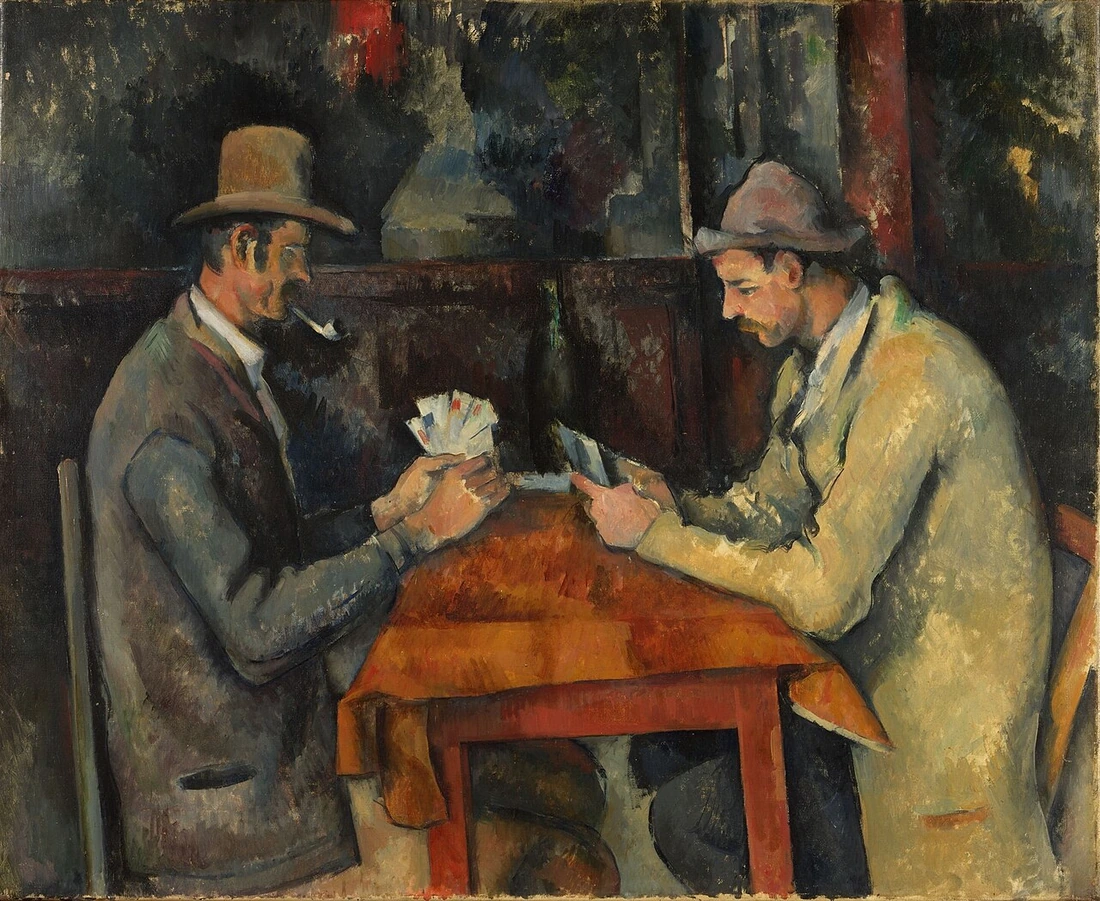
The Courtauld’s version, dated around 1892–96 by the museum, shows two men facing each other. Removing other figures makes the interval between them especially noticeable. A bottle rises between their heads, while the tabletop joins the two sides of the picture. Compare that tightly focused encounter with the larger group in the Met painting before deciding which one feels more spacious. In the group scene, your attention can travel among several faces; in the pair, it repeatedly crosses the table between two opponents.
The Courtauld describes the figures as absorbed in the ritual of their game. You can explore that idea without turning the painting into a photograph of a single afternoon. Change where you begin looking, moving from a hand to a hat and then to the bottle. The scene becomes a set of relationships you can revisit, rather than a puzzle with one concealed answer.
Bring a question about looking into artistic Paris
Our article on Caillebotte’s rainy Paris study follows another carefully prepared scene that can appear casual. A street crowd and a card table ask different things of a painter, yet both reveal decisions about distance and attention. The story of Père Tanguy’s paint shop opens another door onto the relationships behind the artistic world. None of these connections requires every artist to share one technique or one idea of modern life.
The Montmartre guide offers a Paris setting for exploring those artistic histories. In The Impressionists of Montmartre, a professional actor embodies Père Tanguy for an immersive theatrical encounter. Read what to expect for its format and practical approach. Carry one small challenge from Cézanne’s table into the rest of your day: notice what a picture keeps you looking at when very little seems to be happening.
Discover an Immmersiv Experience
Explore The Impressionists of Montmartre with a professional actor embodying Père Tanguy. This article provides background for your curiosity. It does not promise stops or access beyond the published experience route. Consult the current experience page for its route and practical details.