Berthe Morisot’s The Cradle: An Intimate Scene in Impressionism
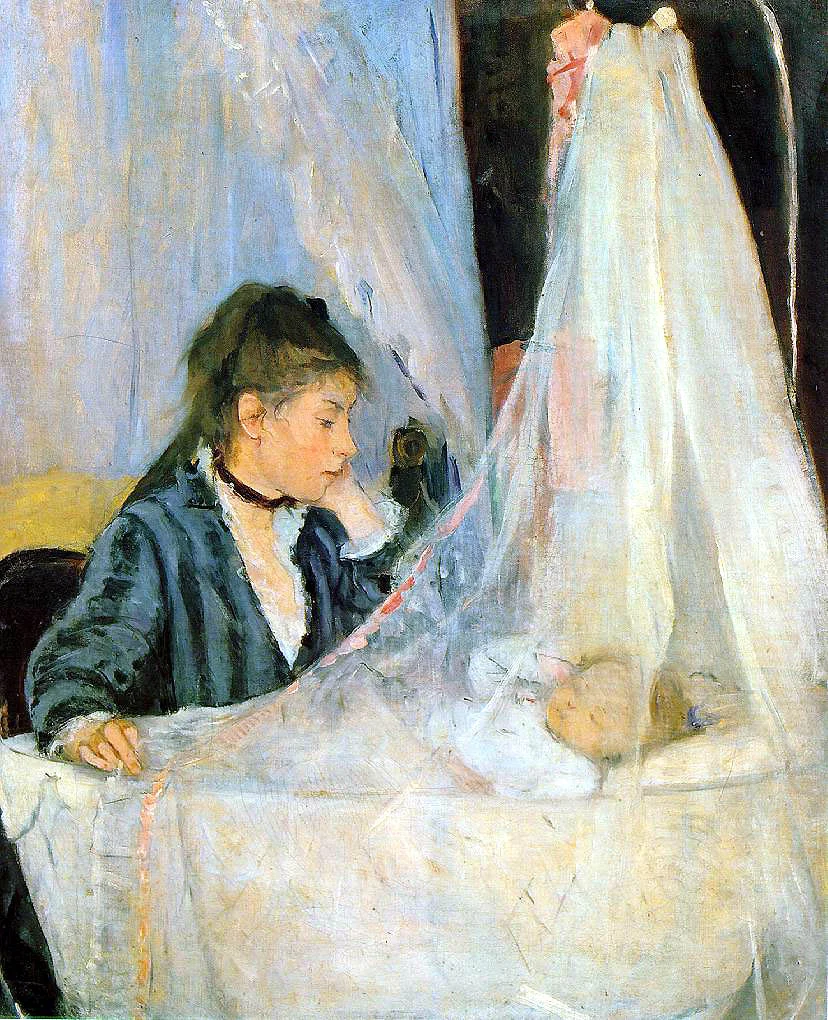
A woman watches a sleeping baby through a veil of pale fabric. Nothing announces a grand historical event, yet the arrangement gives an everyday moment the power to hold a room. Berthe Morisot’s The Cradle brings that quiet attention into the story of Impressionism. Looking closely at it is also a way to encounter Morisot as a painter making decisions, rather than only as the woman in somebody else’s portrait.
Meet Edma and Blanche before reading the movement’s label
Morisot painted The Cradle in Paris in 1872. The Musée d’Orsay identifies the woman as her sister Edma and the baby as Edma’s daughter Blanche. This is a family scene with identifiable people, not a general illustration of an anonymous mother and child. Knowing their relationship gives the picture a human starting point before any discussion of artistic movements.
The woman’s gaze draws attention toward the sleeping child. A raised arm, the edge of the veil, and the curtain behind her create lines you can follow through the picture. Look at the distance between the two faces, then notice how the fabric both connects and separates them. That small act of looking can make an intimate painting feel as full of decisions as a larger public scene.
Notice what the veil allows you to see
The fabric over the cradle is more than an object to identify. In the reproduction, it partly screens the baby while allowing the small face to remain visible. Morisot paints through that delicate barrier rather than removing it for the spectator’s convenience. You are invited to look, but the scene retains a sense of privacy.
Try following the pale passages from the lower foreground to the hanging fabric above. Then compare them with the darker blue of Edma’s clothing and the more defined shapes of her face and hand. The contrast helps organize the scene without requiring every surface to be described in the same way. For a very different use of a cradle in painting, compare the empty cradle in Marie Antoinette’s royal family portrait.
Recognize the painter as well as the sitter
Morisot exhibited The Cradle at the Impressionist exhibition of 1874. This places her work within the group’s public beginnings, rather than at the edges of a story belonging only to male painters. The subject may be domestic, but the decision to present it belongs to an artist participating in a new exhibition venture. Continue with the artists who changed Paris to place that moment in a broader setting.
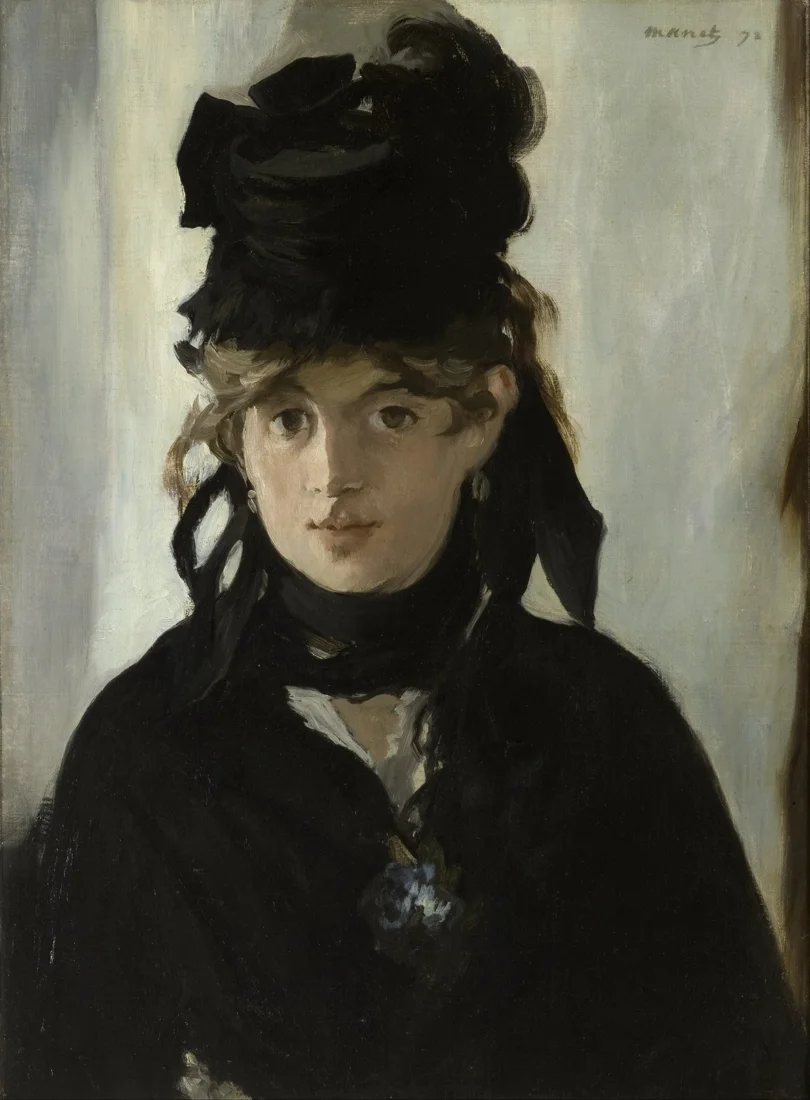
The second image here is Édouard Manet’s Berthe Morisot with a Bouquet of Violets, also dated 1872. It shows Morisot in dark clothing and a black hat, with light falling across her face. The Musée d’Orsay’s account of her career notes that Manet painted her repeatedly without depicting her at work. Place the portrait beside The Cradle and you can hold two roles in view: Morisot as someone another artist painted, and Morisot as the maker of a picture herself.
Take a question about looking into artistic Paris
A useful question to carry through a museum is simply who made the choices you are seeing. In this case, Morisot decides how close the spectator can feel, where the eye moves, and how much remains behind the veil. You do not have to settle Edma’s private thoughts to notice those choices. Another human connection to the artistic world appears in Père Tanguy’s paint shop and Van Gogh’s portrait.
The story of Montmartre opens further questions about the people around the painters. In The Impressionists of Montmartre, Immmersiv’s professional actor embodies Père Tanguy within the published experience route. This article does not add a museum visit or promise that either painting appears along that route. Consult what to expect from an Immmersiv experience and the current itinerary before planning your day.
Discover an Immmersiv Experience
Explore The Impressionists of Montmartre with a professional actor embodying Père Tanguy. This article provides background for your curiosity. It does not promise stops or access beyond the published experience route. Consult the current experience page for its route and practical details.