Best Things to Do in Paris with Teenagers
Teenagers rarely need Paris to become more entertaining; they need a reason to care and some control over how the day unfolds. Contemporary art, music, striking urban spaces, and unresolved historical questions can all open that door. Give them meaningful choices instead of disguising every cultural visit as a game. The result can feel like a shared city break rather than a school trip.
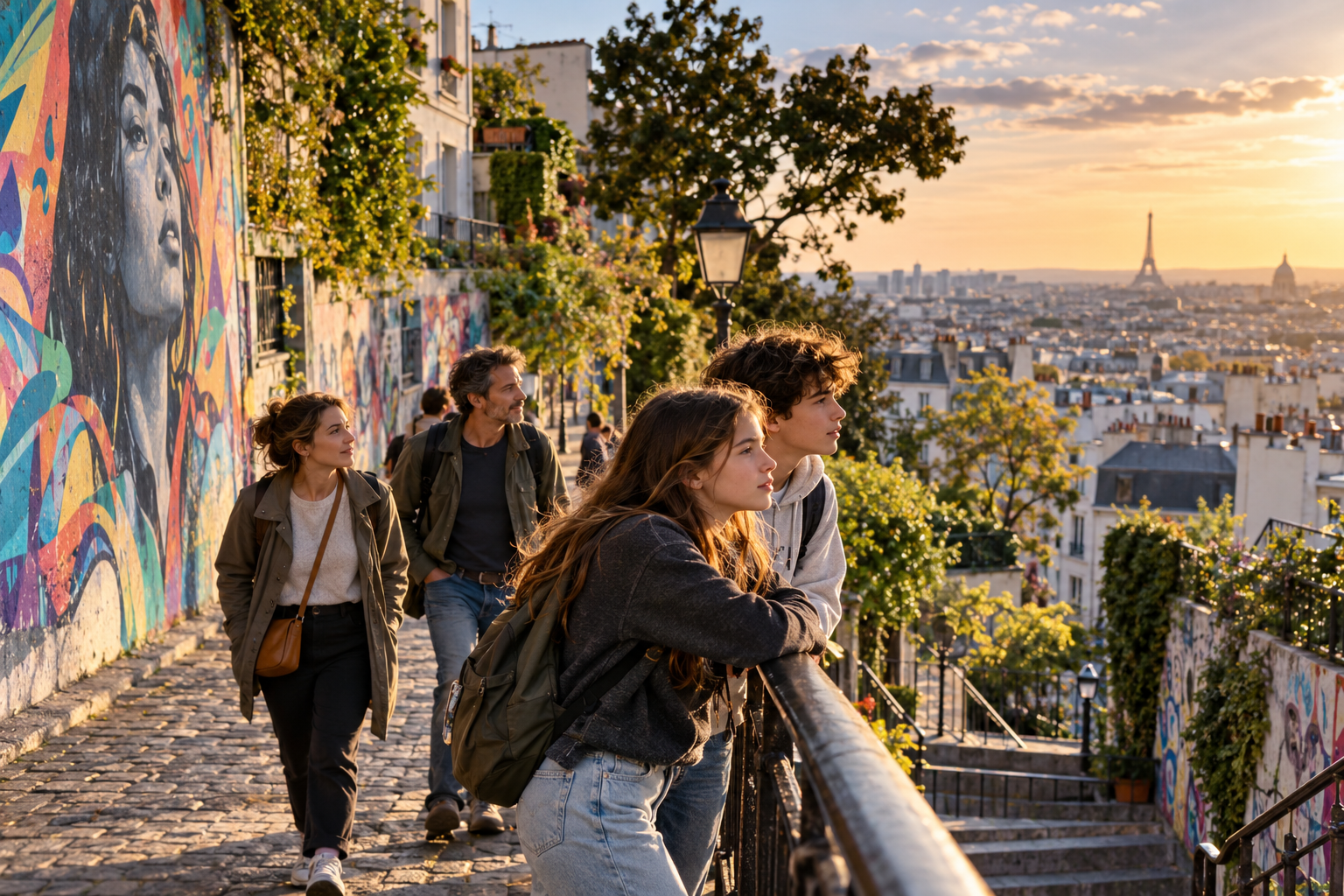
Paris works especially well for teenagers when the itinerary recognizes that they are developing tastes, opinions, and a desire for independence. A fifteen-year-old who resists a three-hour museum survey may become absorbed by a single provocative work, a dramatic historical choice, or the design of a neighborhood. Adults do not need to manufacture enthusiasm for every stop. They need to create the conditions in which a teenager can discover what deserves attention.
Start with a real choice, not a false one
Offer two or three genuinely different options: contemporary art, military history, music, science, architecture, or a neighborhood exploration. Let the teenager choose the morning anchor and ask them to explain what attracted them to it. This small transfer of control changes the visit from an obligation into a decision they helped make. Immmersiv’s Paris playground and character directory provide contrasting routes without assuming that every young traveler wants the same version of culture.
Connect screens to a physical city
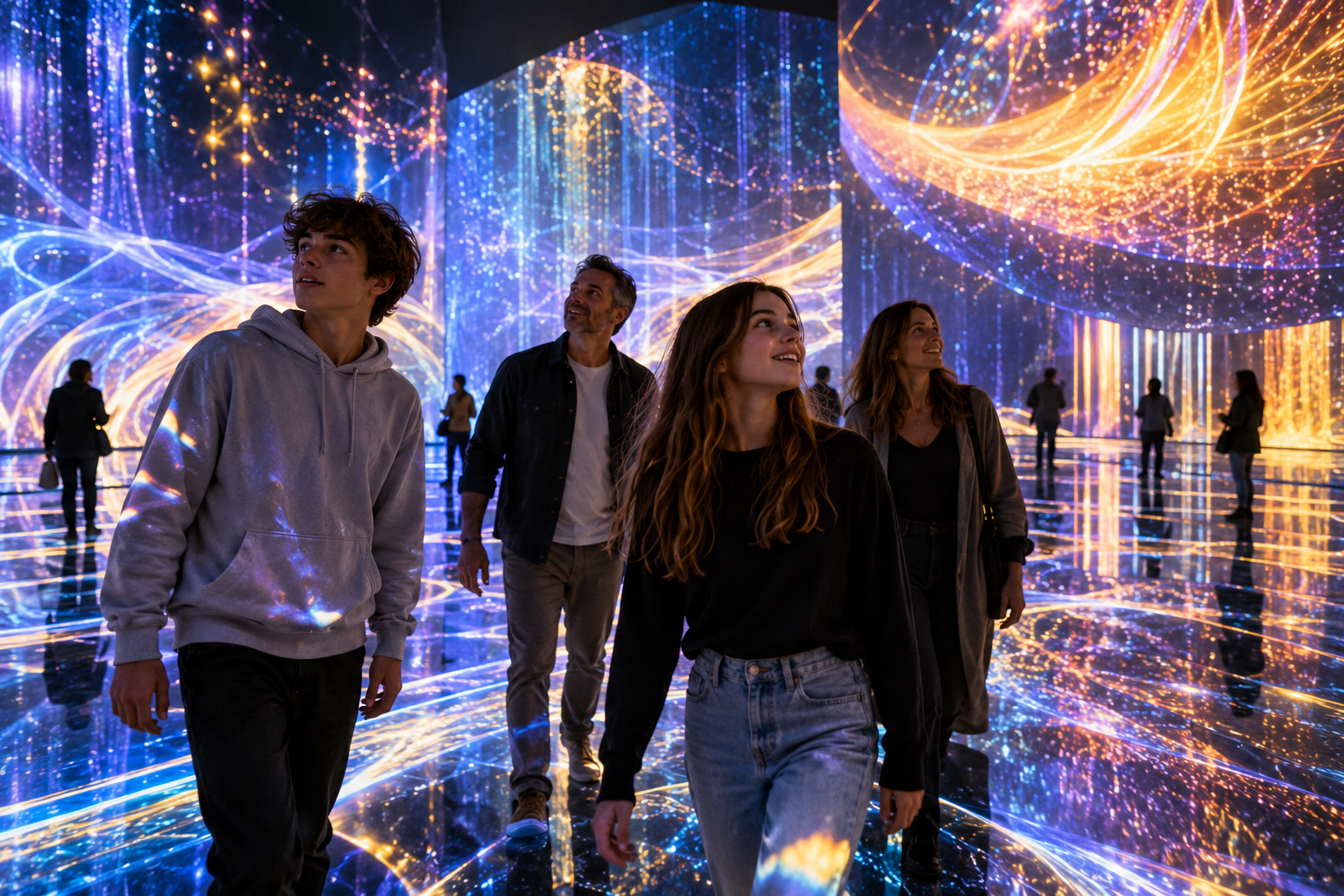
Teenagers arrive with visual references collected from films, games, social media, and school, which can become useful rather than distracting. Ask them to compare an online image with the scale, sound, crowd, or texture of the place itself. At a science or digital-art venue, discuss how the technology shapes perception instead of treating interactivity as automatic proof of quality. The goal is not to ban the phone, but to make the physical encounter interesting enough that recording it is no longer the only activity.
Build history around conflict and consequence
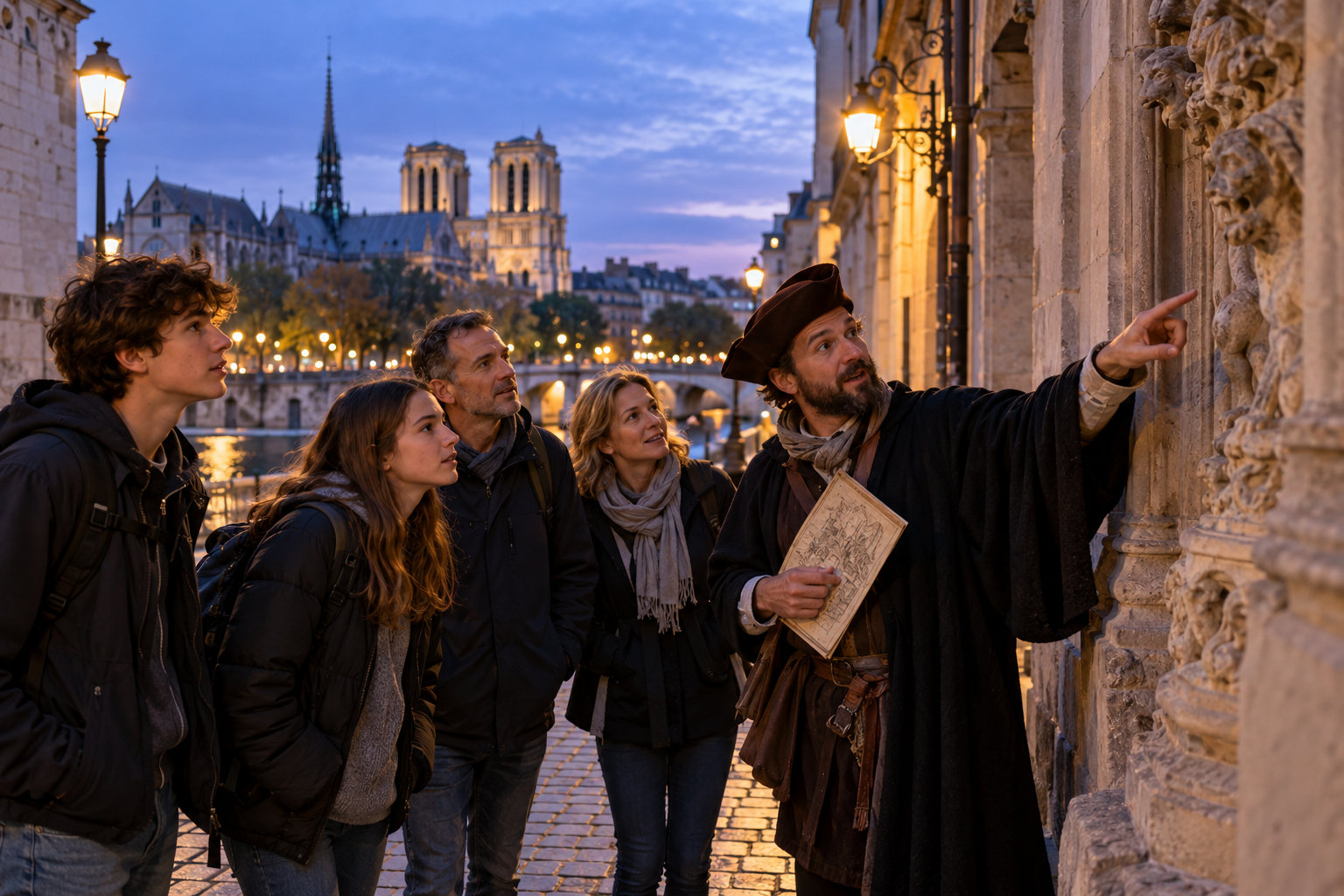
Teenagers are often more receptive to history when it is presented as a series of contested choices rather than a procession of dates. The Musée de l’Armée can support questions about power, warfare, memory, and Napoleon, while Île de la Cité provides a compact setting for medieval authority, revolution, justice, and urban change. Use Immmersiv’s Île de la Cité guide to identify visible clues and the live-encounter guide to understand how a character perspective can invite debate. Responsible storytelling should distinguish evidence from interpretation and leave room for a young visitor to disagree.
Design a day with breathing room
A strong teen itinerary alternates one demanding visit with time for food, browsing, photography, music, or simply watching the city. Montmartre can be approached through art and changing urban identity rather than only its most photographed viewpoint, and Immmersiv’s Montmartre guide offers context for that exploration. Agree in advance on a meeting point and boundaries if older teenagers receive a short period of independent time. Respecting their pace does not weaken the family experience; it often creates better conversation when everyone meets again.
The best things to do in Paris with teenagers do not talk down to them or demand constant visible excitement. They offer complexity, aesthetic impact, real stakes, and the freedom to form an opinion. One well-chosen museum, one neighborhood with a question, and one unstructured interval can make a memorable day. Paris becomes compelling when teenagers are treated not as reluctant children, but as emerging travelers with a point of view. Let the teenager choose one question to investigate after the outing.
Sources checked
Discover an Immmersiv Experience
For an artistic story connected with a neighborhood, explore The Impressionists of Montmartre. A professional actor offers a present-day theatrical interpretation of Père Tanguy and the artistic world around him. Confirm current language, age suitability, walking and standing requirements, accessibility, and availability before choosing the encounter. Its booking conditions are separate from museum admission or transport, with dramatic dialogue understood as interpretation rather than original historical testimony.