A 7-Day Paris Itinerary for History and Culture Lovers
A week in Paris allows history to become a sequence rather than a cabinet of disconnected curiosities. This itinerary moves from the island where the city’s political and religious center took shape to royal display, revolution, artistic change, and twentieth-century memory. It uses museums for evidence, streets for scale, and character-led encounters for human perspective. The plan remains intentionally selective, because historical depth begins when a traveler has time to compare.

Days one and two: origins, medieval power, and the royal city
Begin on the Île de la Cité and treat it as a landscape of institutions. The Archaeological Crypt can introduce earlier layers, while Notre-Dame, Sainte-Chapelle, and the Conciergerie reveal different relationships among worship, monarchy, justice, and imprisonment. Walk slowly enough to notice how later rebuilding frames what survives. End at Musée Carnavalet, where objects and reconstructed rooms can place the streets within a longer urban chronology.
Use the second day to examine royal power through architecture and collection. The Louvre is both a museum and a former palace, so select a route that makes that double identity visible. Follow the Tuileries axis toward Place de la Concorde and observe how political meanings changed even when the urban line endured. The day links monarchy, public space, and the repeated reuse of symbols.
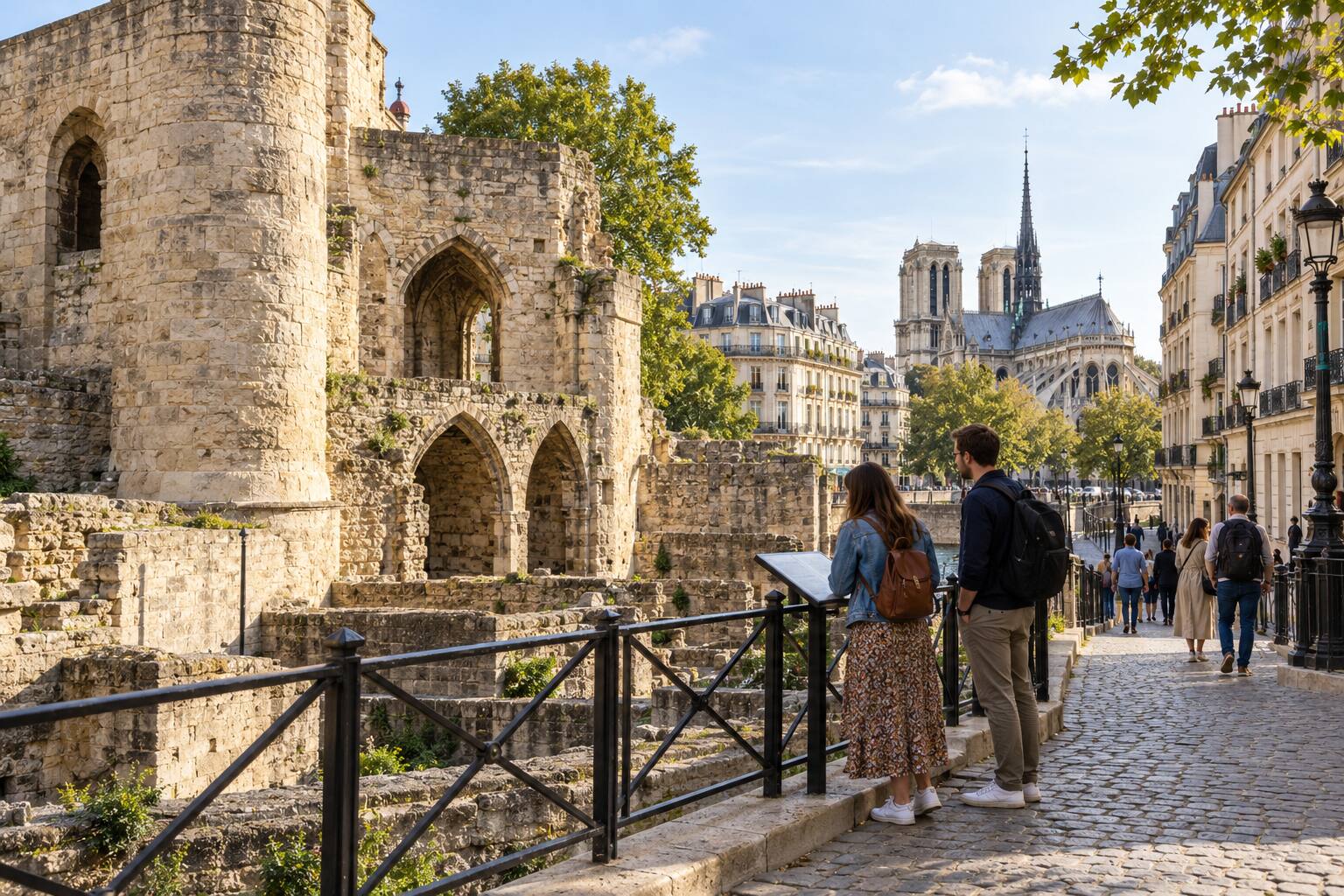
Days three and four: Versailles, revolution, and new regimes
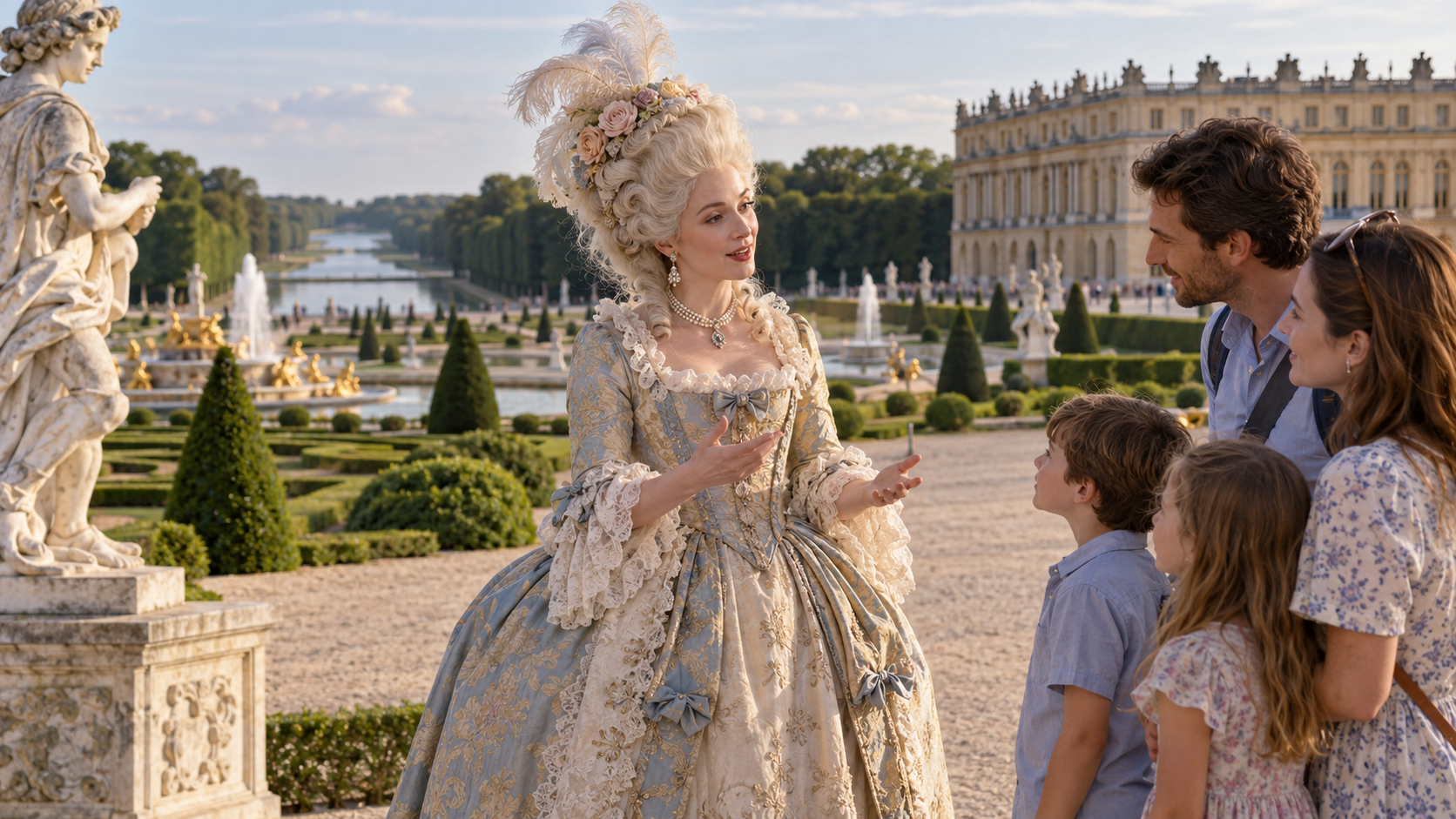
Give Versailles a full day and define one central question before arriving. You might study how architecture managed access to the monarch, how gardens projected control, or how court ritual shaped political life. Marie Antoinette’s reputation should be approached through evidence, contemporary representation, and later myth rather than a single moral judgment. A professional actor embodying Marie Antoinette can help visitors examine those tensions when interpretation is clearly distinguished from fact.
Return to Paris on day four to follow revolution and regime change. The Conciergerie, Place de la Concorde, and collections at Carnavalet can anchor discussions of 1789, imprisonment, political violence, and the difficulty of turning ideals into institutions. Continue toward sites associated with Napoleon only after establishing that the revolutionary period was not a simple prelude to one man’s rule. Paris becomes more intelligible when each regime is seen adapting the symbols and spaces inherited from the last.
Days five and six: nineteenth-century transformation and artistic worlds
Devote day five to the city’s physical remaking. Compare older street patterns in the Marais or Latin Quarter with the broad axes, façades, parks, and infrastructure associated with nineteenth-century modernization. Palais Garnier offers a concentrated study of spectacle, circulation, wealth, and the social theater of public architecture. Ask who benefited from the transformed city, who was displaced, and which older fragments survived around the new order.
On day six, follow artistic networks rather than arranging painters as isolated geniuses. The Musée d’Orsay provides works and chronology, while Montmartre or Montparnasse shows how cafés, studios, dealers, writers, and performers formed creative ecosystems. Père Tanguy can serve as an especially useful figure because his relationships reveal the material and social conditions behind artistic change. A professional actor embodying him turns attention from celebrated objects toward the people who helped one another work. That change of scale makes artistic history social rather than solitary.
Day seven: memory, resistance, and the city you now read differently
Use the final day for the twentieth century and for reflection. The Museum of the Liberation of Paris can connect occupation, resistance, military events, and civilian experience through documented collections and testimony. Joséphine Baker’s life opens another path through performance, resistance, and citizenship, provided these themes are presented without reducing her to one glamorous image. Leave time afterward to revisit a street or square whose meaning changed during the week.
A chronological itinerary should not imply that Paris moved neatly from one era to the next. Medieval walls were absorbed into later buildings, revolutionary sites were redesigned, and modern institutions occupy spaces shaped by earlier power. Keep notes on continuities as well as breaks, and check current opening days before fixing the sequence. After seven days, the reward is not a completed history but a city whose surfaces have become readable.
Continue the story with Immmersiv
Marie Antoinette at Versailles features a professional actor embodying Marie Antoinette and examines the person behind competing representations. Hemingway in Montparnasse features a professional actor embodying Ernest Hemingway and explores one literary circle within modern Paris. Each one illuminates a different layer in the week’s historical sequence. Confirm current date, language, duration, route, and access details before planning.