The Rise of Immersive Experiences in Paris
Paris has long turned culture into an encounter with place, from museums installed in former palaces to performances shaped by historic streets. What feels new is the number of experiences that explicitly call themselves immersive and ask visitors to enter a constructed sensory or narrative environment. Projection, spatial sound, interactive scenography, and live performance now sit beside traditional collections. The label is expanding quickly, which makes clear definitions and quality standards more important.
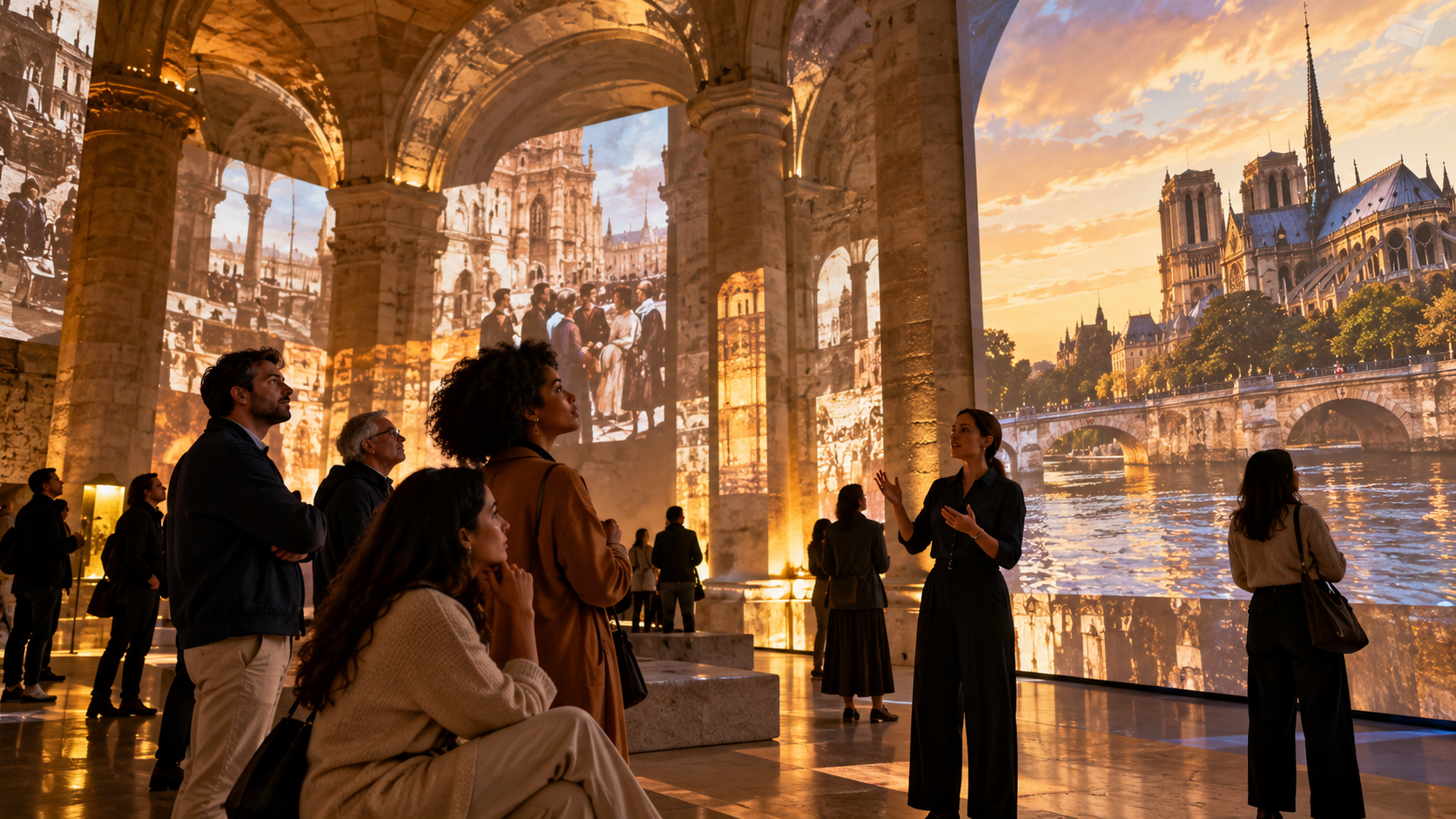
Immersion is not one technology
An immersive experience may surround visitors with moving images, organize sound across a space, invite physical choices, or use a performer to address the group directly. None of those tools automatically produces meaningful participation. The essential change is a shift from looking at a framed subject toward feeling located inside a sequence. Good design uses that location to clarify relationships rather than merely fill the senses.
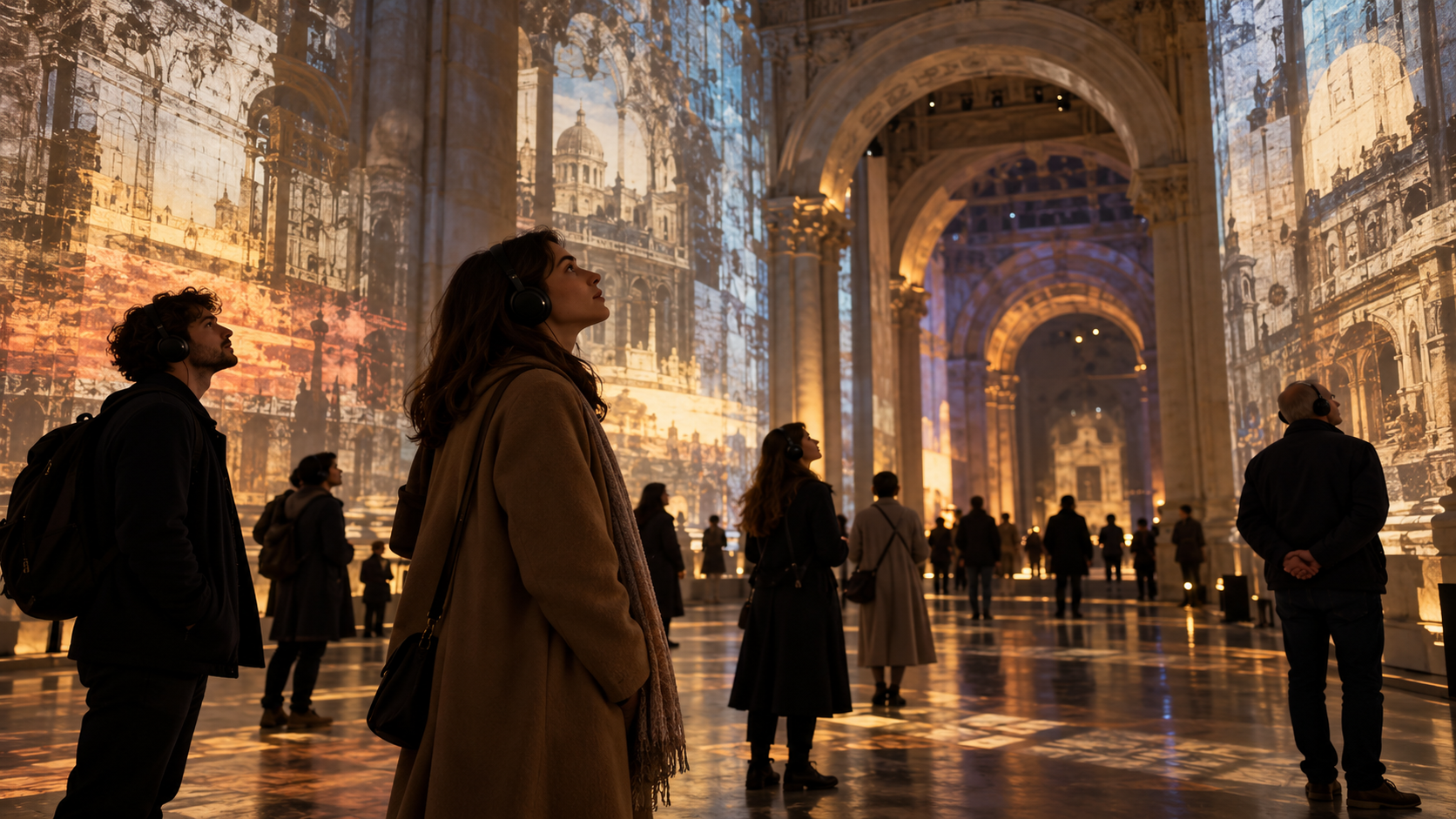
Paris offers both historic settings and demanding audiences
The city gives creators architecture, biographies, collections, and urban memory that can support many forms of narrative. It also attracts visitors with different languages, ages, and levels of prior knowledge. An experience must therefore be legible without becoming simplistic and atmospheric without confusing fiction for fact. The density of traditional museums creates a productive comparison that pushes immersive formats to justify what they add.
The strongest projects connect sensation to evidence
Light can reveal scale, sound can direct attention, and performance can make conflicting motives audible. These techniques are valuable when they lead visitors back to documented places, objects, dates, and uncertainties. They become weaker when effects replace explanation or when a famous image is enlarged without context. Cultural immersion earns trust by showing its sources and marking its interpretive choices.
Live storytelling keeps immersion human
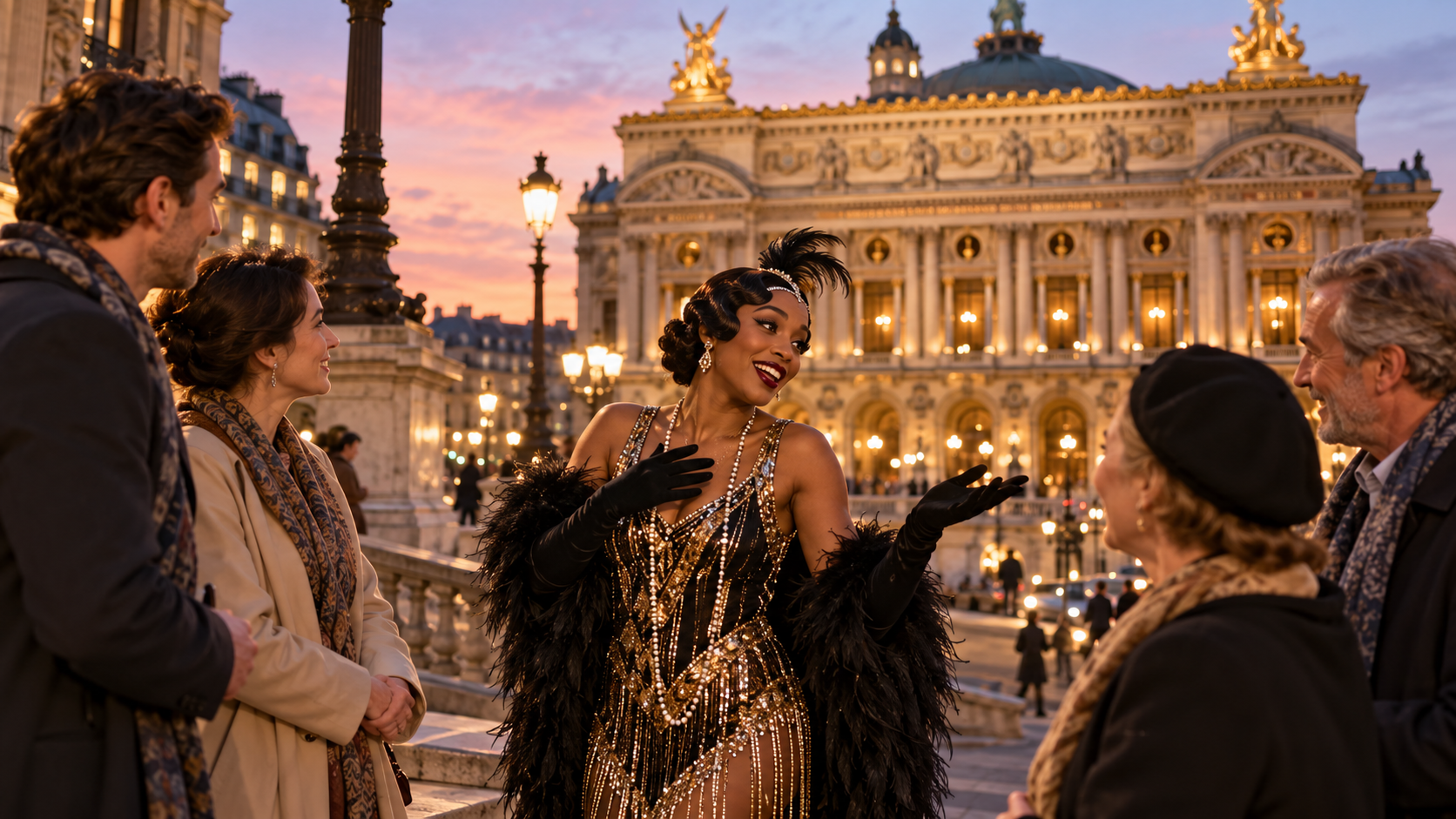
A professional actor embodying Joséphine Baker can turn the Opéra district into a sequence of choices involving performance, resistance, race, citizenship, and public memory. The performer does not claim to be the historical person or to know private thoughts that sources cannot establish. Instead, the encounter uses documented biography and clearly signaled interpretation to invite questions. That responsiveness distinguishes live immersion from a fixed audiovisual loop.
The rise of immersive experiences does not signal the end of museums or guided interpretation. It enlarges the cultural vocabulary available to visitors and asks institutions to think more deliberately about attention, movement, and memory. Travelers should look beyond the word immersive and examine the actual method, evidence, accessibility, and human care behind the promise. The future will be most interesting where formats collaborate without losing their integrity.
For the practical part of this outing, consult Paris, your playground to locate Immmersiv experiences. Browse the personalities according to the subject that interests you. Read what to expect alongside the individual experience description before booking. Confirm current language, suitability, walking requirements, access needs, and availability for your own group.
Treat the growing variety of immersive language as an invitation to examine specific formats. A reconstructed setting, an interactive activity, and a live personality each use different methods to direct attention. The word itself does not demonstrate that a visitor will learn more or that an account is historically complete. Look at the subject, the sources described by the institution, and the distinction between documented details and artistic choices. Then check language, access, movement, and current booking conditions for the actual people taking part. Give the encounter enough space in the day that you can compare an impression with reliable reading afterward. A thoughtful choice rests on what the experience helps you investigate, rather than a general expectation that every new format must be an improvement.
Continue the story with Immmersiv
Near the Opéra district, Josephine Baker’s Paris & the Occupation features a professional actor embodying Joséphine Baker within a place-based historical narrative. On the Île de la Cité, The Dark Legends of Paris features a professional actor embodying Edgar Allan Poe and keeps Parisian legend distinct from documented history. Both demonstrate how live interpretation can remain responsive without abandoning source boundaries. Confirm date, language, route, and practical details before planning.